
Documenting the Ever-Changing Story of Plants
Woodland Leaf & Flower Prints
About the Prints and Leaf Library
Watercolor & Ink
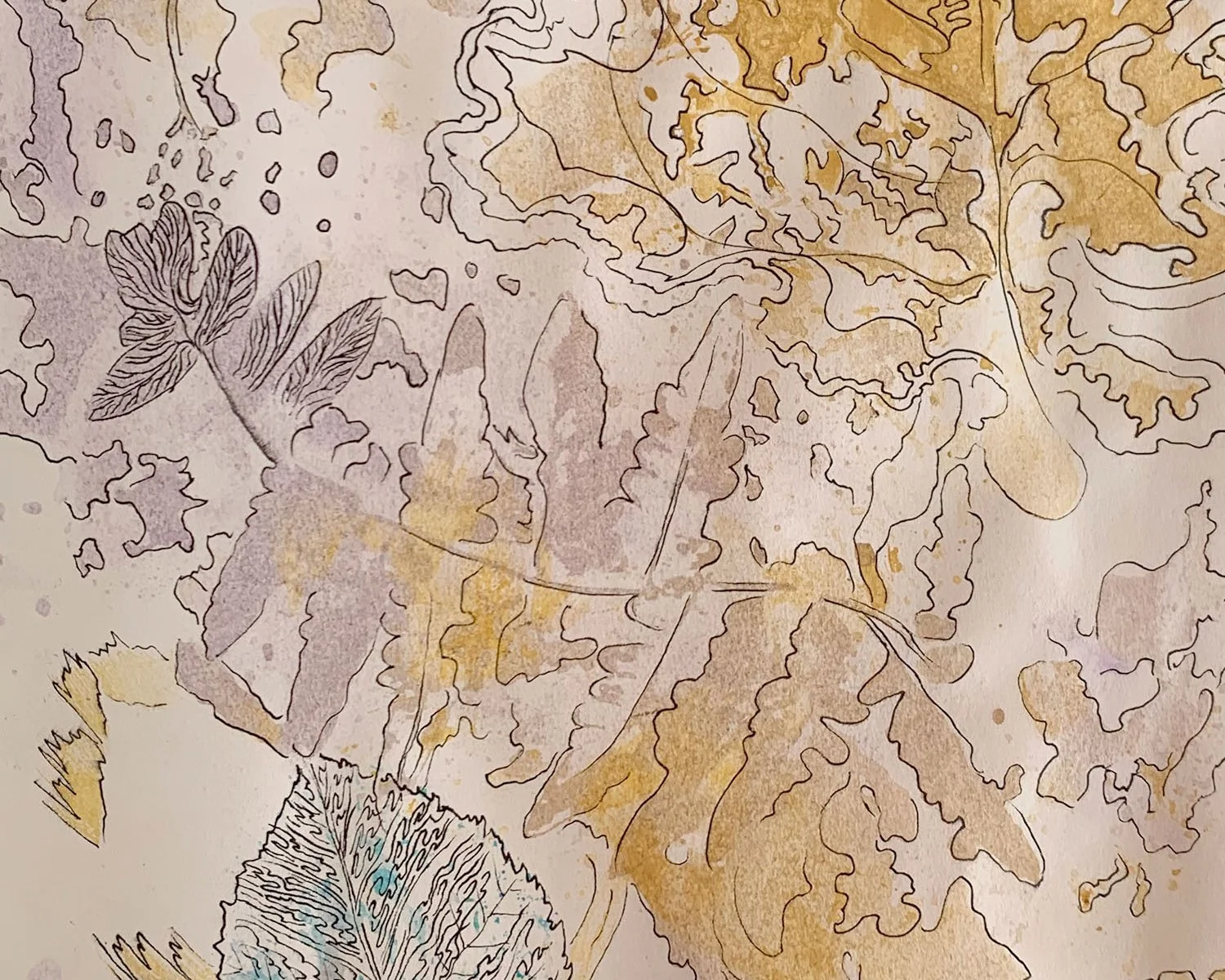
This Leaf & Flower Print series features leaves, wildflowers, and flora gathered from my woodland lot in northern Wisconsin. Preserved in a “Leaf Library,” the pressed herbage is sorted and stored in an archive of tree leaves and wildflowers found within the lot (sometimes referred to as the land, a term of endearment with respect to its sovereignty). As the Leaf Library grows, some common pressed leaves and wildflowers are used to create artwork, while others are preserved. The collection and preservation process helps deepen my connection with the local plant life. The Leaf Library preserves an ecological story of place during this specific moment in time as the climate heats and life in this natural environment shifts. It is not a comprehensive inventory of what I’ve seen at the land, but it does document some of the more common (and occasionally less-common) plants plants, when growing abundantly.

Leaf print, watercolor, and ink. Pipsissewa, Partrideberry, Clubmoss, Haircap Moss. 2023
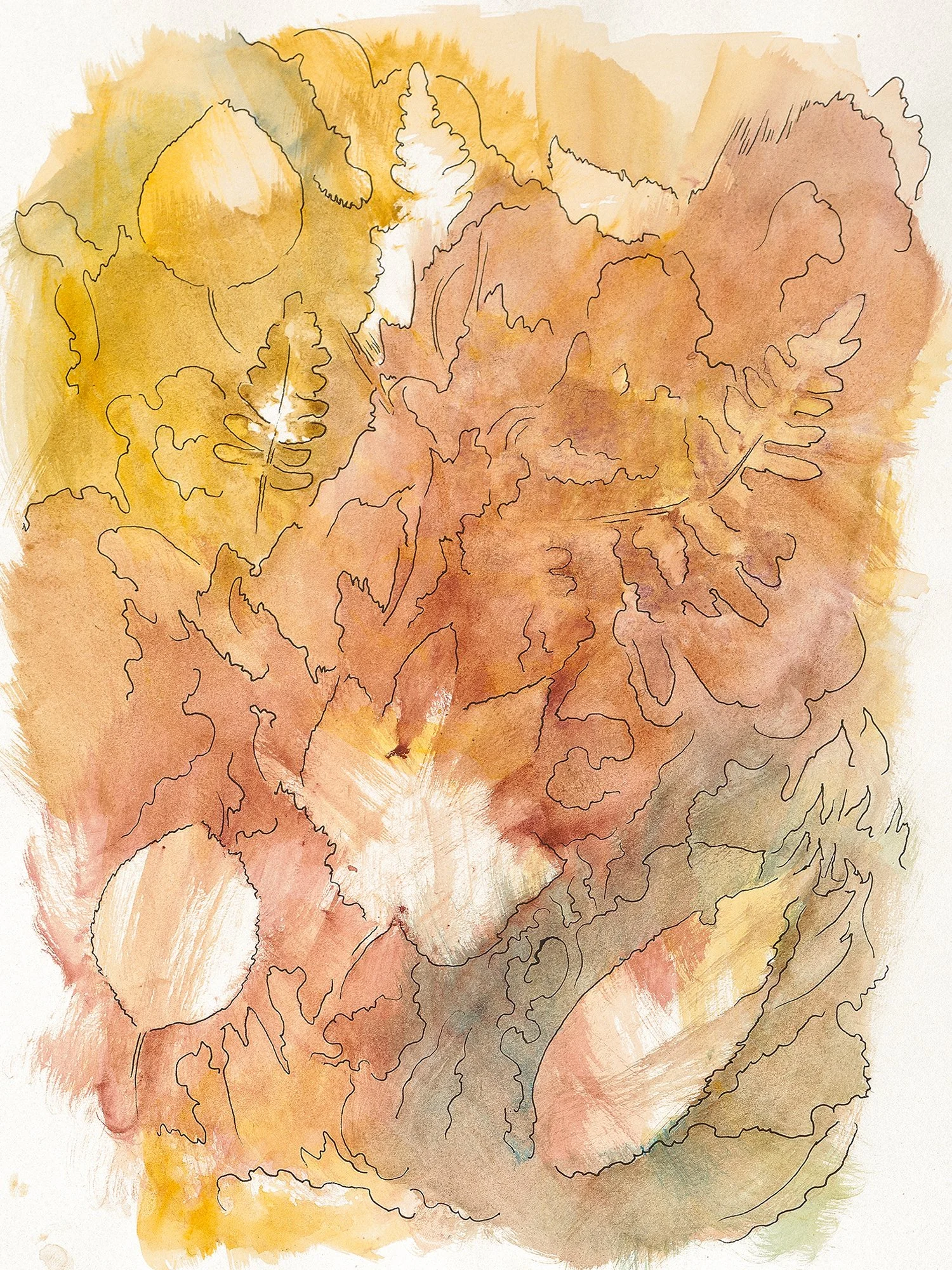
Leaf and fern print, watercolor, and ink. Bracken, Birch, Maple, Hornbeam. 2024.

Leaf, fern, and flower print, watercolor, and ink. Bracken, Butterfly Weed, Oxeye Daisy, Wild Geranium. 2024.

Leaf, fern, and flower print, watercolor, and ink. Bracken, Butterfly Weed, Oxeye Daisy, Wild Geranium, Aspen. 2024.

Leaf and fern print, watercolor, and ink. Bracken, Birch. 2023.

Leaf and fern print, watercolor, and ink. Bracken, Oak. 2023.
Leaf Library
An Ongoing Collection
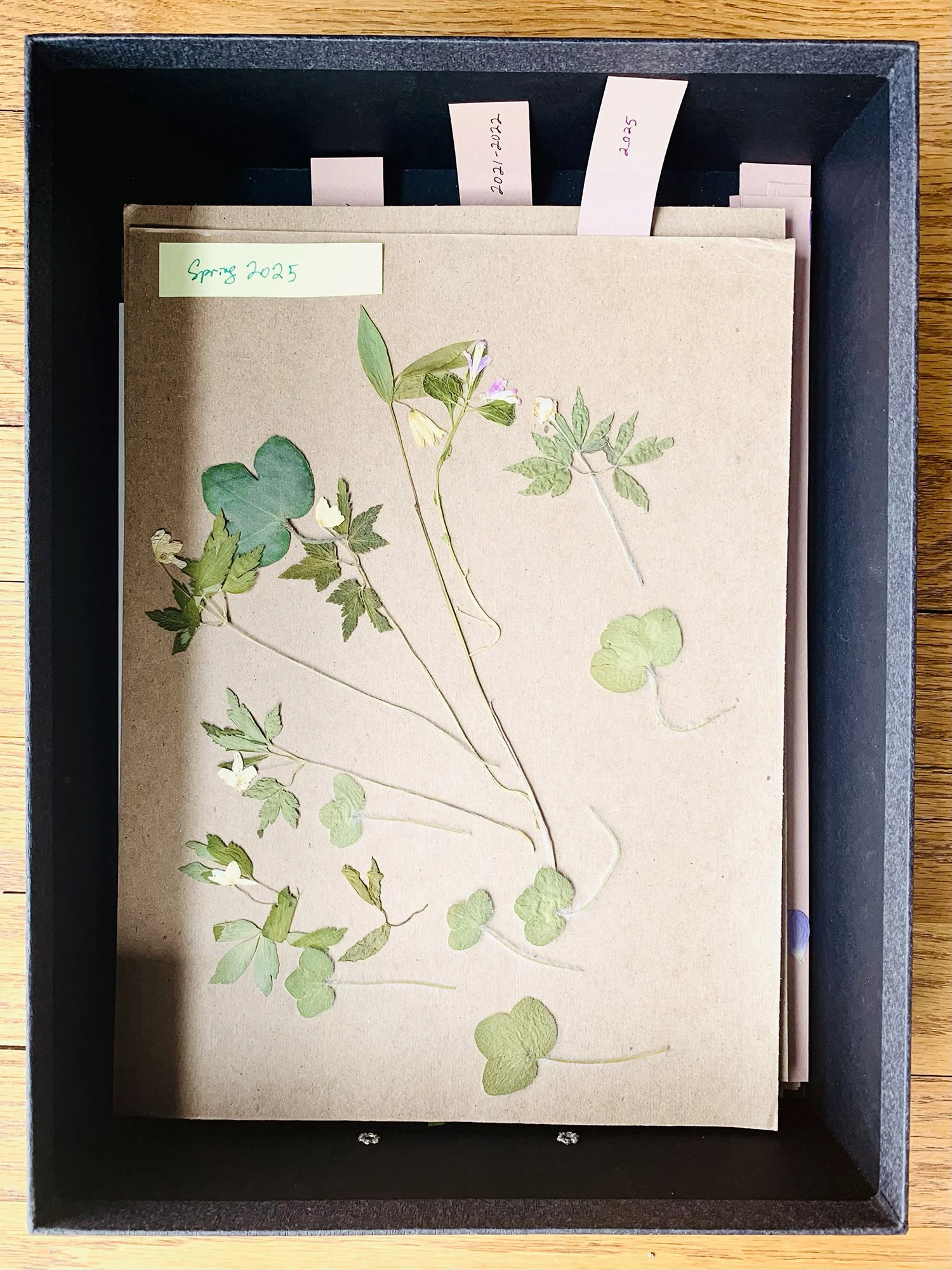
Leaf Library 2025
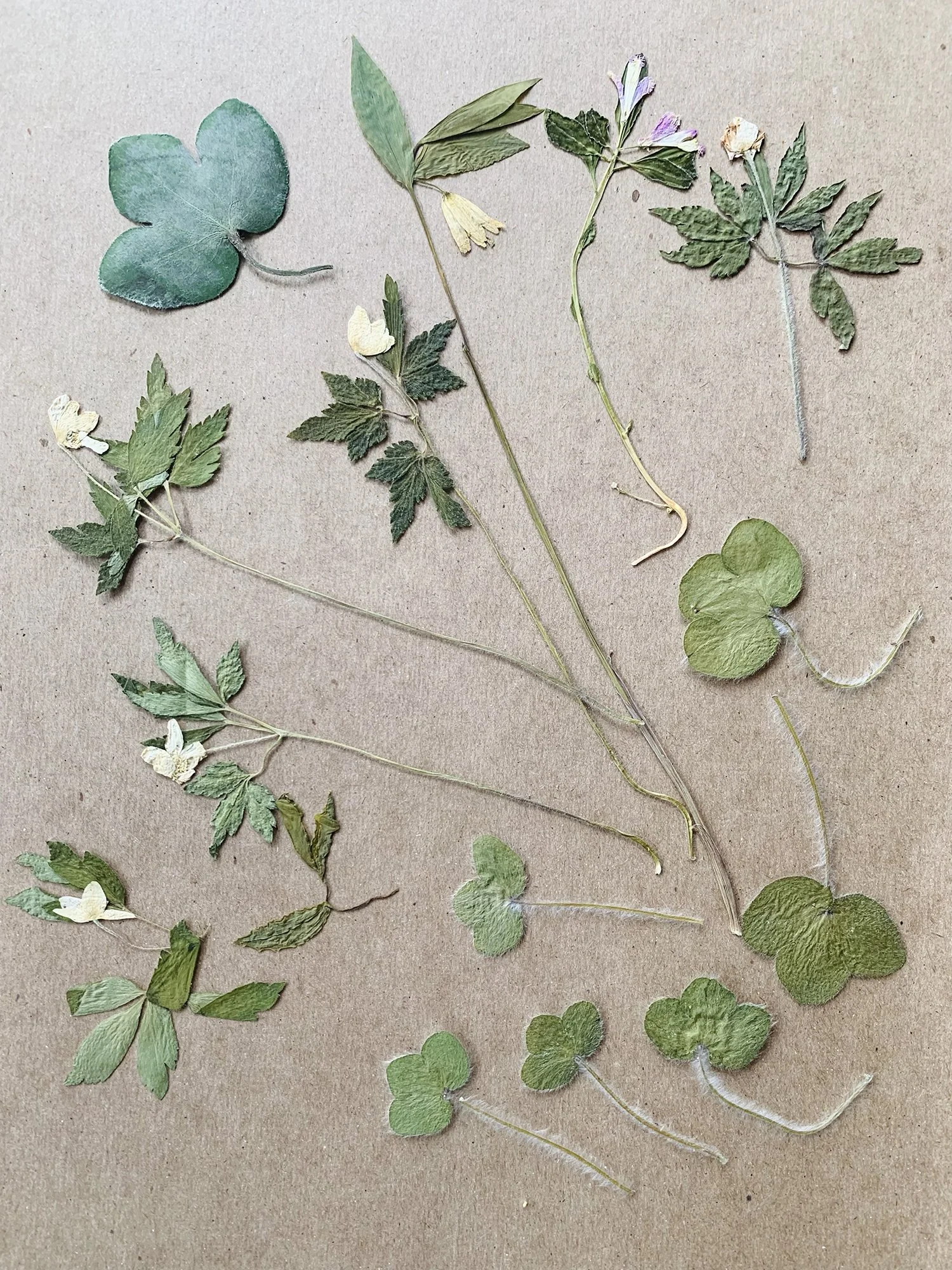
2025: Hepatica leaves (top left and lower right), Sessile Bellwort (top center) , Wild Geranium (Geranium maculatum) (top right), Wood Anemone (Anemone quinquefolia) (middle left), False Rue Anemone (Enemion biternatum) (lower left)
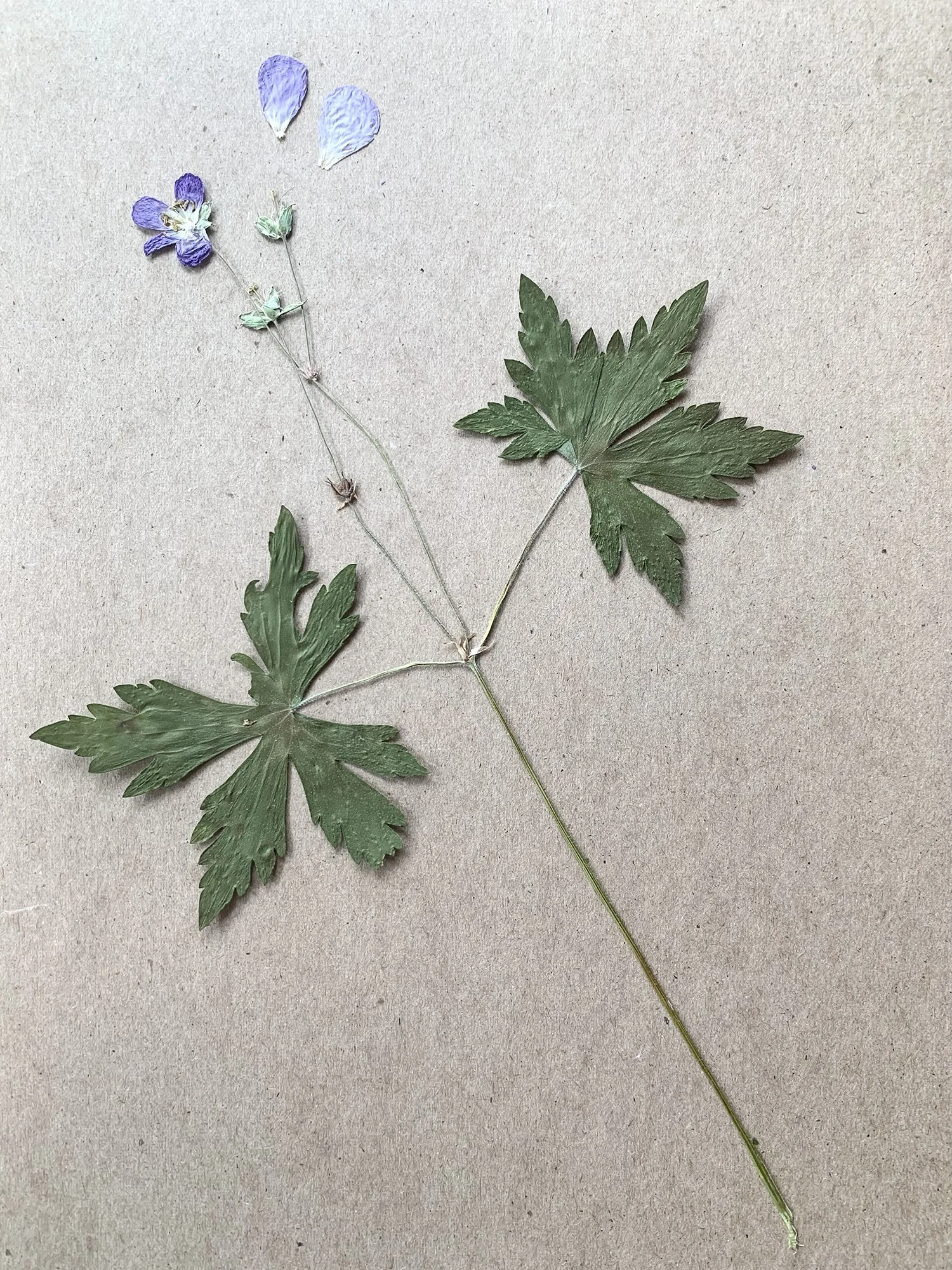
2024: Wild Geranium (Geranium maculatum)
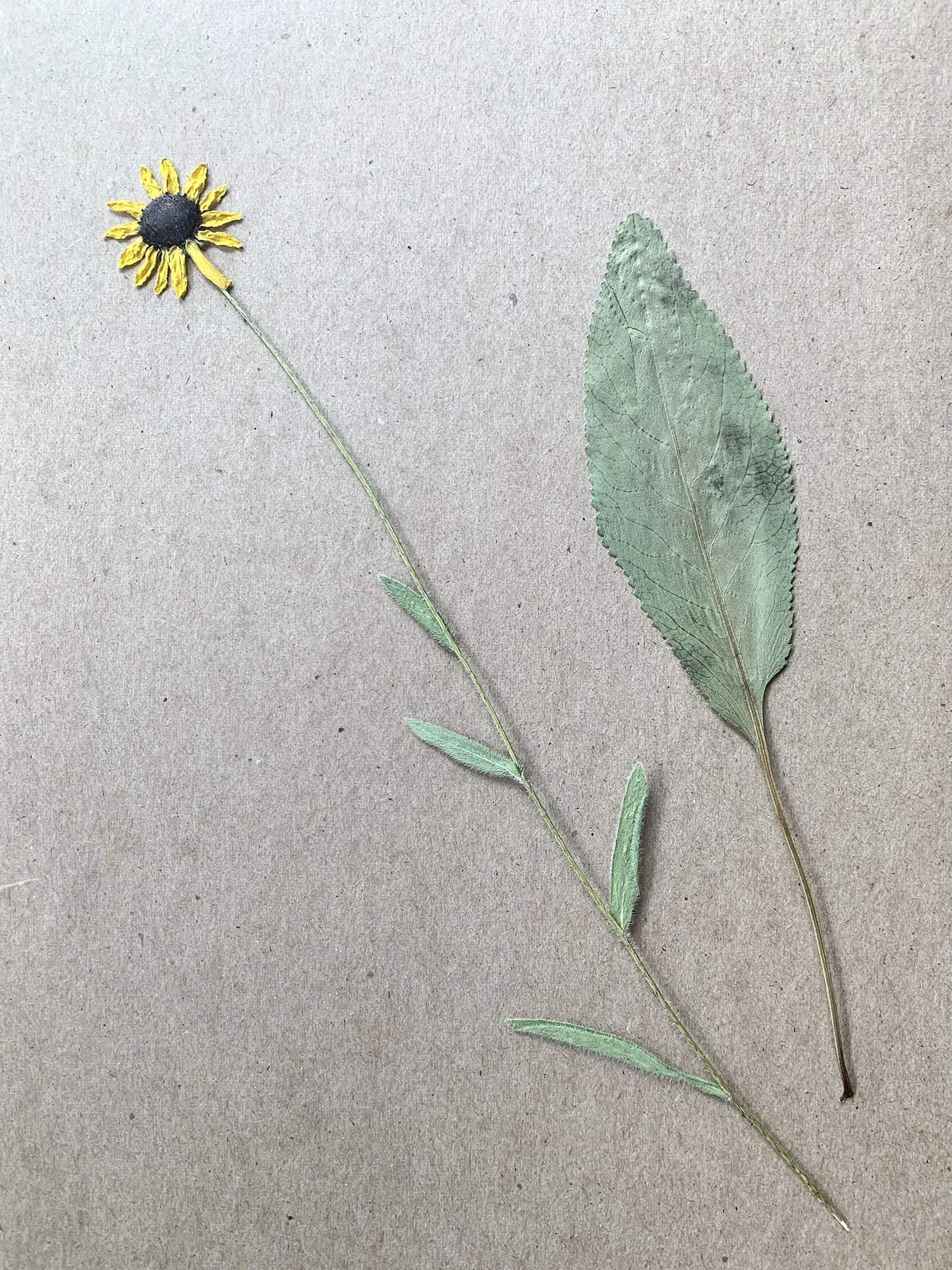
2024: Yellow Coneflower (Echinacea Paradoxa) (left), no ID (right)
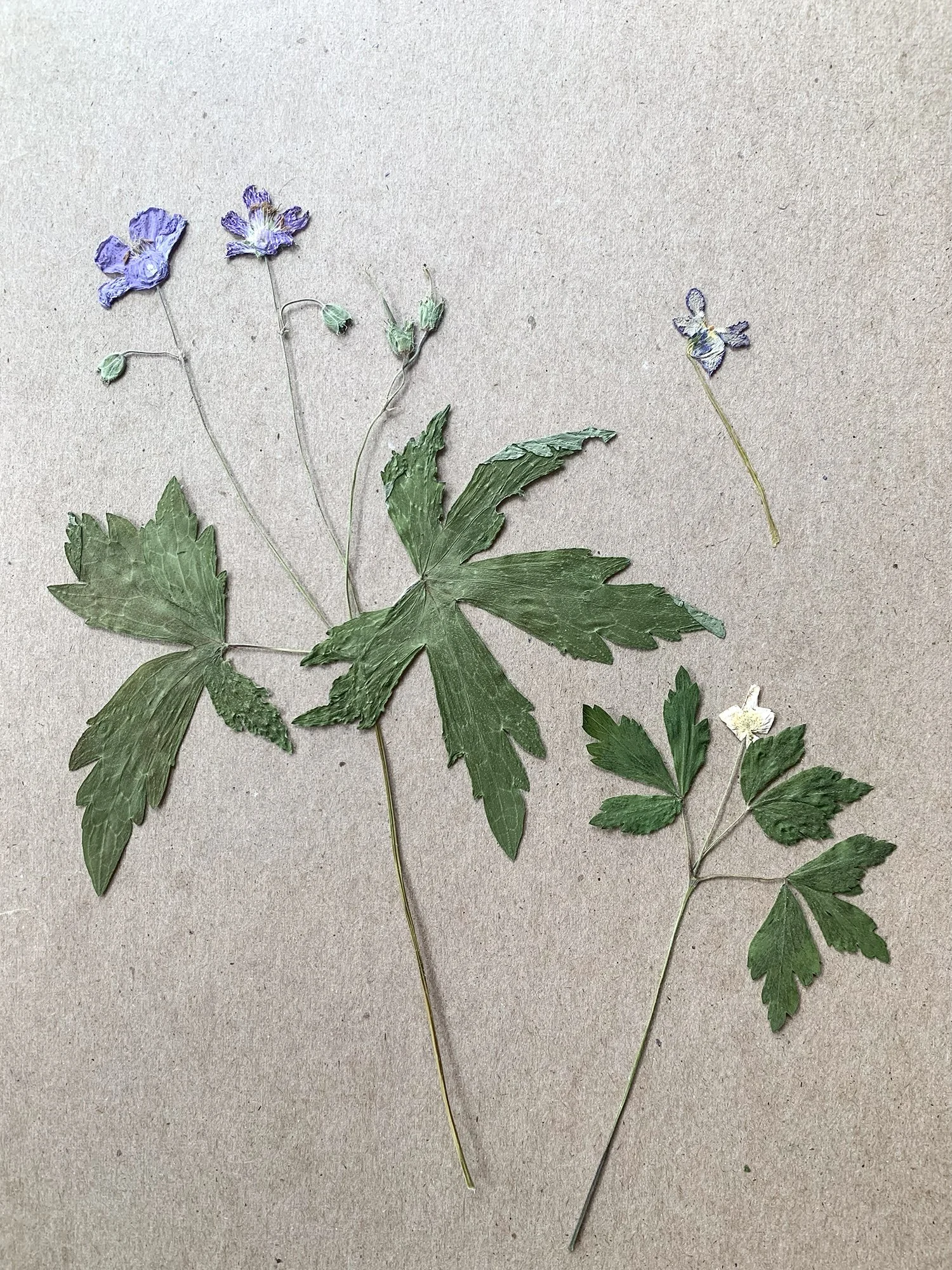
2024: Wild Geranium (Geranium maculatum) (left), Wood Anemone (Anemone quinquefolia) (right)
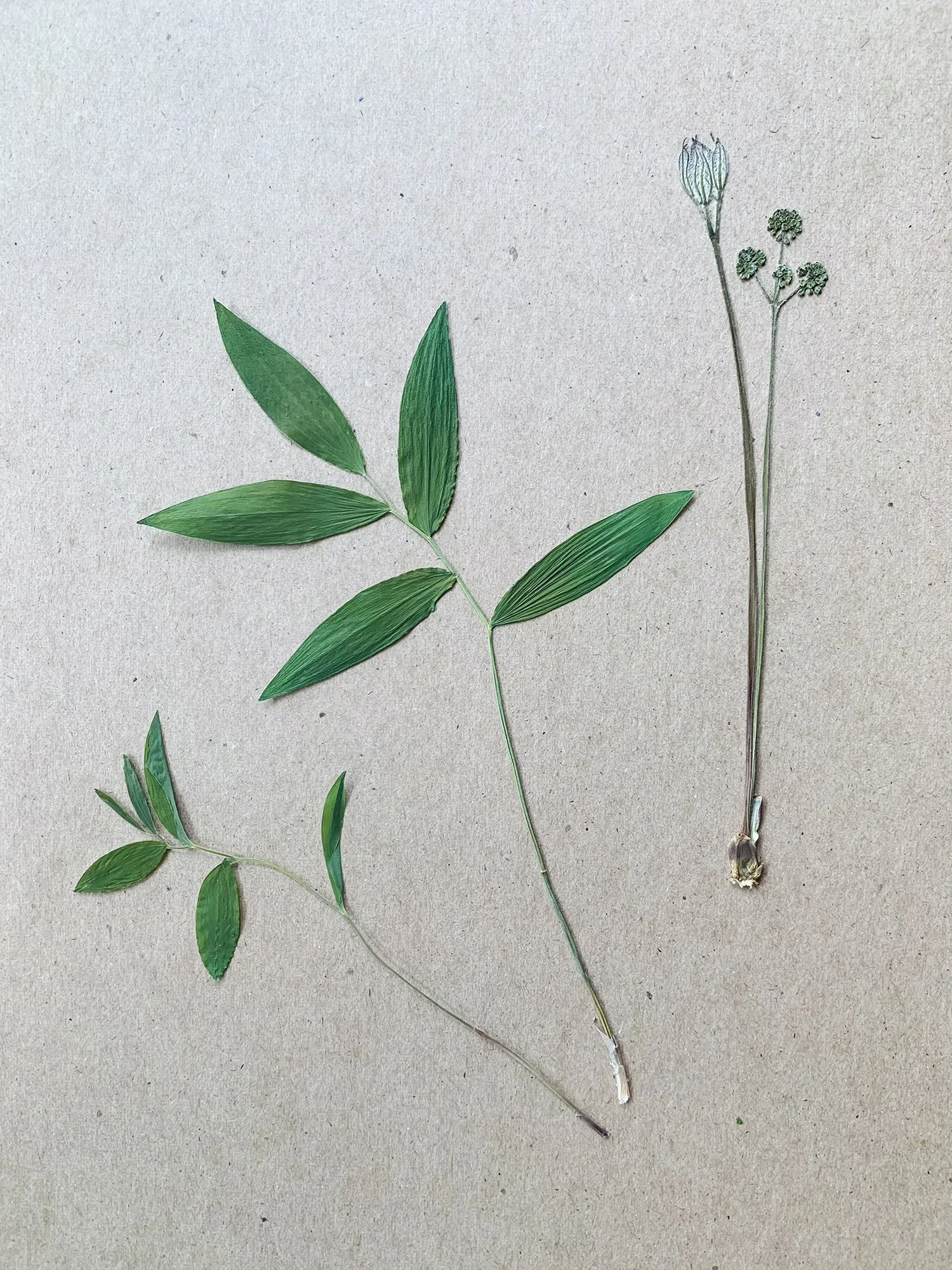
2024: Sessile Bellwort leaves (left and middle), Wild Sarsaparilla (right)
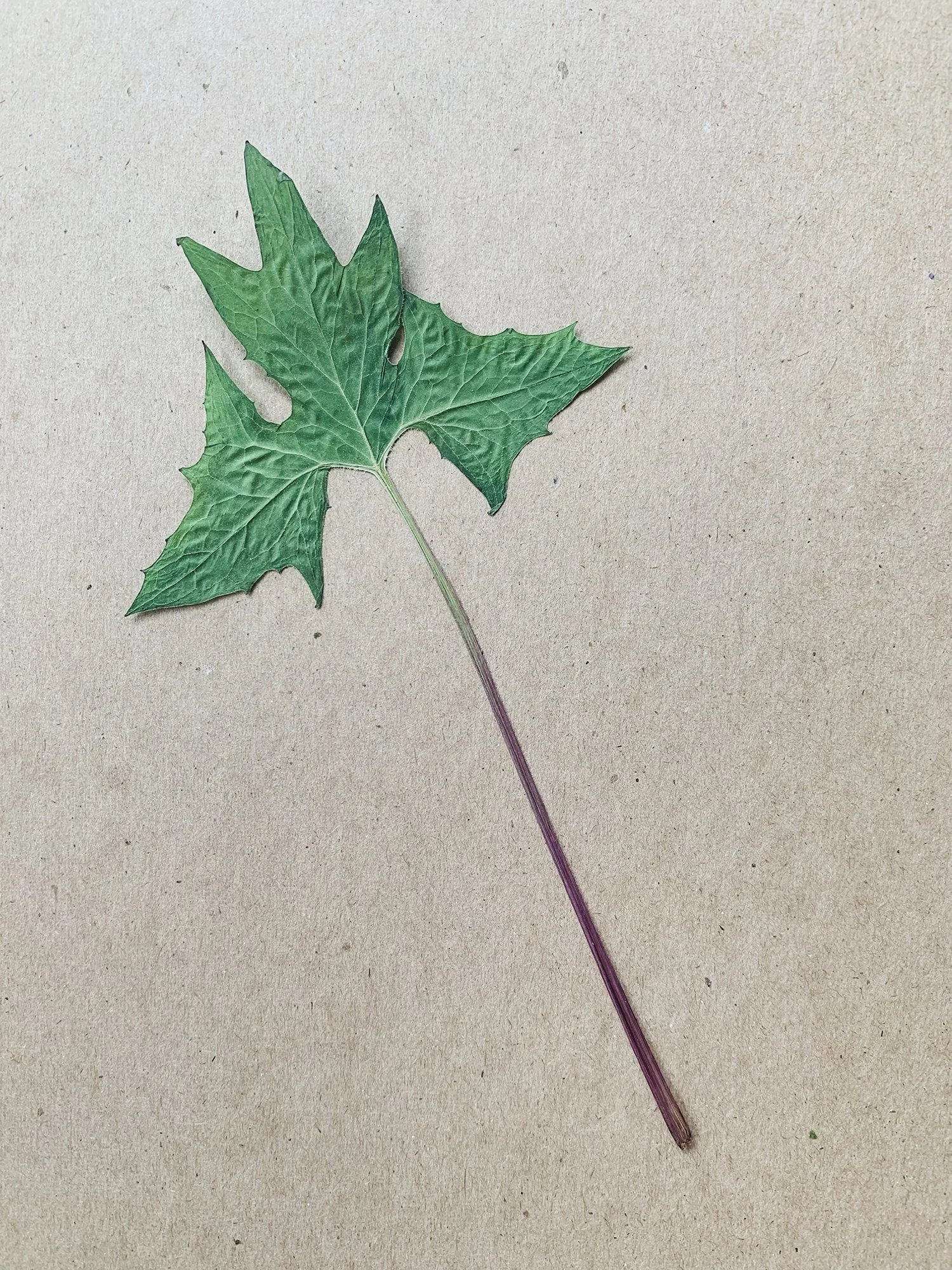
2024: No ID (possible wetland plant)
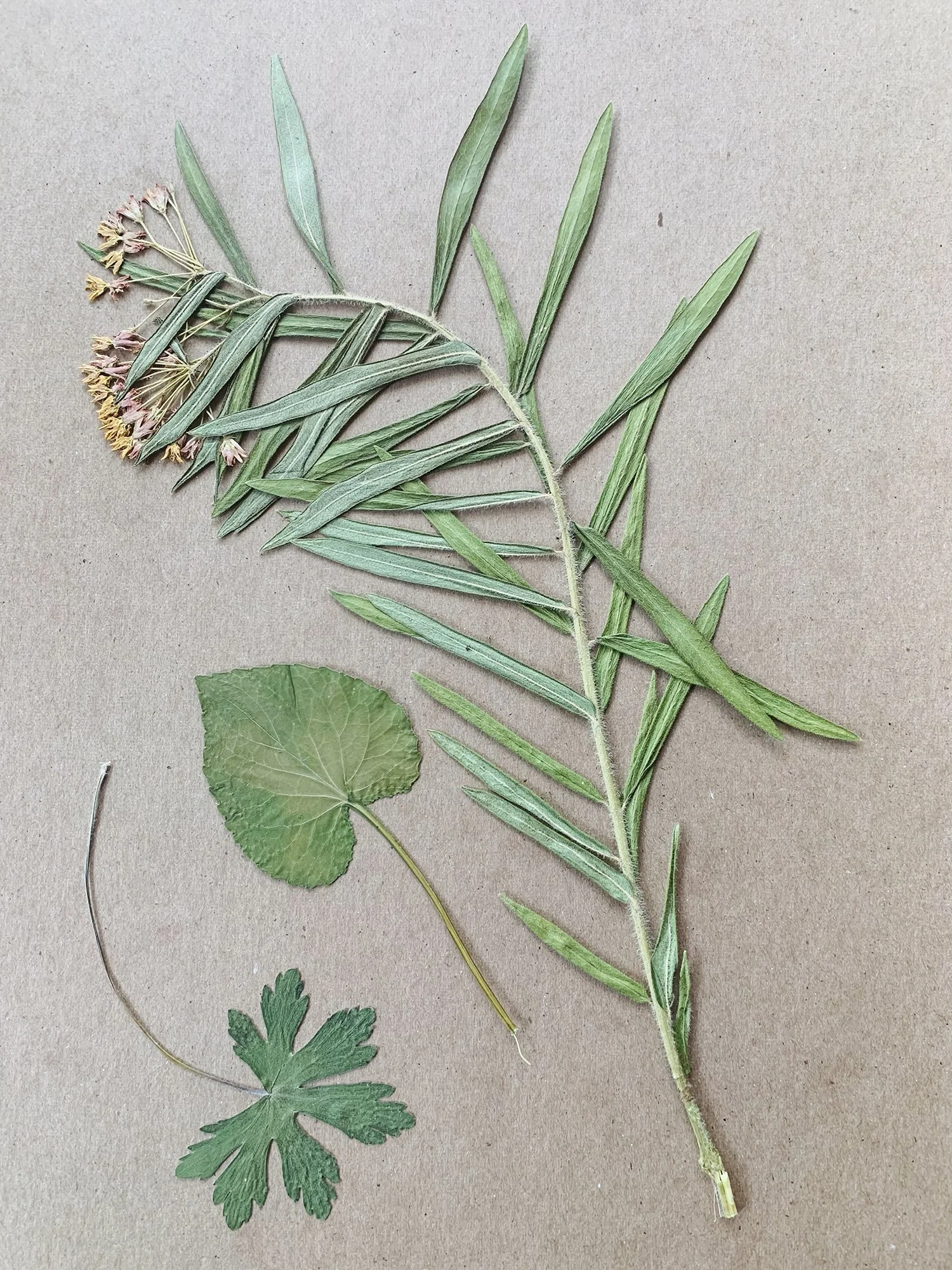
2021: Butterfly Weed (Asclepias tuberosa) (top), no ID (middle), Wild Geranium leaf (Geranium maculatum) (lower left)
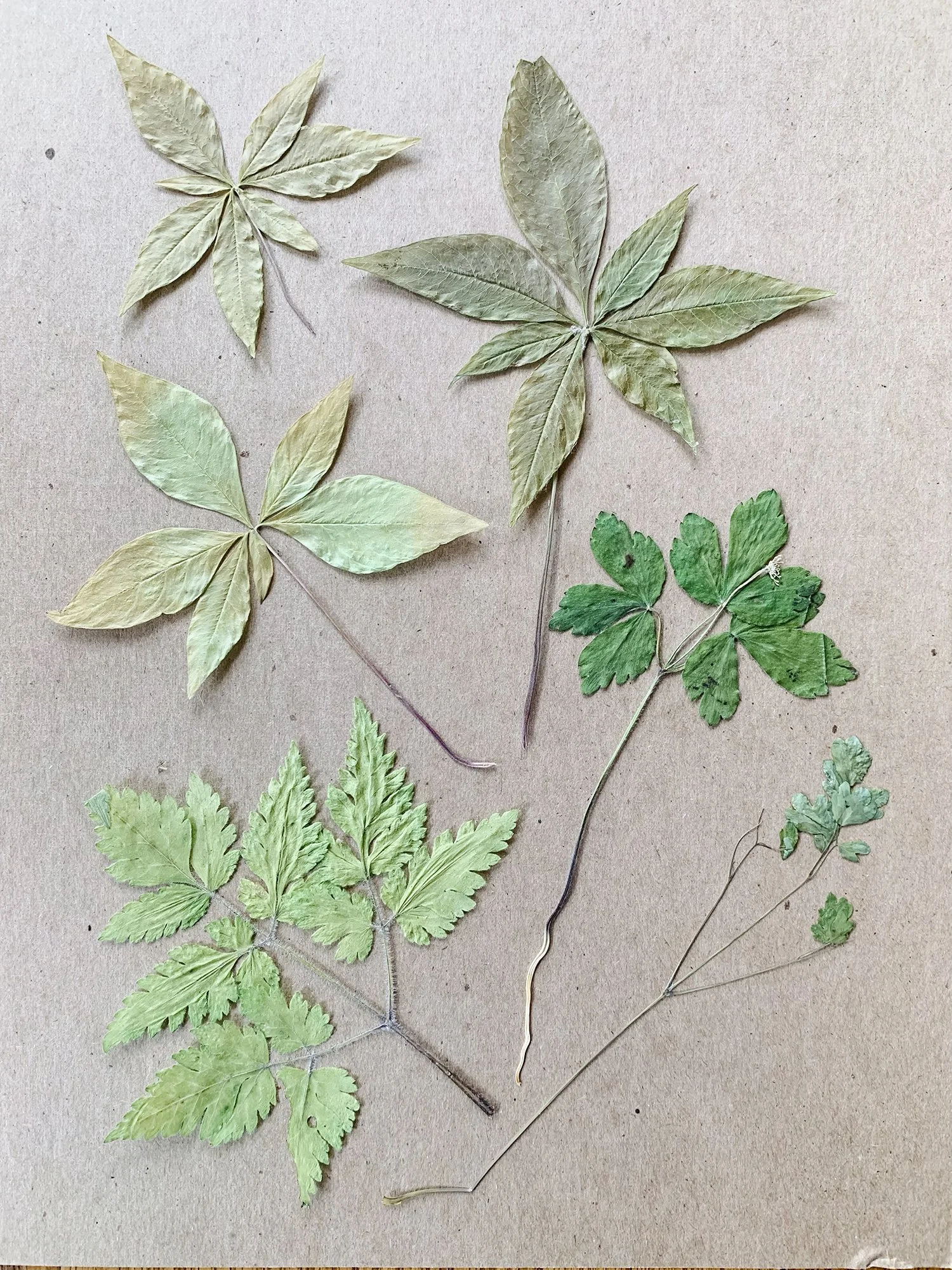
2021: Starflower leaves (Lysimachia borealis) (top), Aniseroot (Osmorhiza longistylis) (this ID needs confirmation) (lower left), False Rue Anemone (Enemion biternatum) (right)
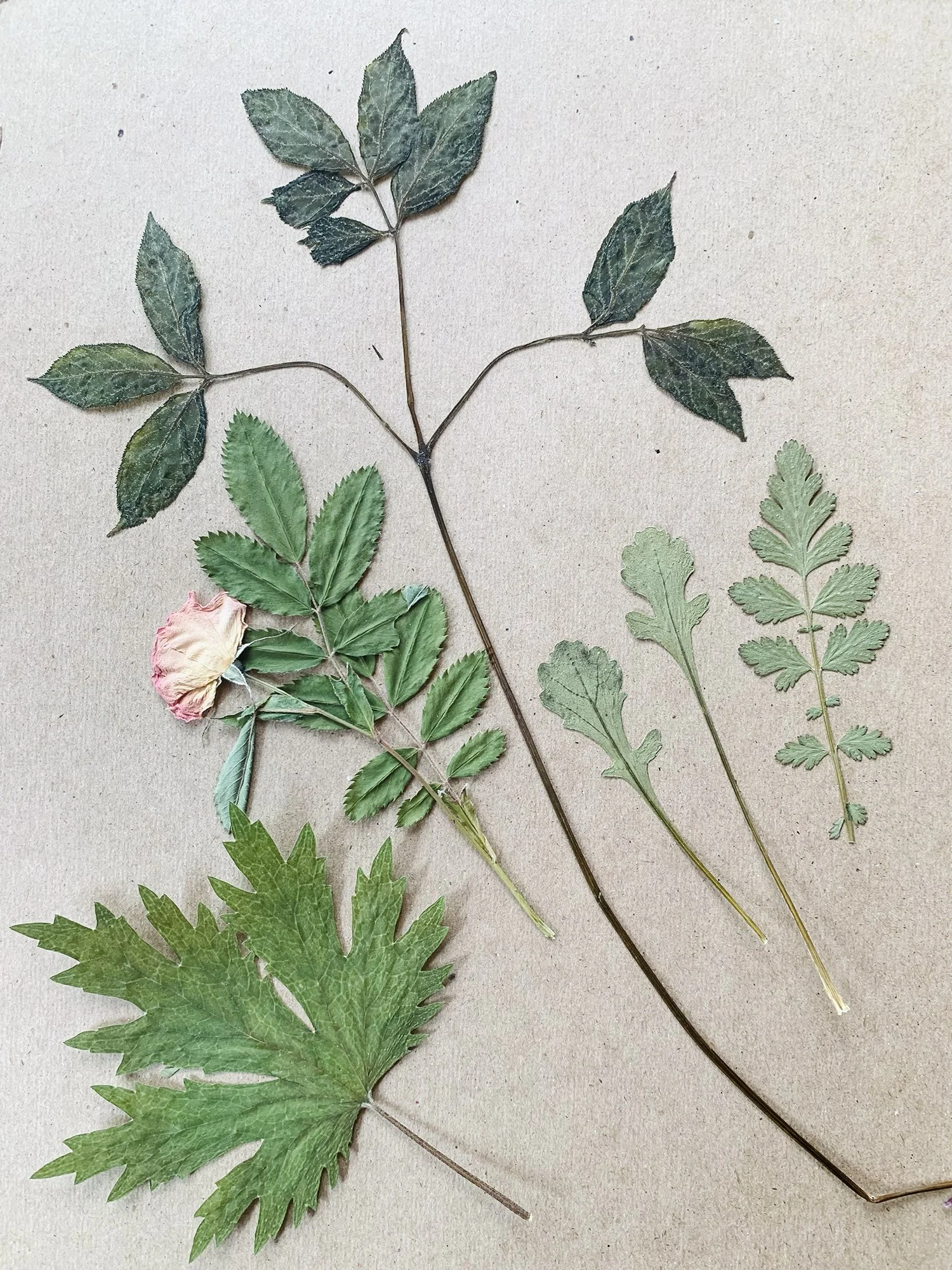
2022: Wild Sarsaparilla (Aralia nudicaulis) (top), Wild Rose (Rosa blanda) (middle left), Wild Geranium leaf ( (Geranium maculatum)) (lower left), Oxeye Daisy (Leucanthemum vulgare) (middle right inner), no ID (middle right edge)
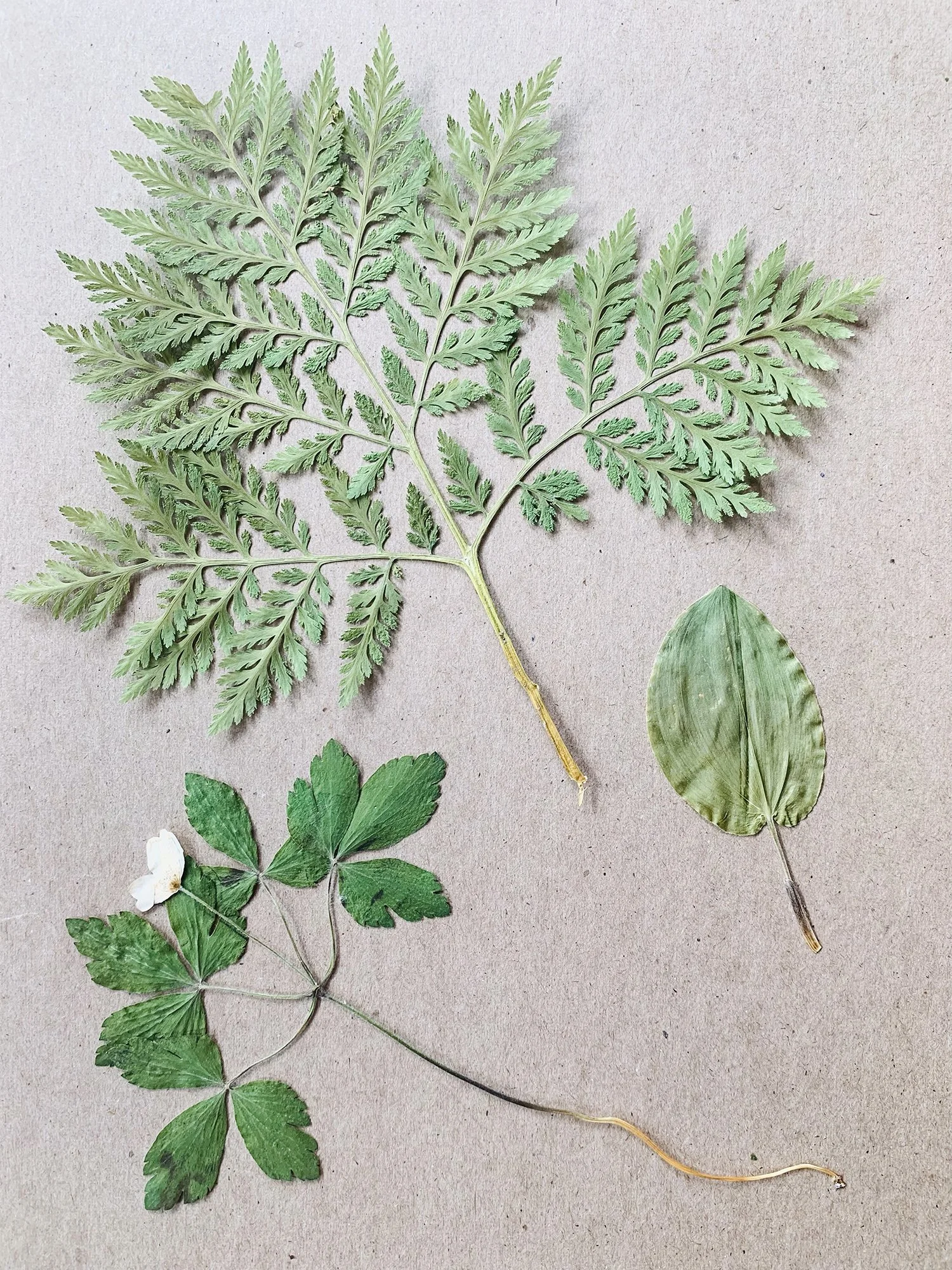
2022: No ID (top), False Rue Anemone (Enemion biternatum) (lower left), no ID (right)
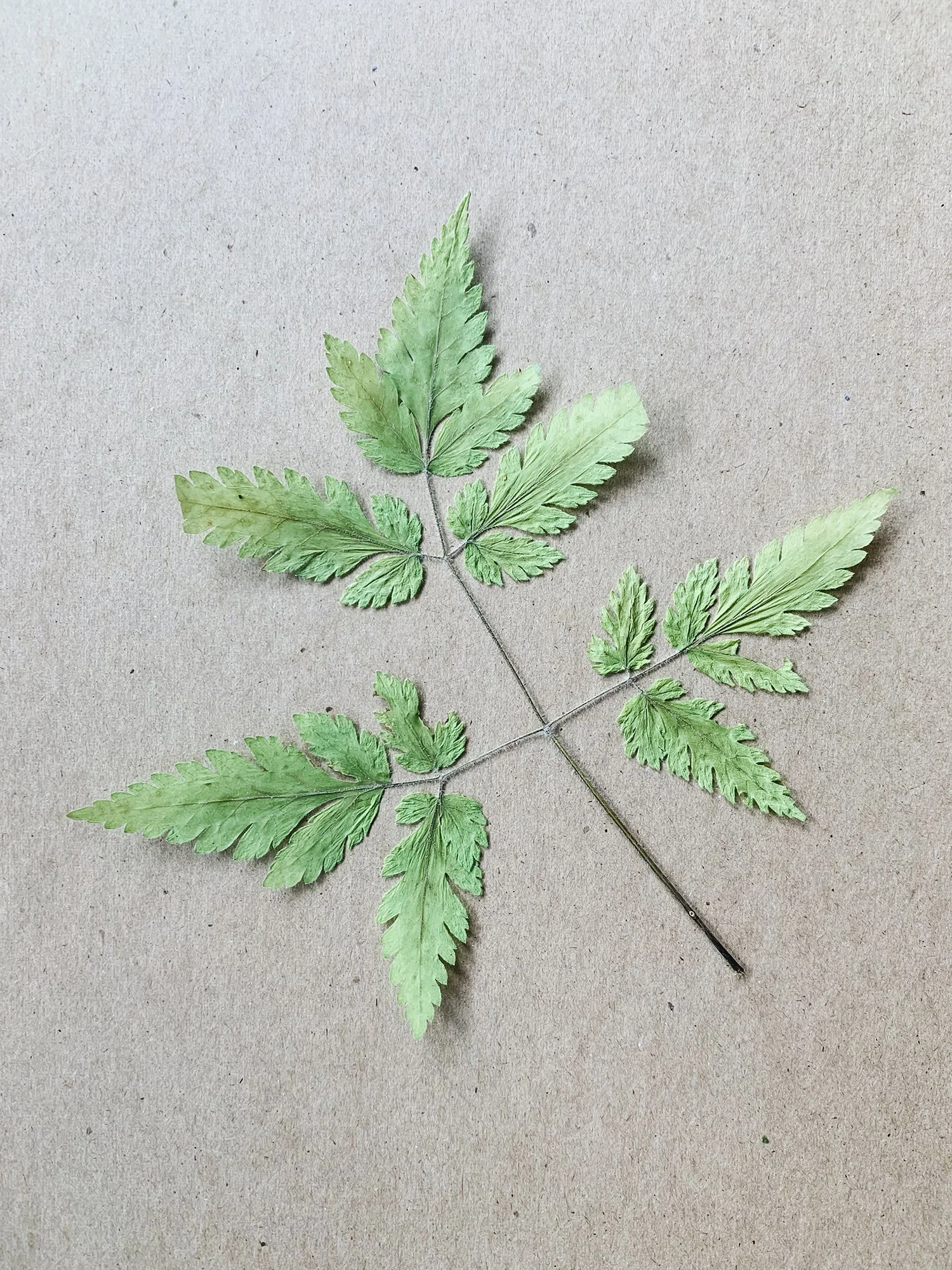
2022: Aniseroot (Osmorhiza longistylis) (this ID needs confirmation)
Woodland On the Namekagon River
10 Minutes from the St. Croix Pine Barrens
While it is a young forest, the surrounding ecosystem is supportive of a thriving habitat with sightings of ruffed grouse, black bears, bobcats, wolves, coyotes, Blanding’s turtle (threatened), northern flying squirrels (special concern), and fireflies (a unique type that I’ve never encountered before). With many large, felled trees from a decade-old storm, the woodland is rich with lichen, clubmoss (a fern ally), bracken, mushrooms, red pine, white oak, (also oak hybrids, perhaps), American hornbeam, paper birch, and aspen. Except for the hand-cut trails and new clearing for a driveway and future studio, the lot has not been altered in many years. Perhaps a hundred or more large trees are breaking down on this small lot, which contributes to its habitat, bountiful in plants common to the area — and a few species of concern.
This woodland lot is surrounded by county forest and abuts NPS land along the Namekagon River, a federally-protected Wild & Scenic River, which also influences its ecosystem. Possibly because of its unique enclosure, I have yet to discover any significant invasive species. The lot is just a few miles from the Namekagon Barrens Wildlife Area (NBWA), a globally rare Pine and Oak Barrens with ecological importance that supports oak grubs, sweet fern, blueberry, forbs, and an open bog with elements of Poor Fen. Though my lot has quite a different from the landscape of the SNA, I wonder what elements it might have in common and sometimes field trip to compare.