
Loose Leaf Project
New Midwestern Nature Stories
The Road Trips
Photo Documentation — Loop 4
Hiking Location
Ash Cave, Hocking Hills State Park
Ohio / Feb 18-20, 2026
Seen, Heard, & Identified
Moss, Liverworts & Spleenworts (Bryophytes)
*Endangered in Ohio.
Great Scented Liverwort
Lobed Spleenwort*
American Tree Moss
Smooth Hook Moss
Broom Moss & Boulder Broom Moss
Delicate Fern Moss
Lichen
Dust Lichen
Ferns (Polypodiophyta)
Christmas Fern
Marginal Wood Fern
Sedges (Cyperaceae)
Plantain-Leaved Sedge
Birds
Carolina Wren
Barred Owl
Ohio, Hocking Hills State Park — Ash Cave
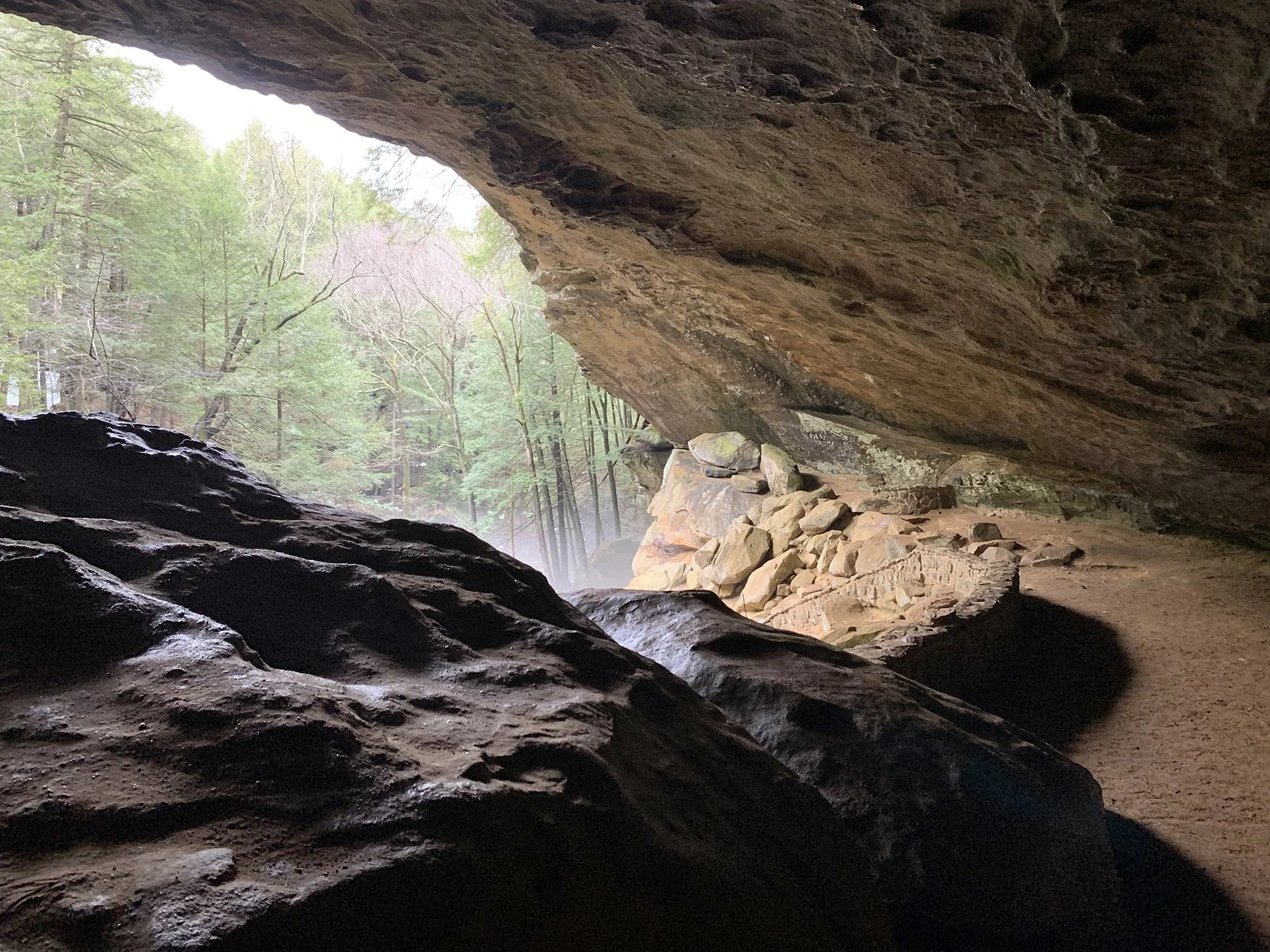
Ash Cave is the largest recessed cave east of the Mississippi. It is not a true cave, but what geologists call a rock shelter. Its Black Hand Sandstone walls contain stories of the glacial past. Thin lines layered throughout called cross-bedding are evidence of ancient migrating ripples or dunes that show how sediment moved over time. It contains quartz pebbles and sand with features, including a conglomeratic quartz sandstone. Freezing and thawing expands the frozen water in the rock and over time this frost wedging creates the sandy floor. In the center of the gorge, trees, moss, and plants grow from an ancient mound of ash that is thought to have been created by early Native American peoples.
My interest in Ash Cave and the Hocking Hills State Park area is the unique biodiversity created by the sloped land, recessed caves, gorges and open sunlit areas, waterfalls, seeps, and acidic soil. An abundance of mosses and liverworts, lichen, ferns, and spleenworts can be easily seen on the rock shelter, behind the waterfall, and from the trail in the surrounding foliage.
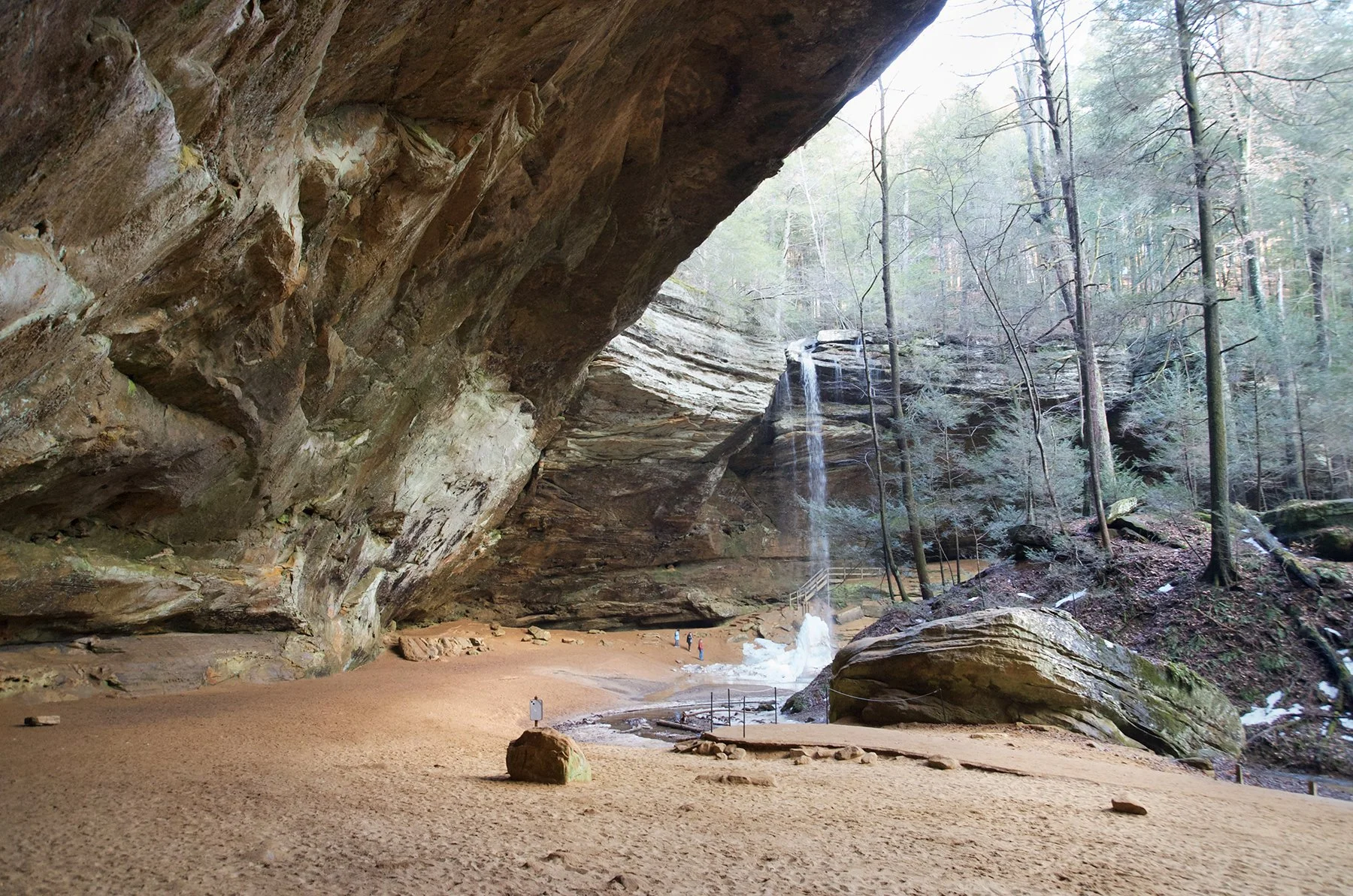
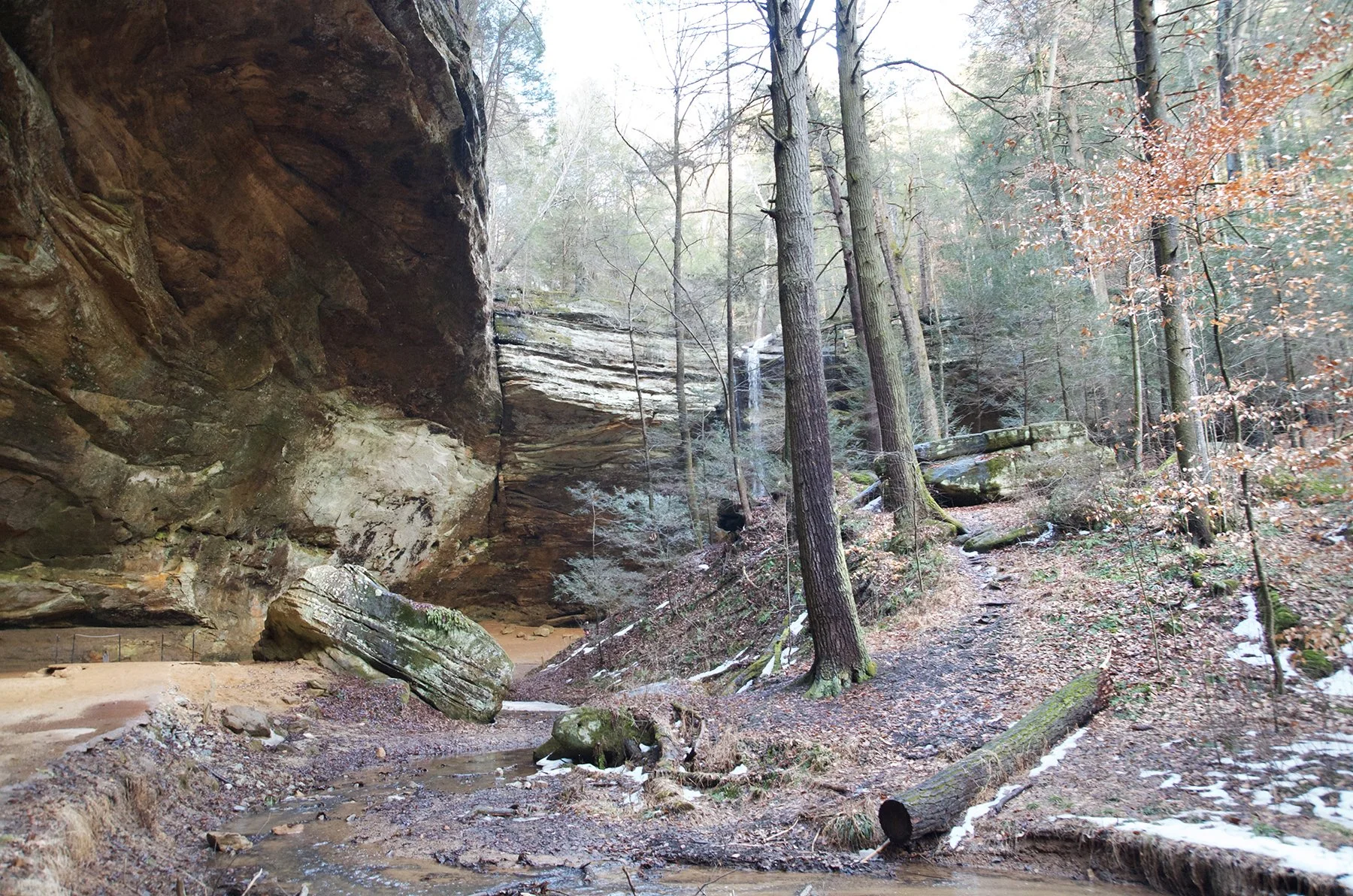
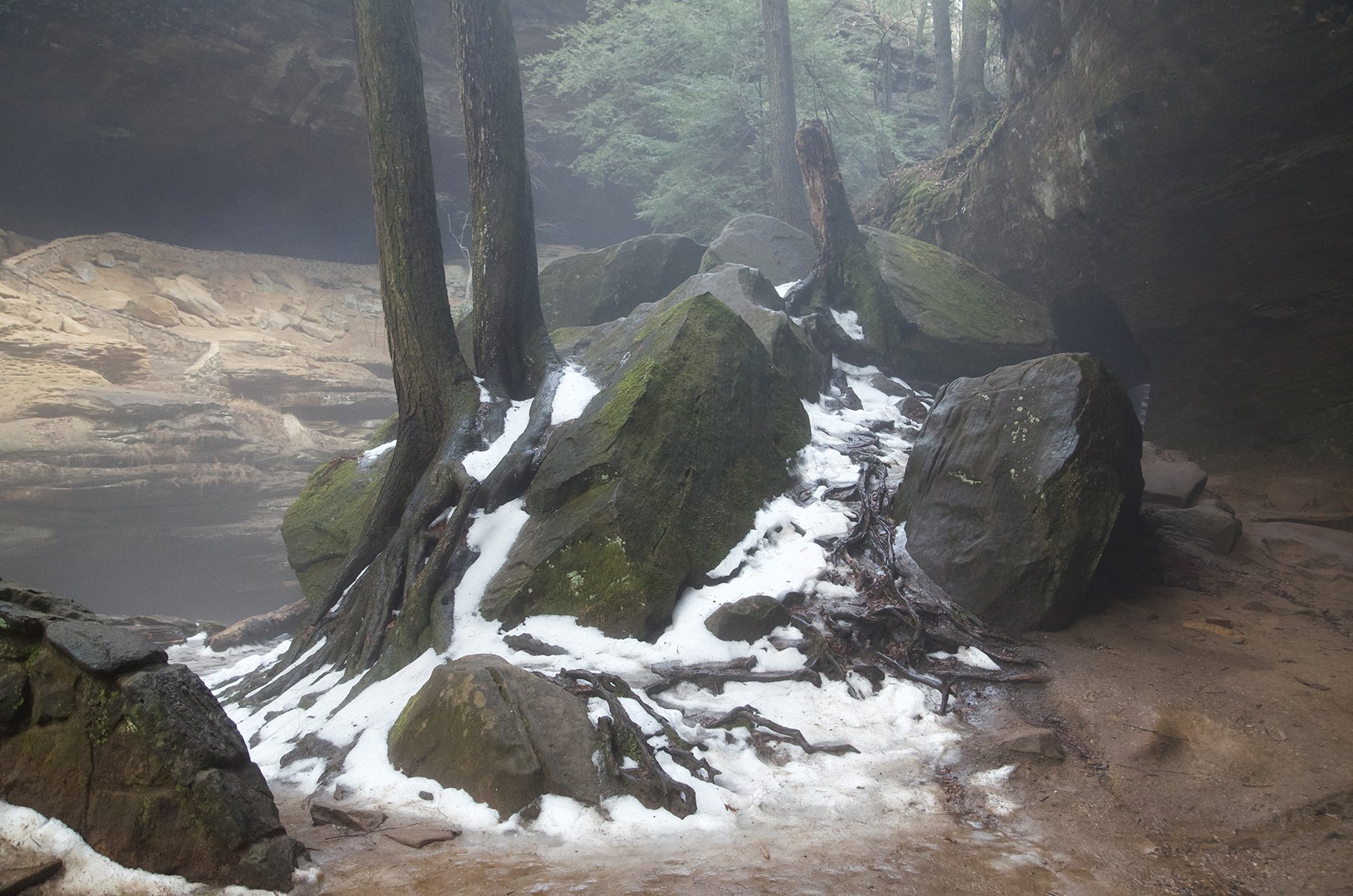
View of Ash Cave and the ancient ash mound. The lighter area may be an example of salt peter.
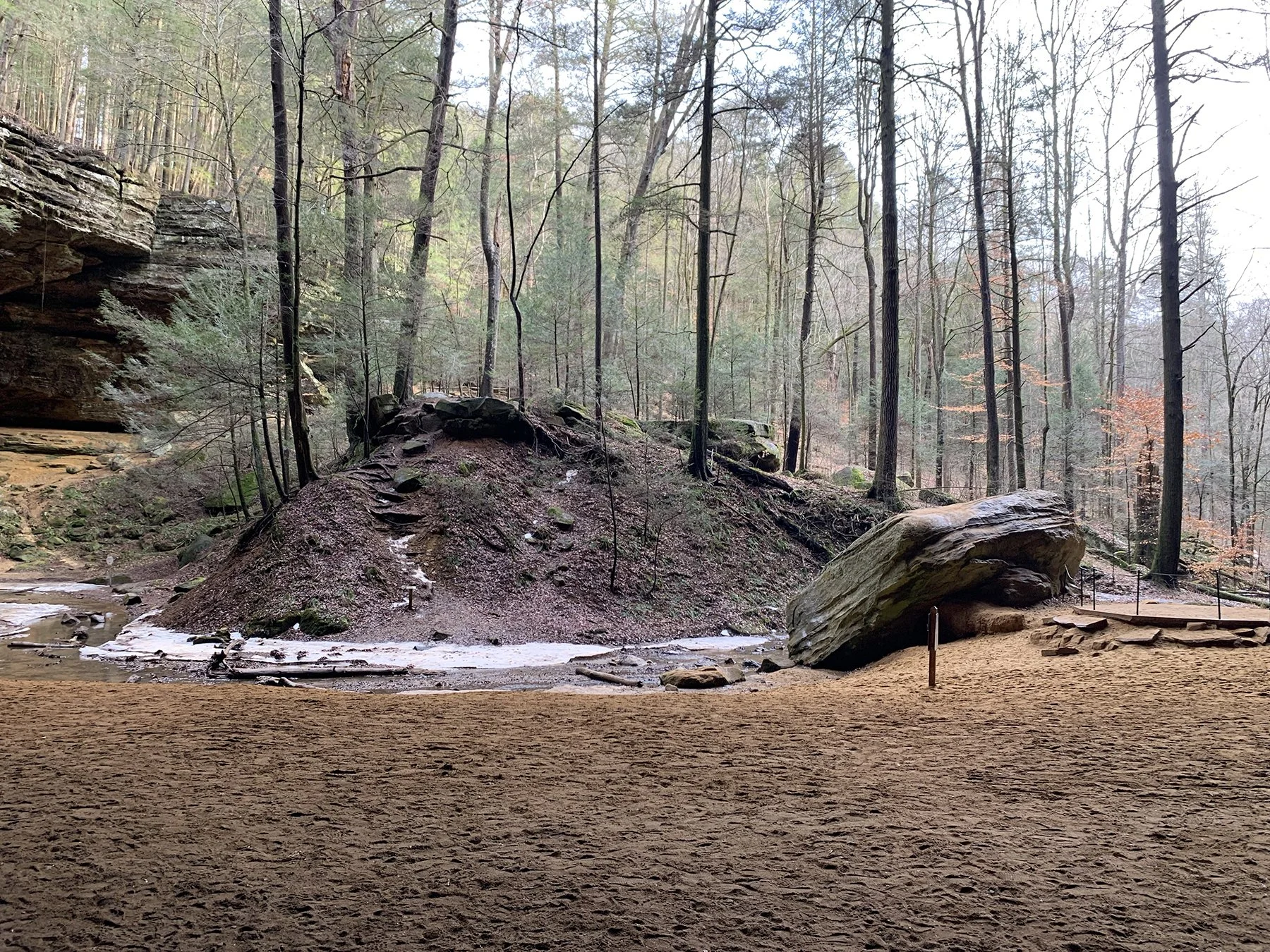
An ancient mound of ash in a gorge at the base of a waterfall, thought to have been created by early Native American peoples.
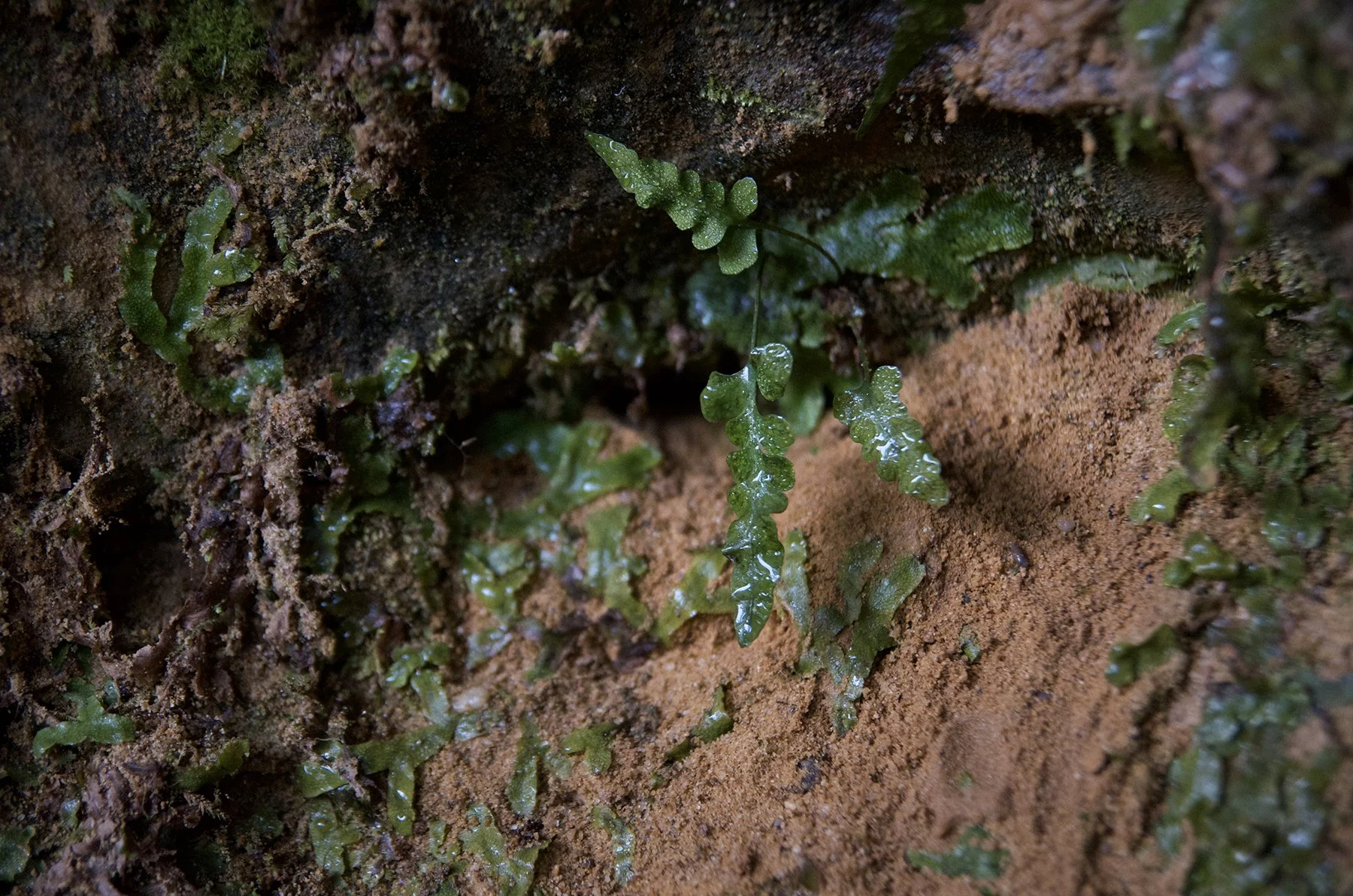
Lobed Spleenwort (Asplenium pinnatifidum)
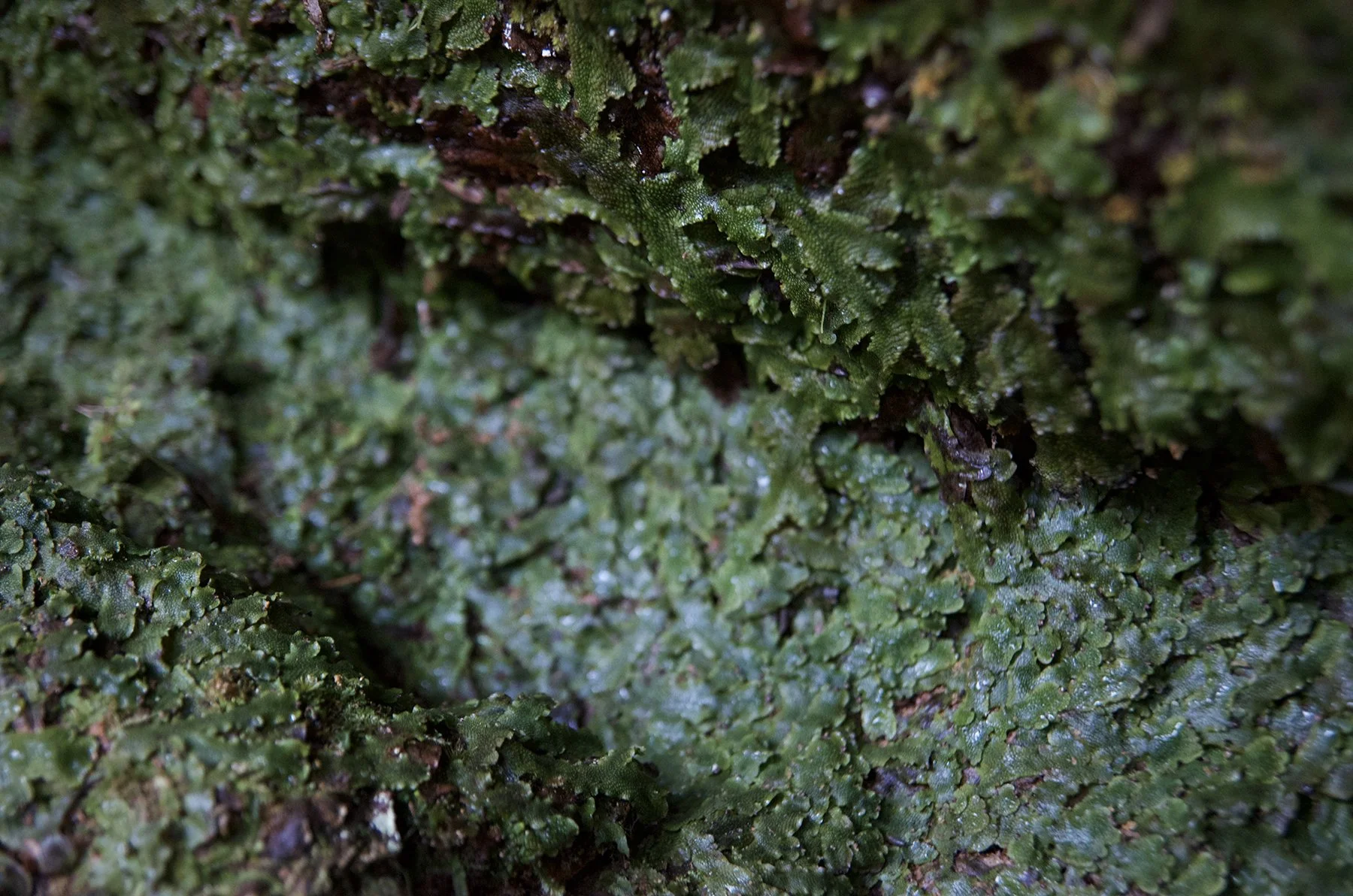
Great Scented Liverwort (Conocephalum conicum) at the base of a rock wall.
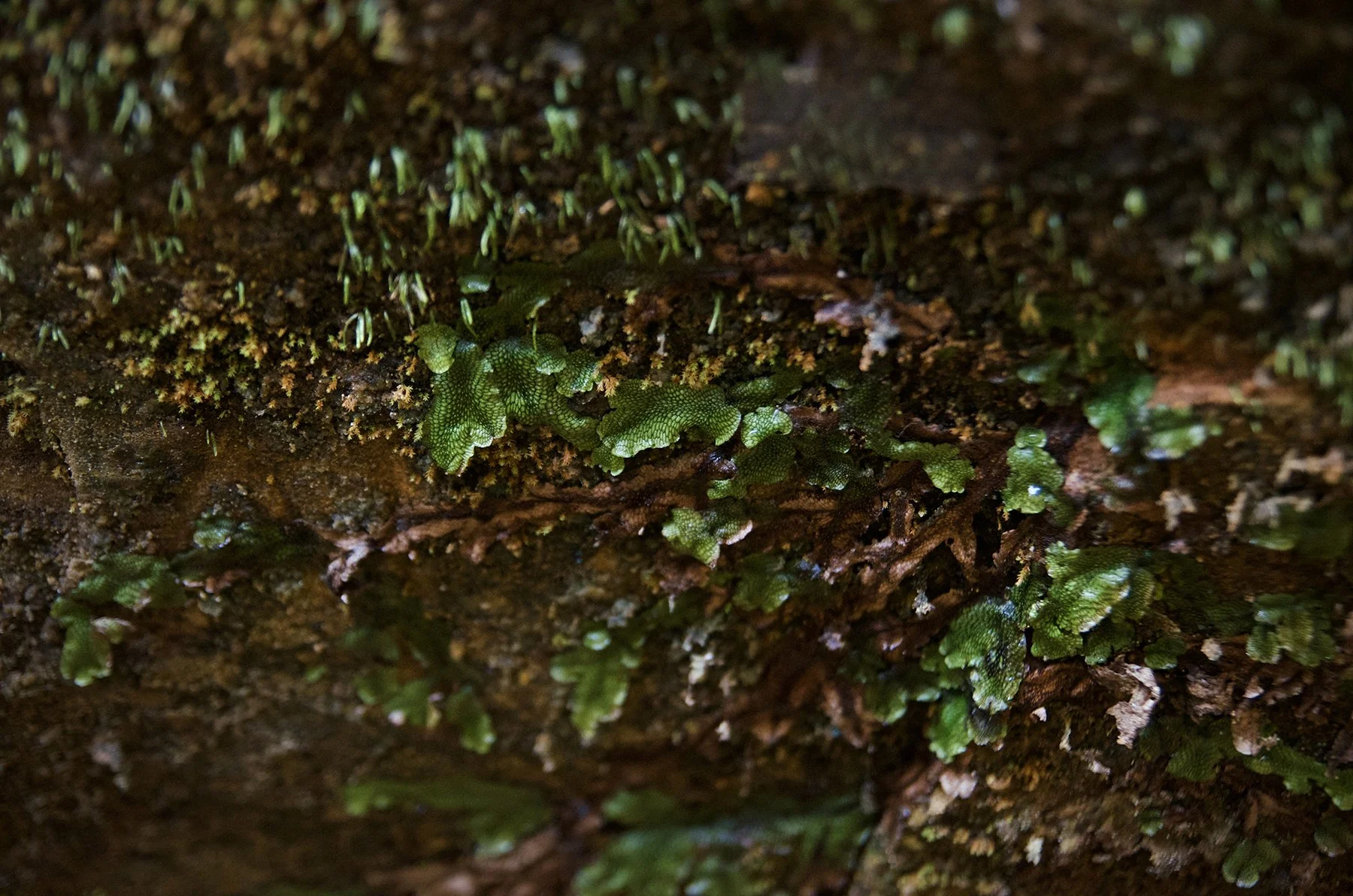
Great Scented Liverwort (Conocephalum conicum) and moss on a rock wall of Ash Cave.
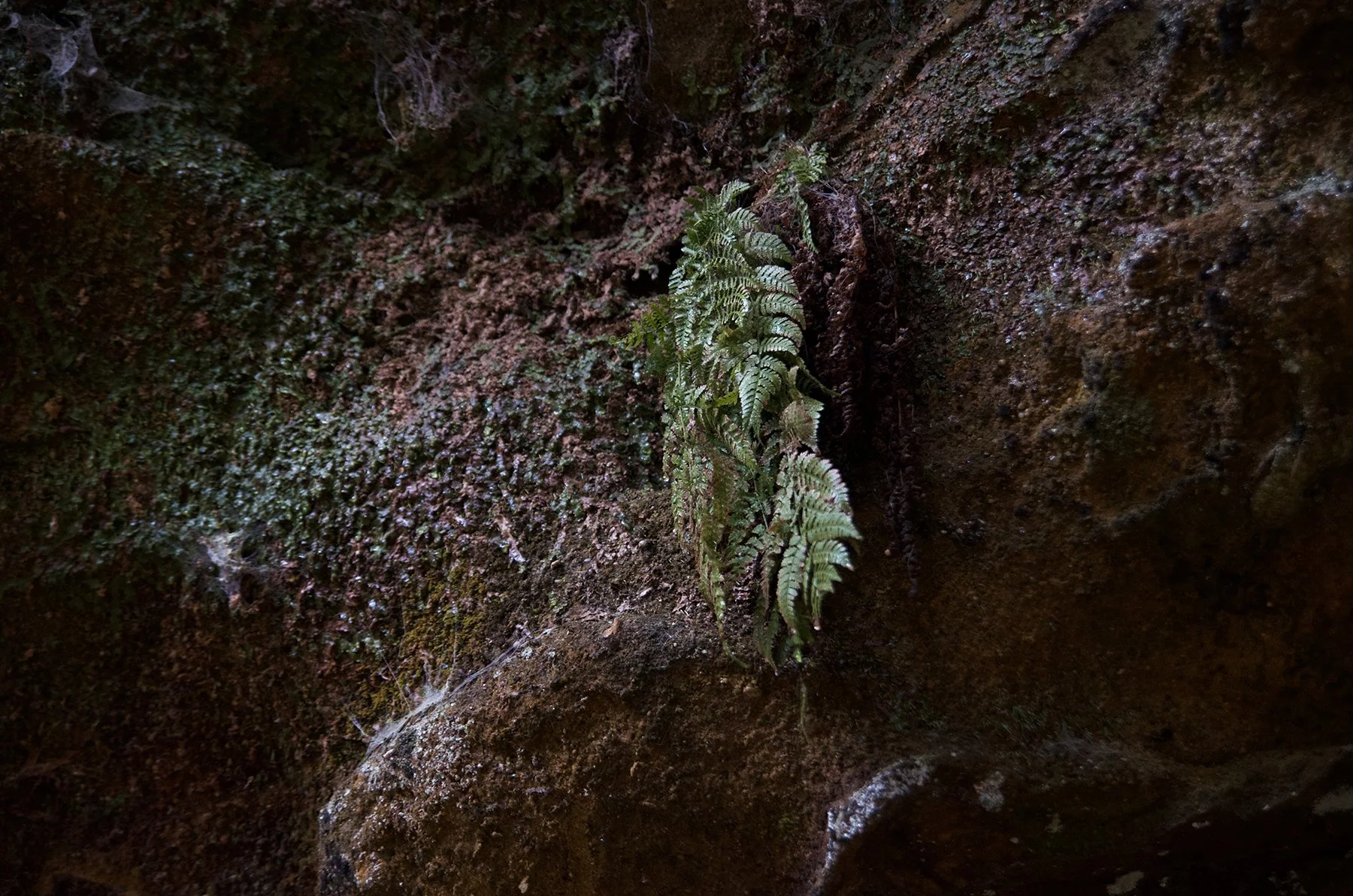
Marginal Wood Fern (Dryopteris marginalis) growing out of a rock wall of Ash Cave.
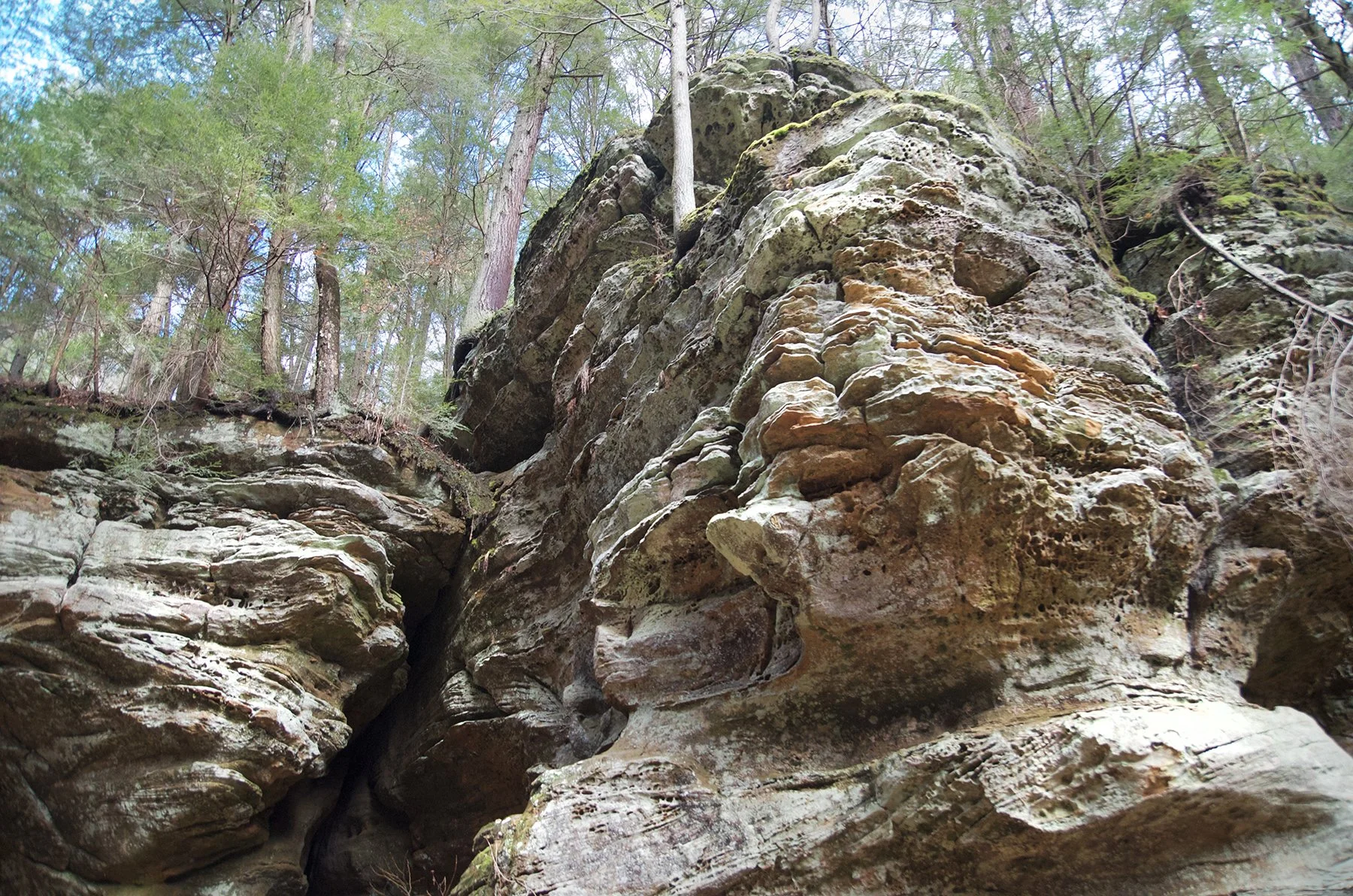
The Black Hand Sandstone at Ash Cave is approximately 355 million years old from the Early Mississippian age. The darker area may be an example of a geological joint.
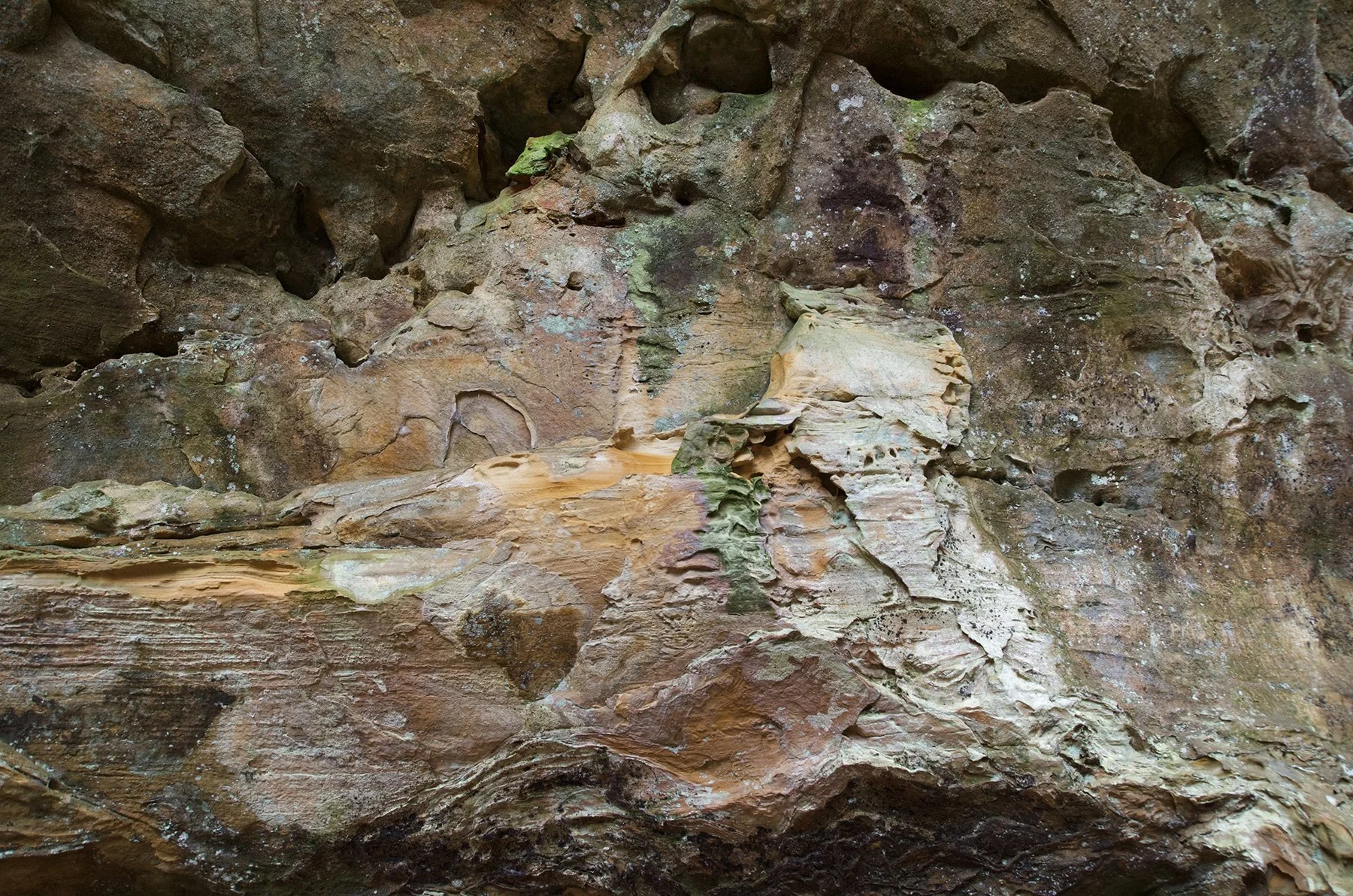
A colorful section of Black Hand Sandstone at Ash Cave.
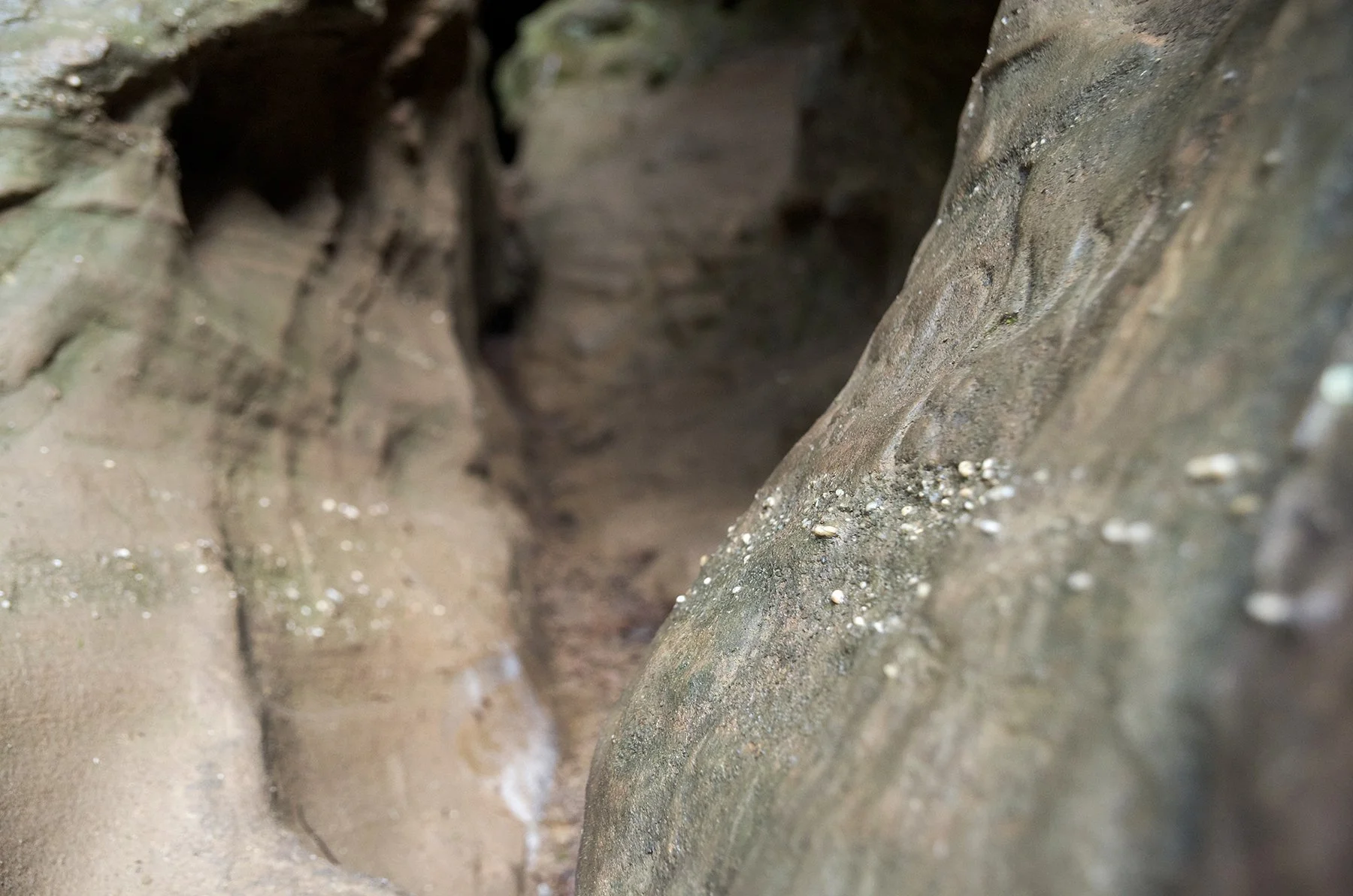
Black Hand Sandstone pebbles at Ash Cave. Small, rounded pebbles of quartz with a mineral hardness of 7.
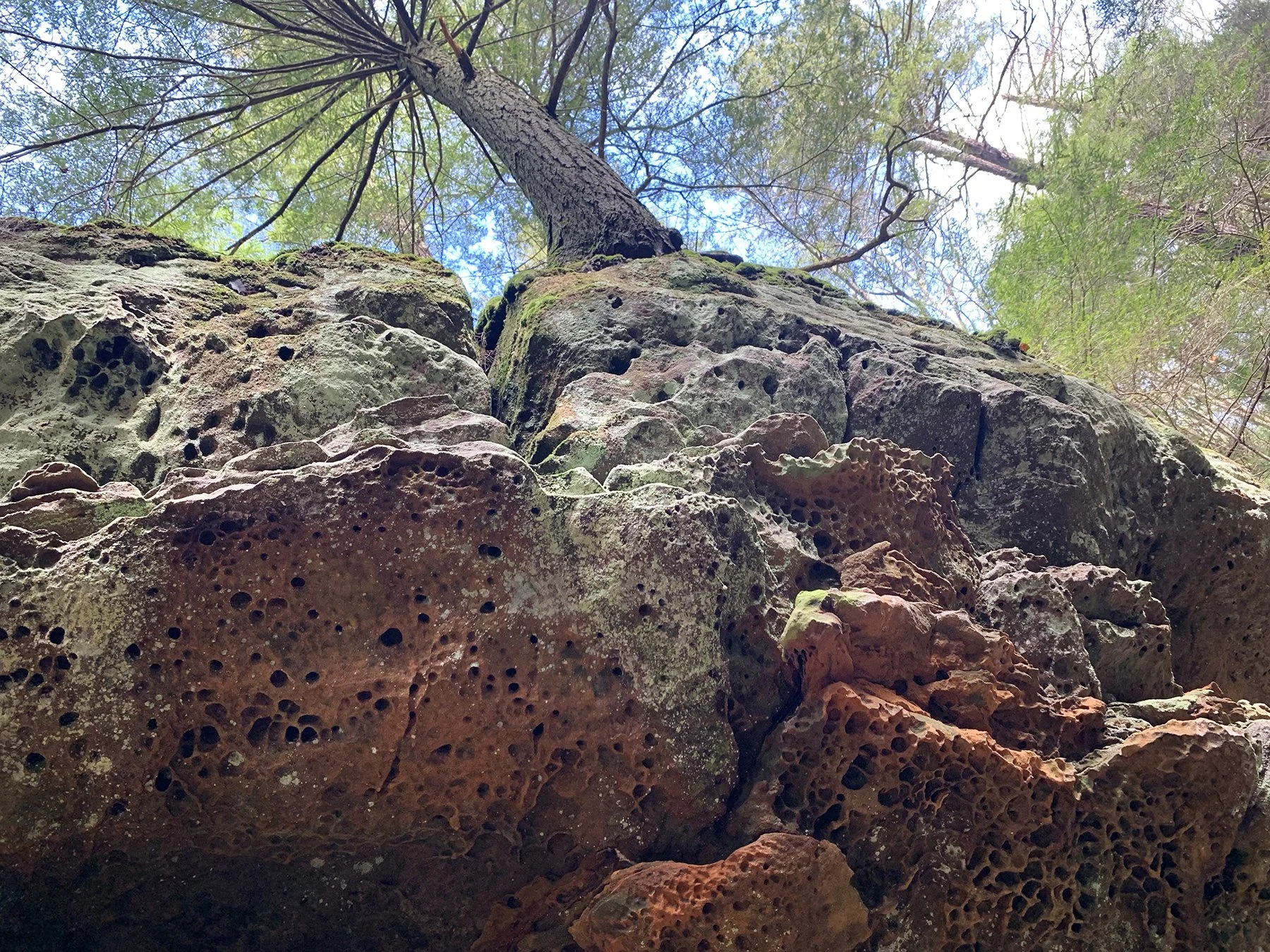
Black Hand Sandstone at Ash Cave.
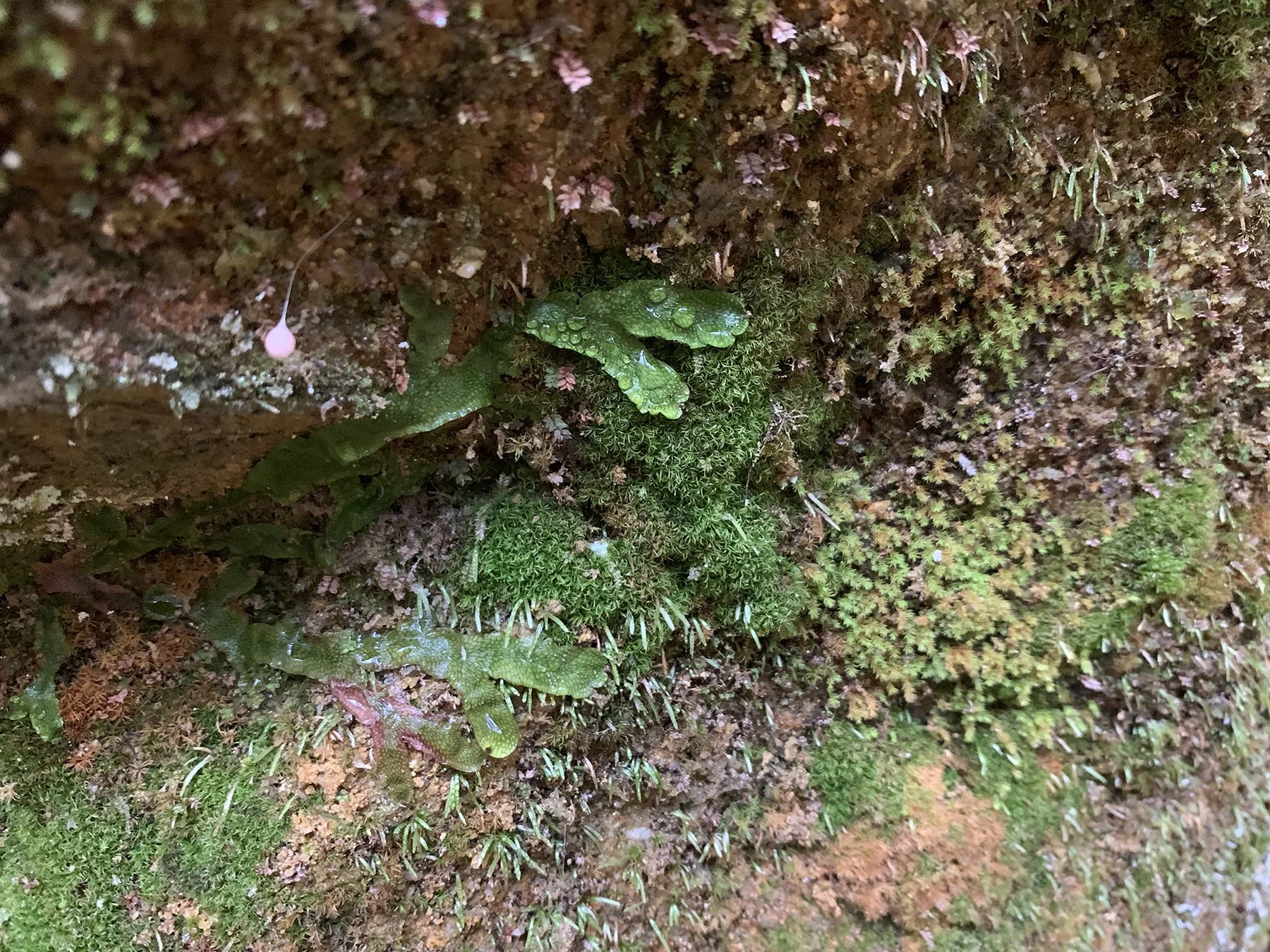
Great Scented Liverwort (Conocephalum conicum) and moss on a rock wall of Ash Cave. Sword moss (Bryoxiphium norvegicum), a rare glacial relict species, can be seen throughout this image.
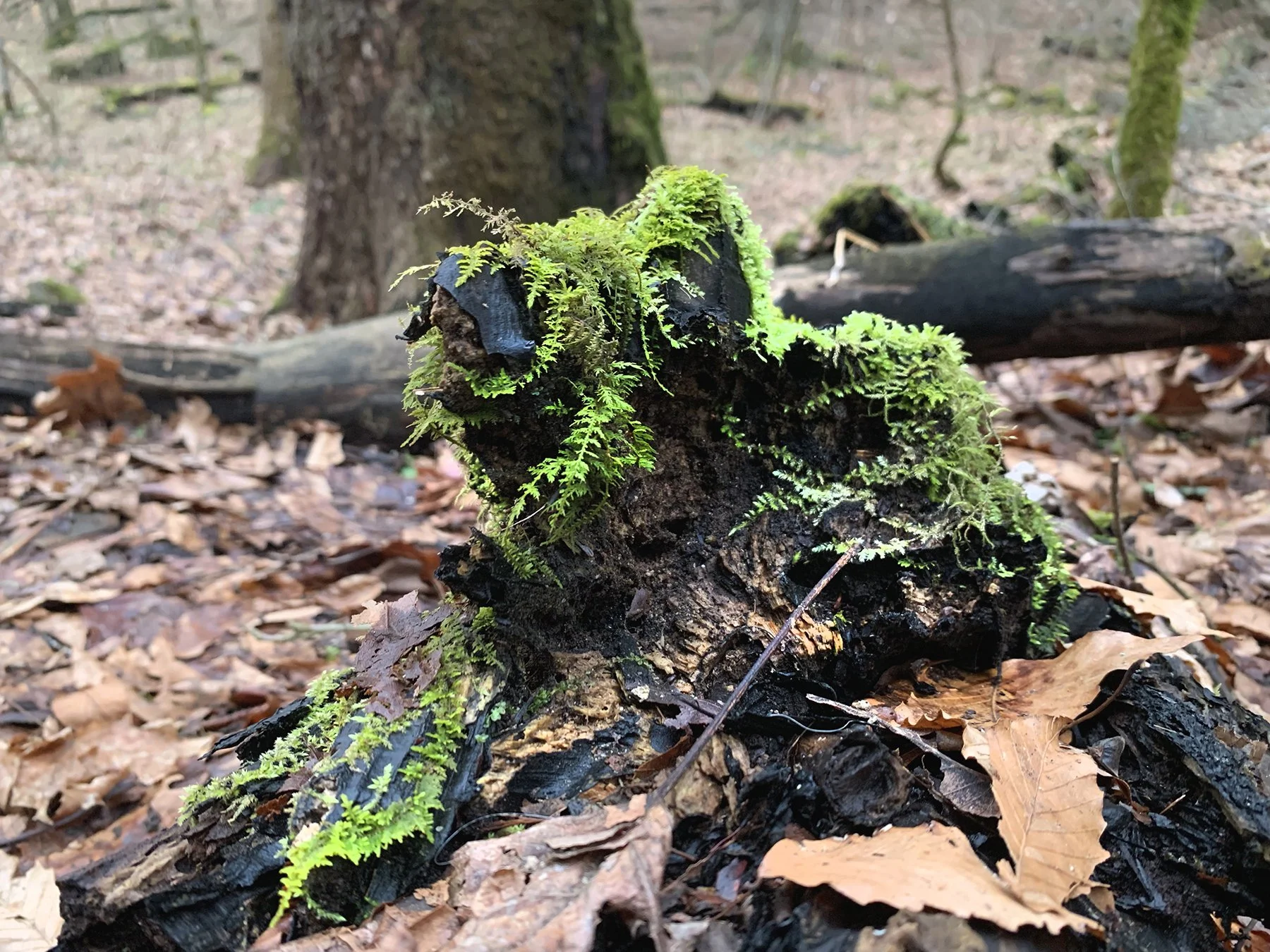
Delicate Fern Moss (Thuidium delicatulum) covering decaying log.
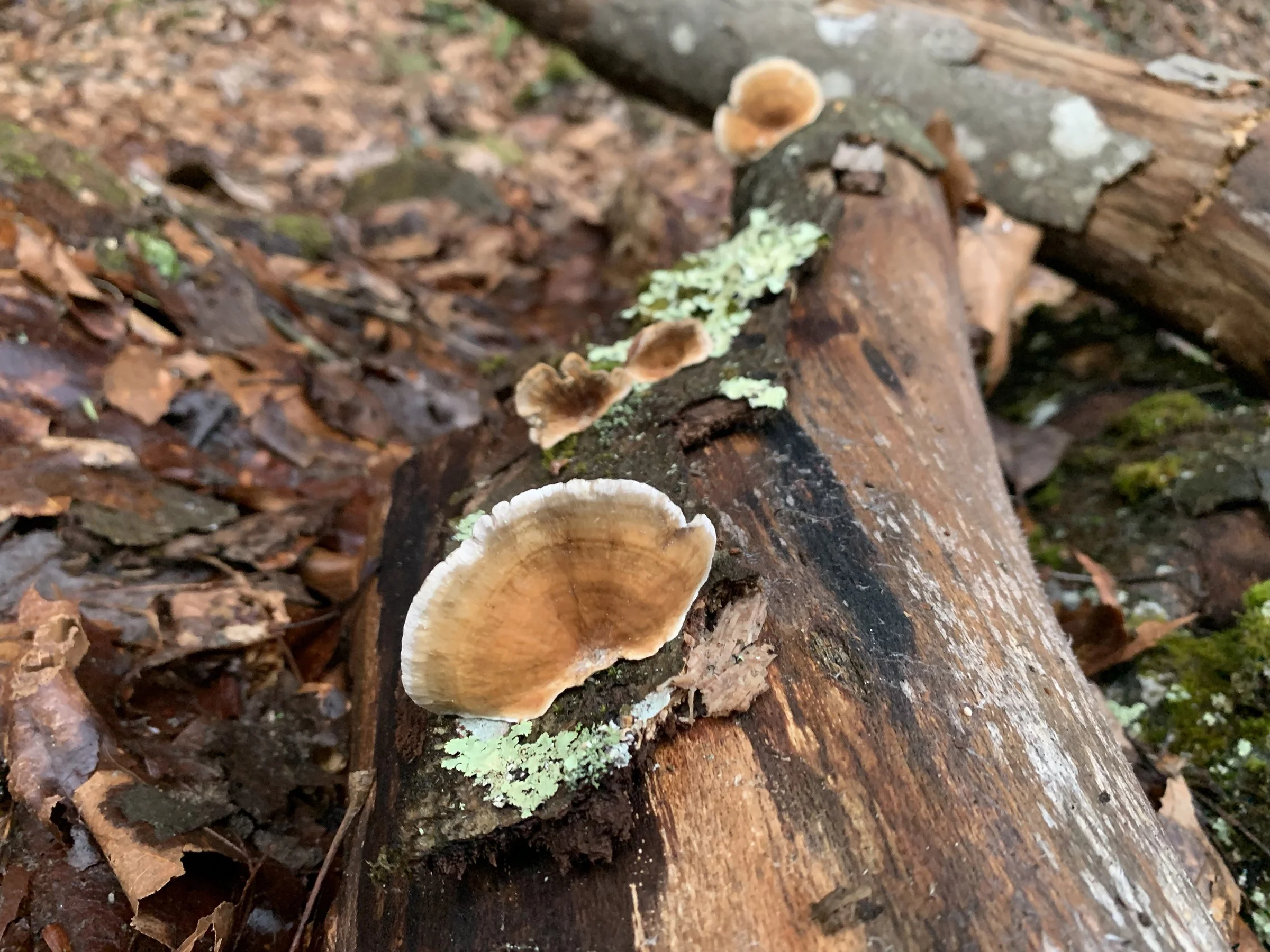
Fungi (Stereum)
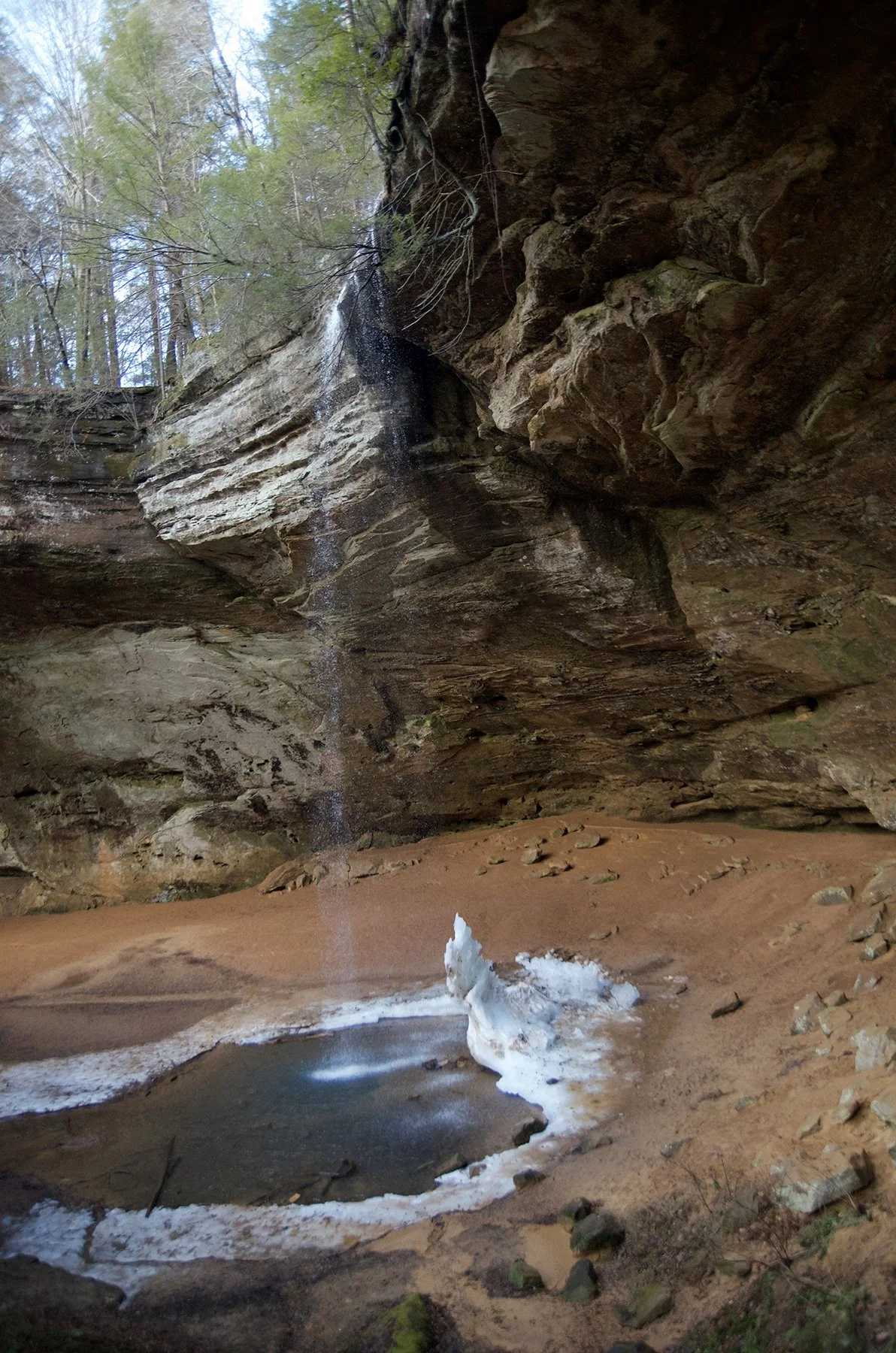
An ice stalagmite at the base of Ash Cave's waterfall.
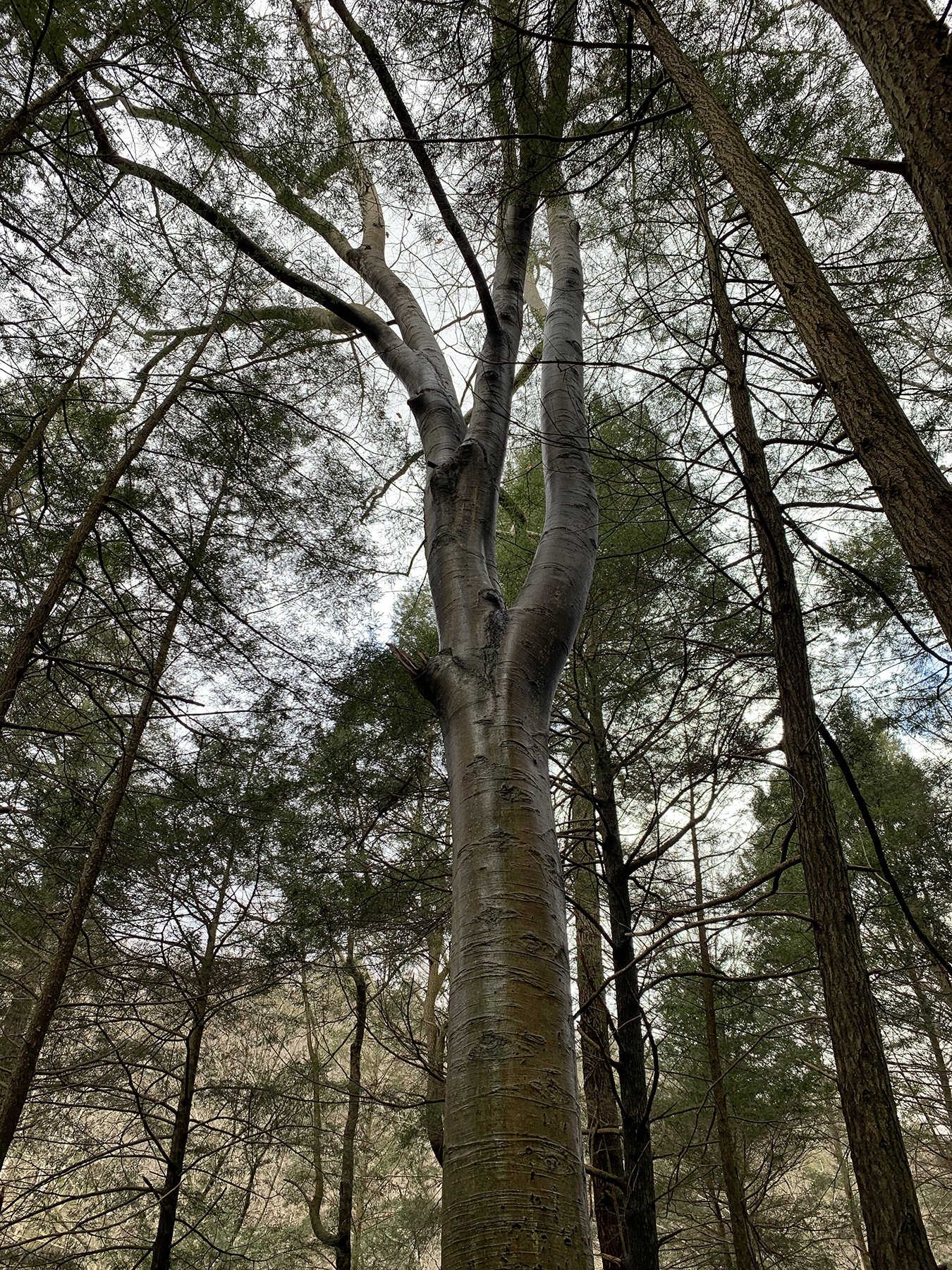
A large beech tree. Ancient trees grow within this forest. This may be one of them. For beech trees, old-growth is 175-250+ years and they can live as long as 400 years.
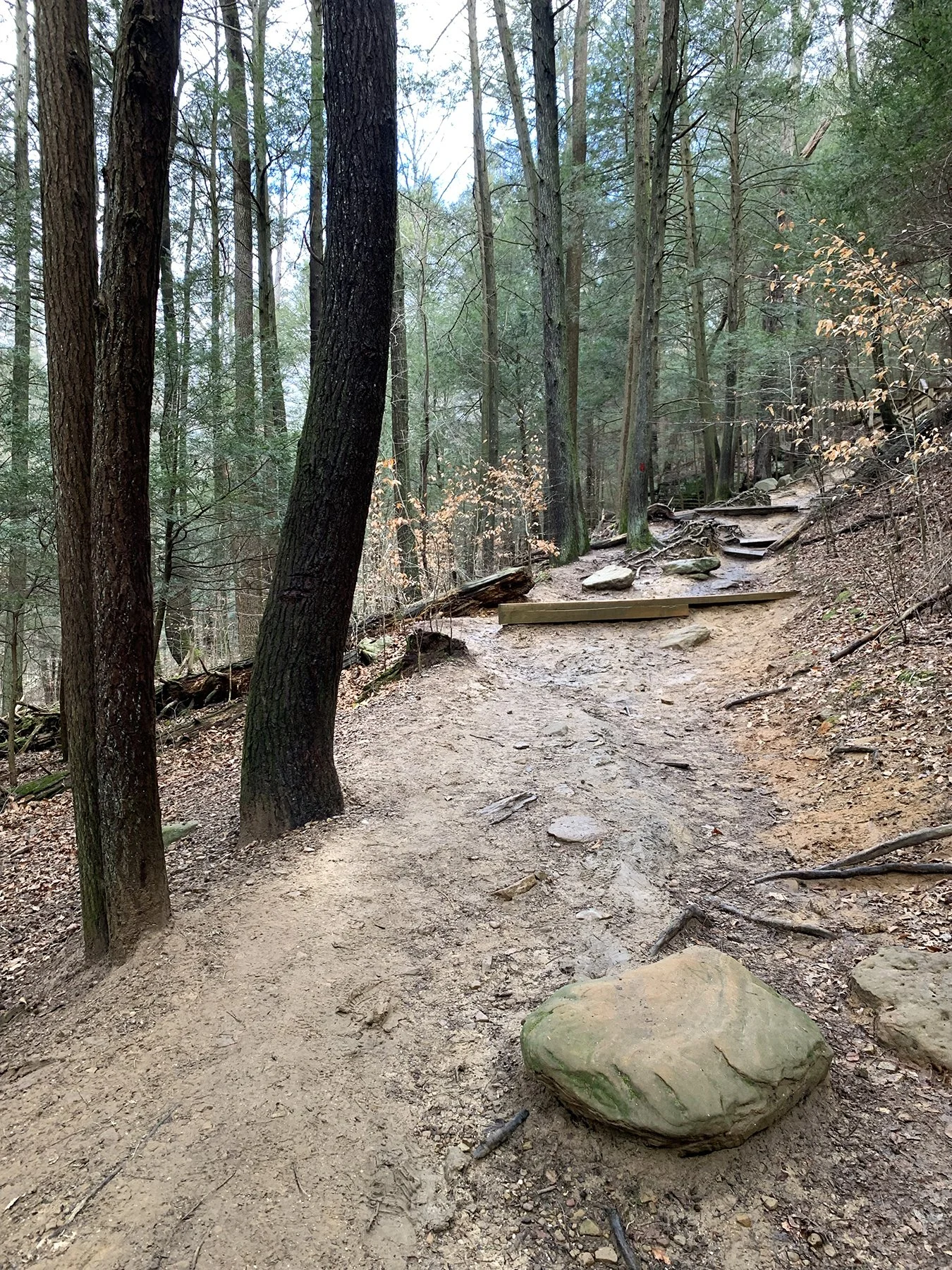
The upper east trail of Ash Cave.
Ohio, Hocking Hills State Park — Cedar Falls
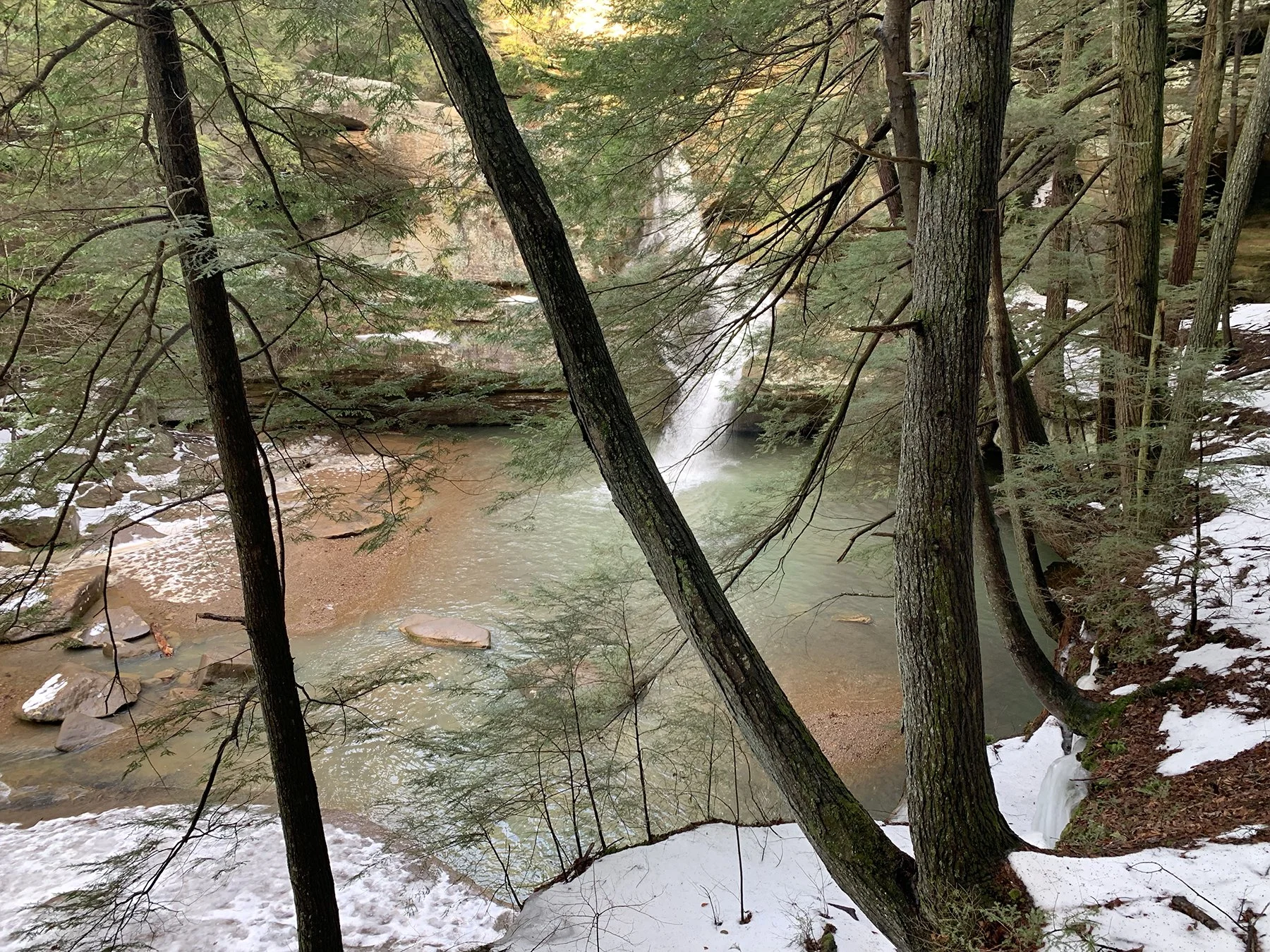
Cedar Falls
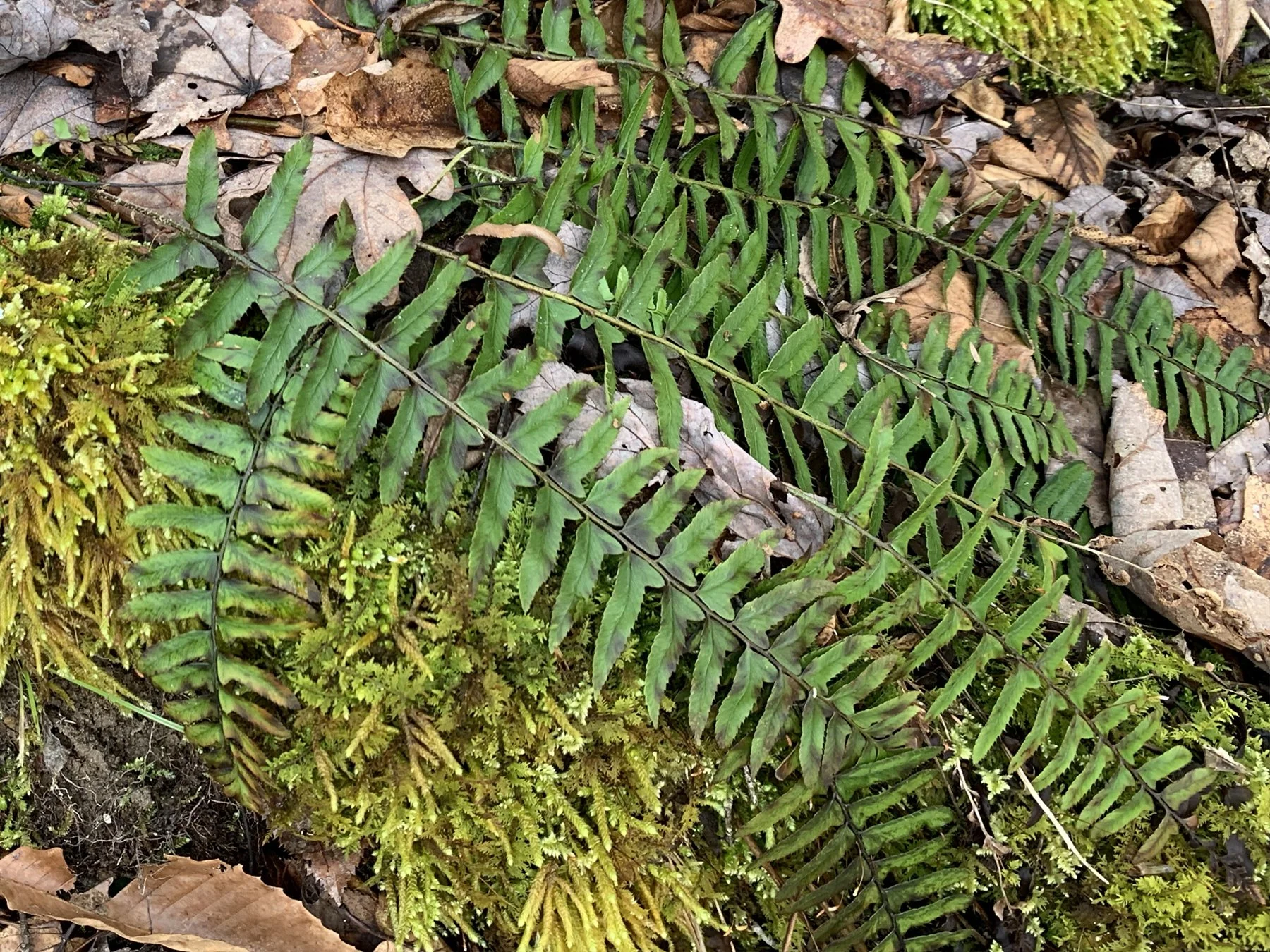
Christmas Fern (Polystichum acrostichoides)
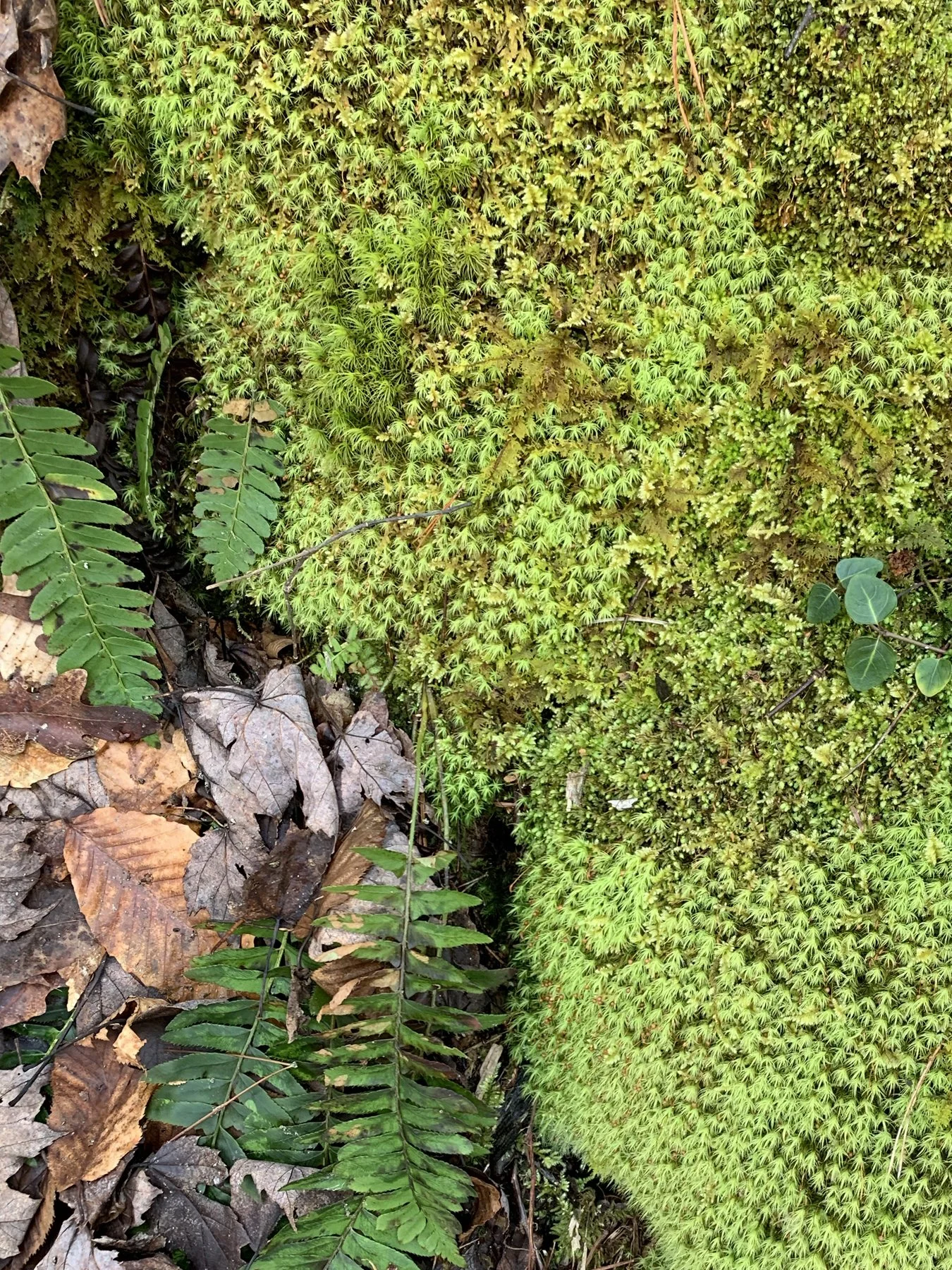
Christmas Fern (Polystichum acrostichoides) with a bit of Partridgeberry (Mitchella repens) and various mosses including Apple Moss (Bartramia pomiformis) and Smooth Hook Moss (Leucodon julaceus)
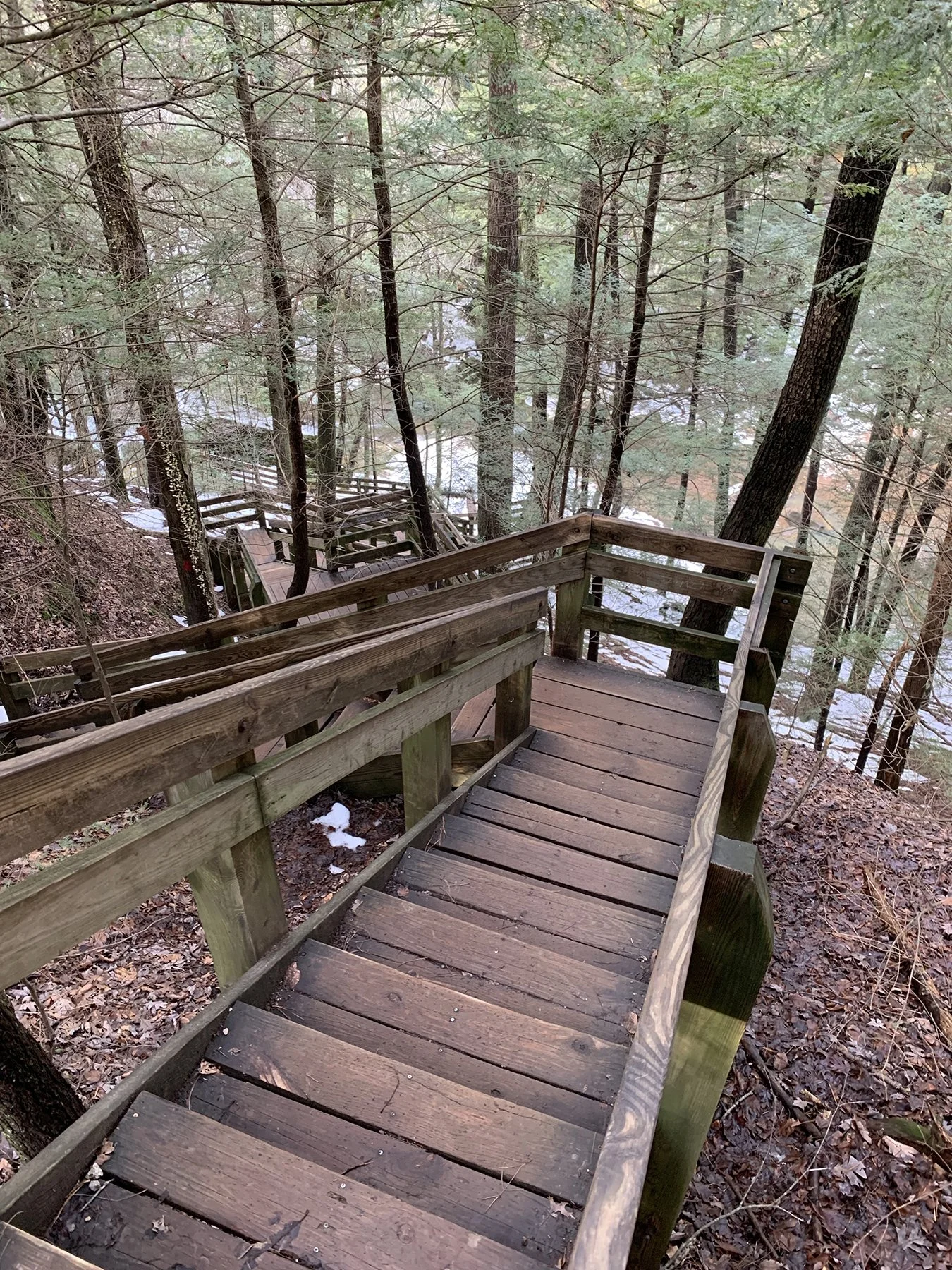
Stairs at Cedar Falls
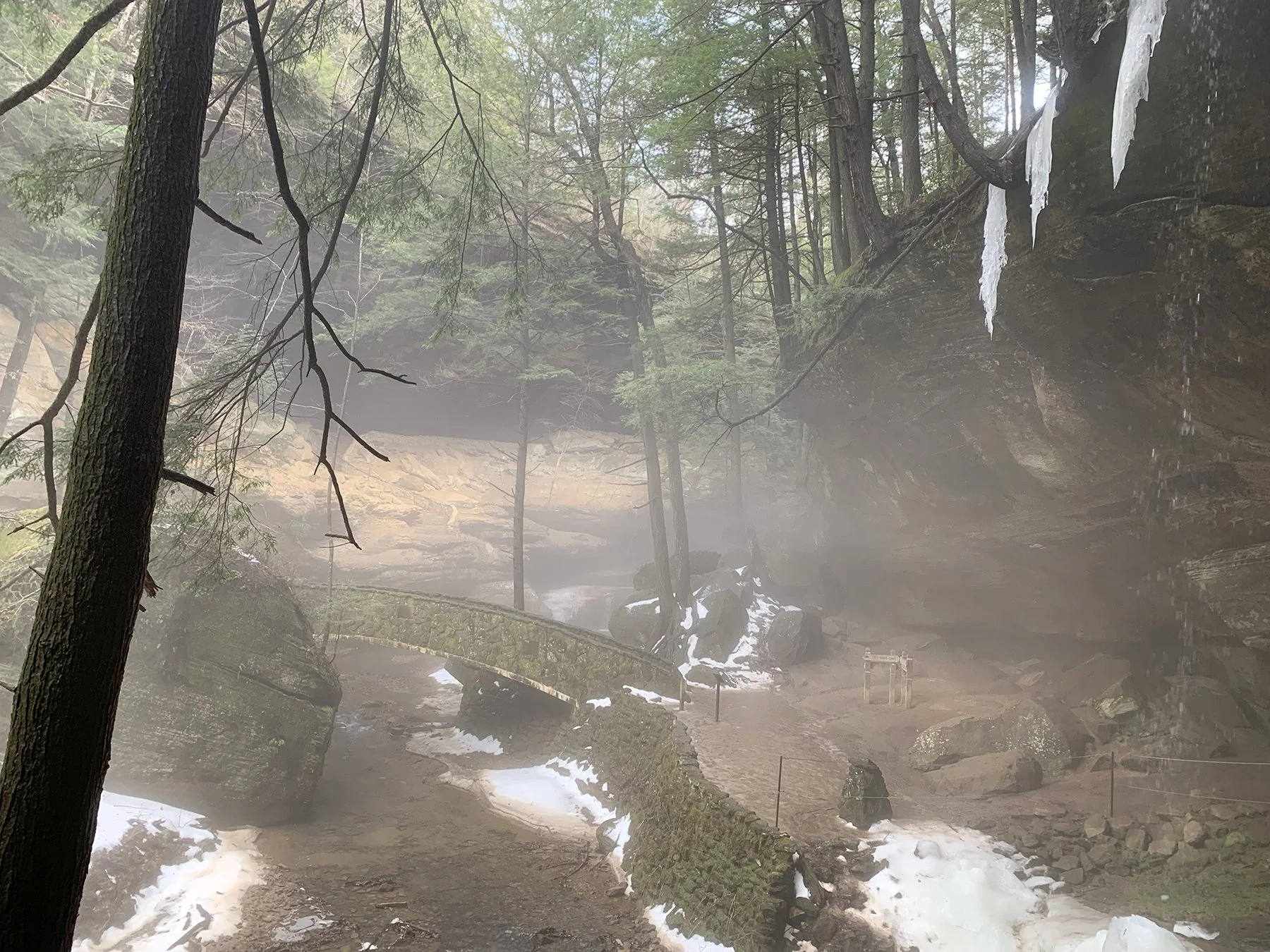
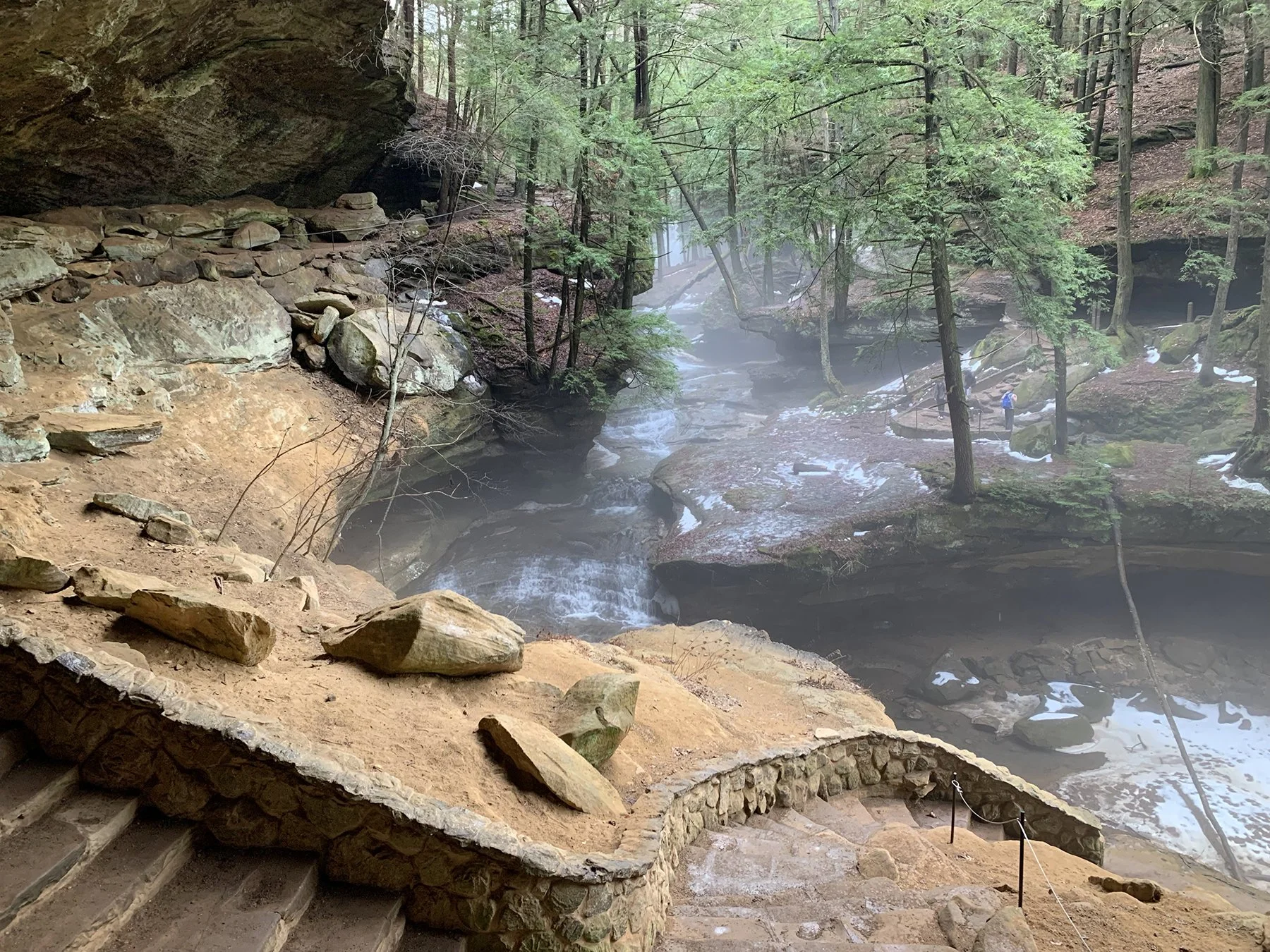
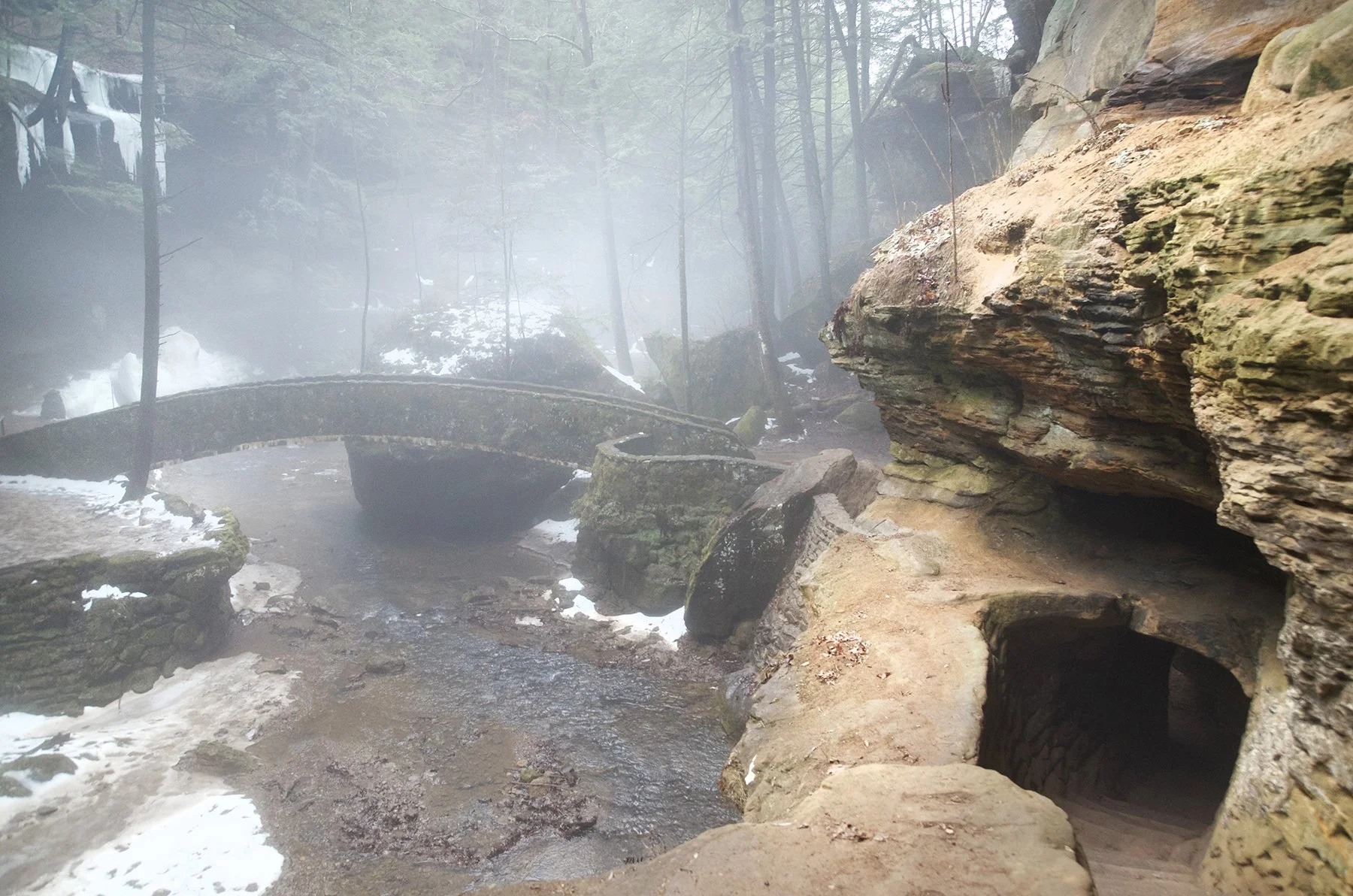
Ohio, Hocking Hills State Park — Old Man’s Cave
And the trail leading to it.
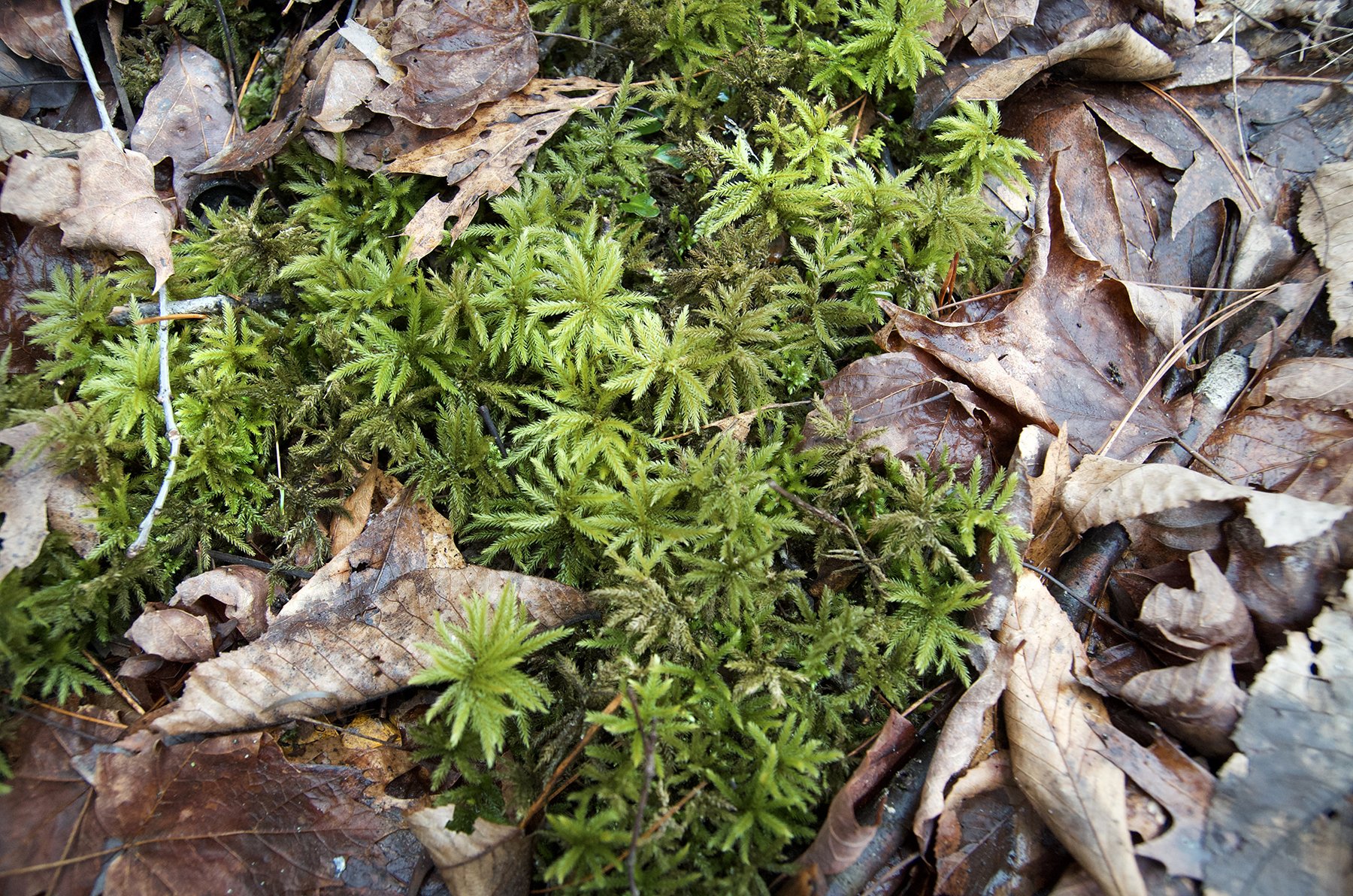
American Tree Moss (Climacium americanum)
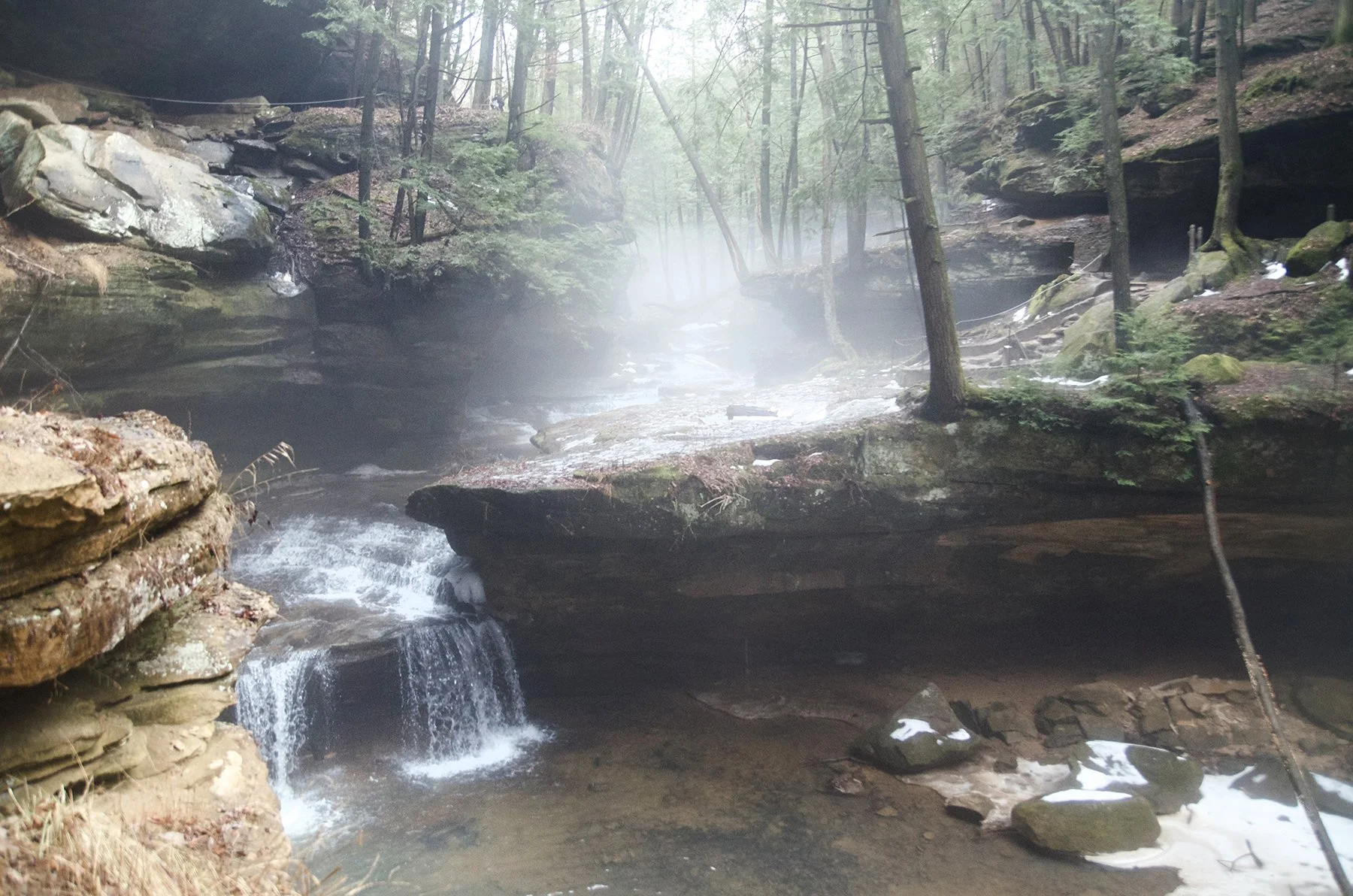
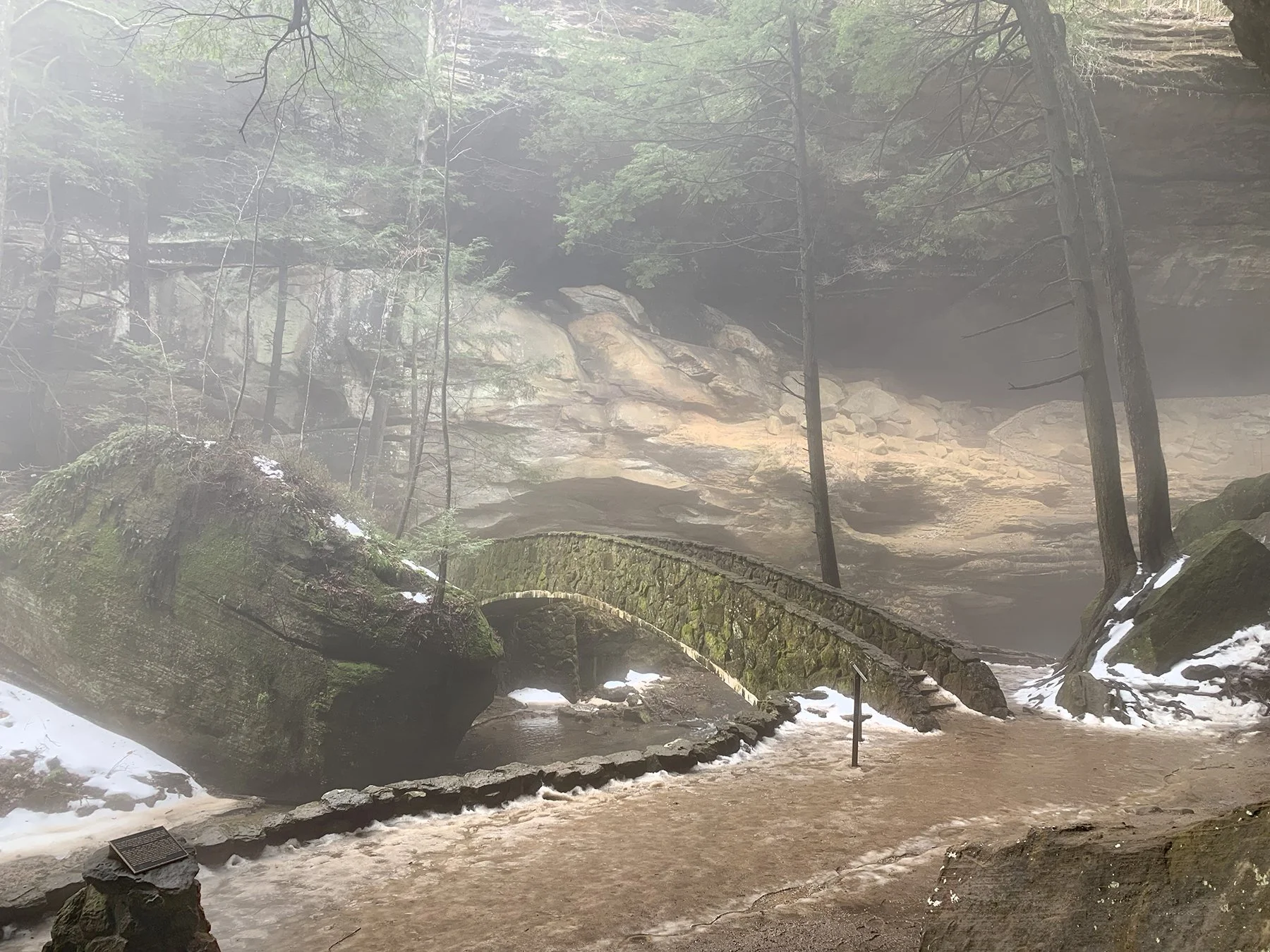
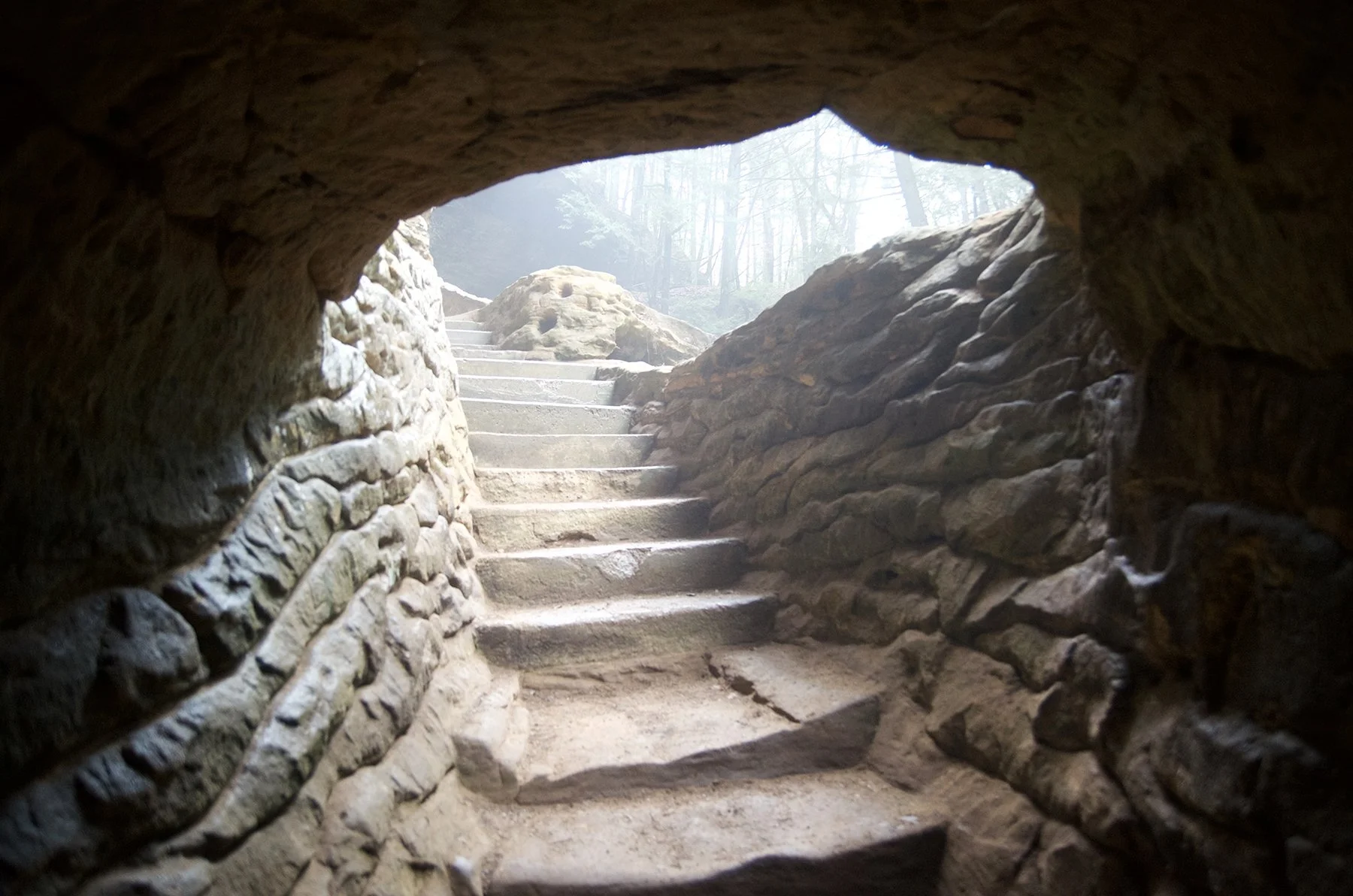
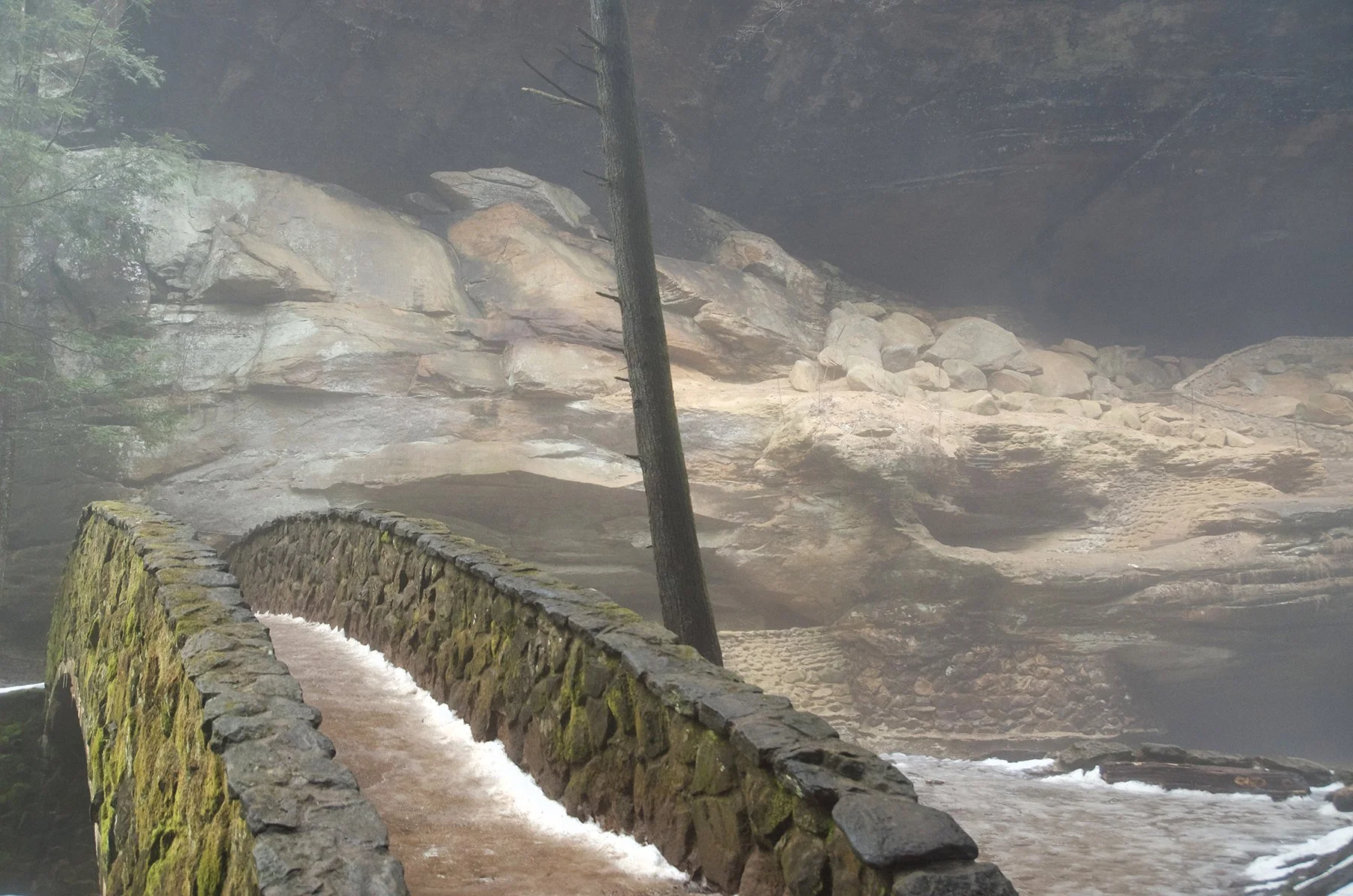
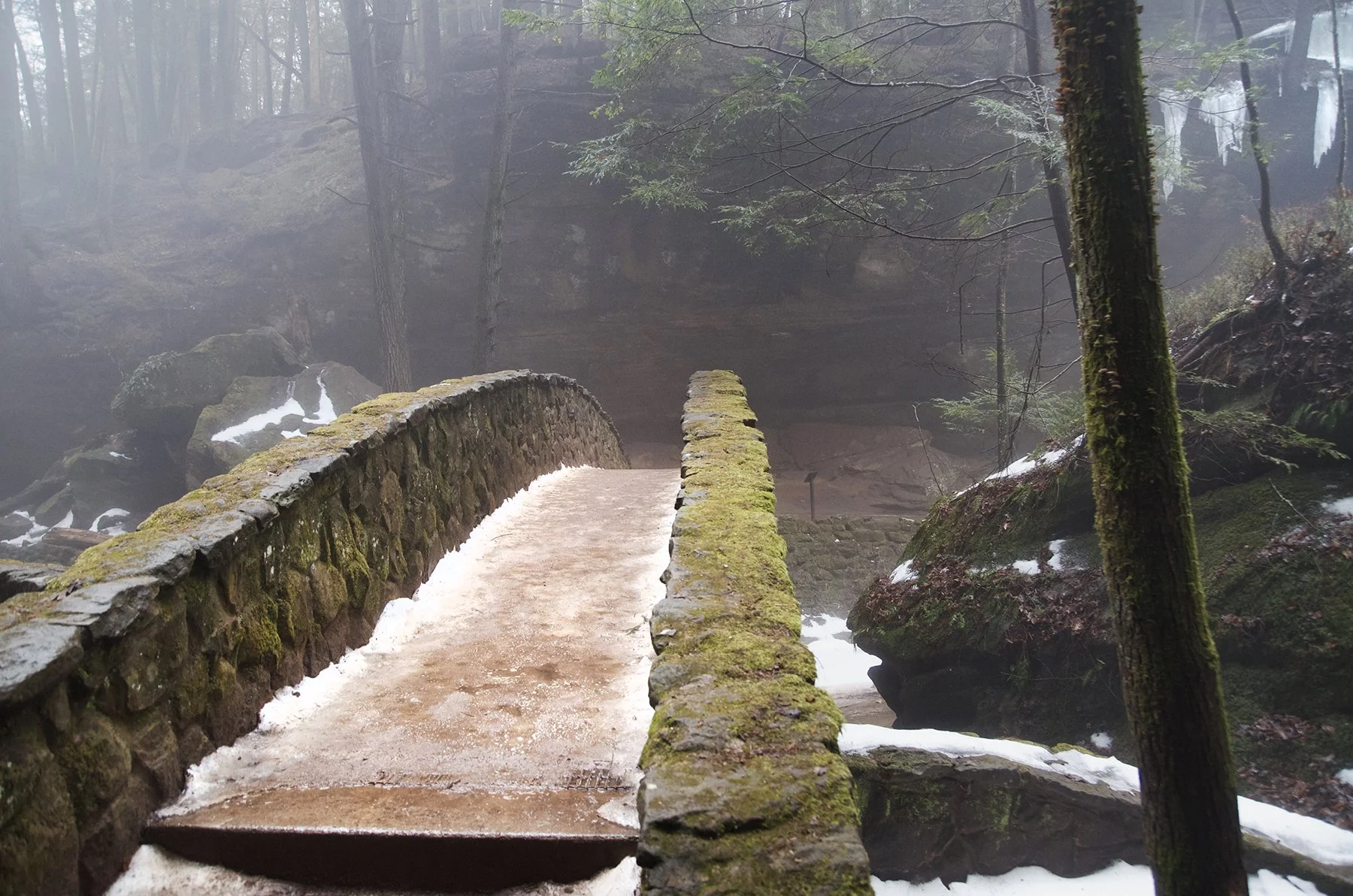
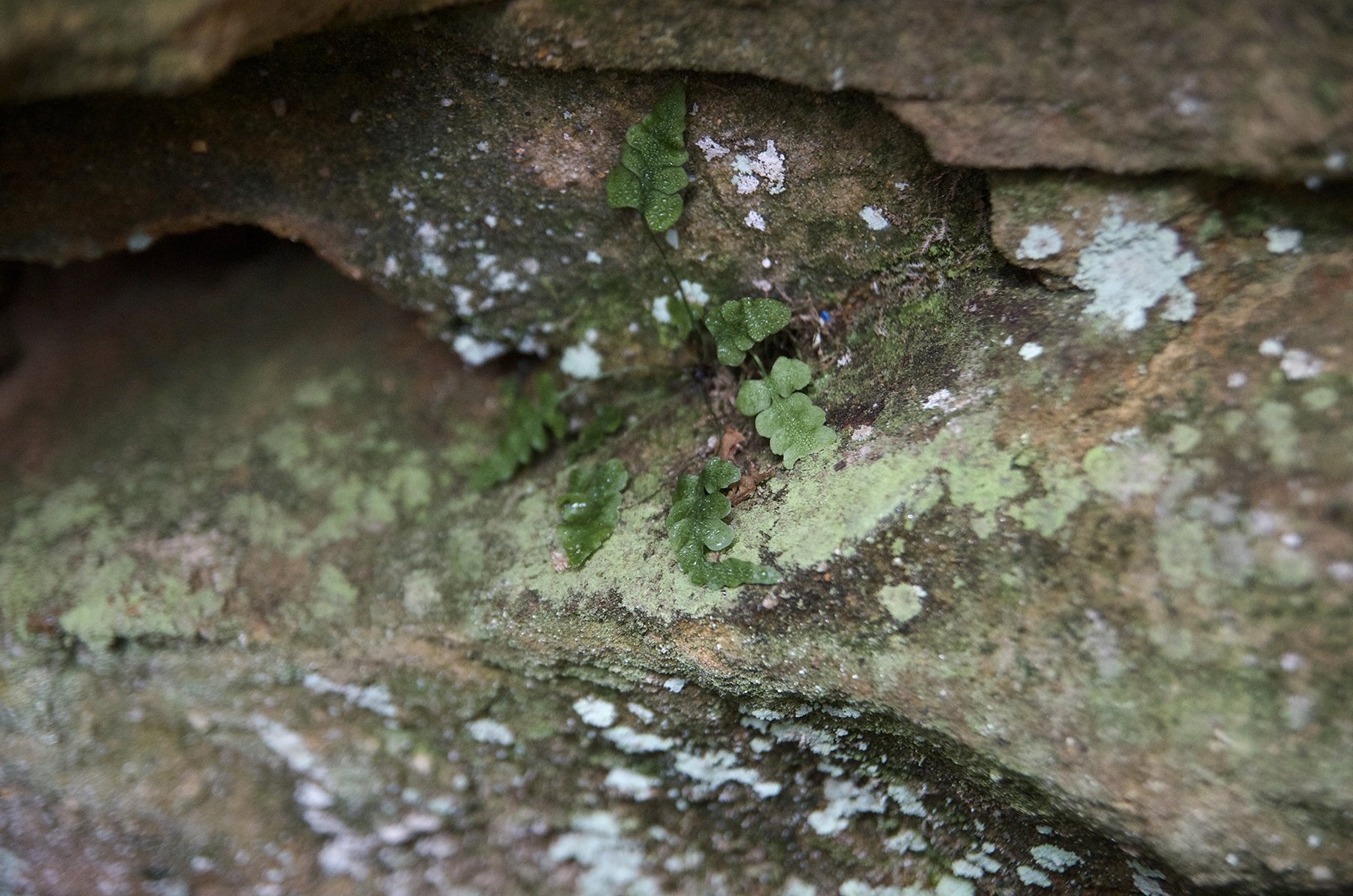
Lobed Spleenwort (Asplenium pinnatifidum)
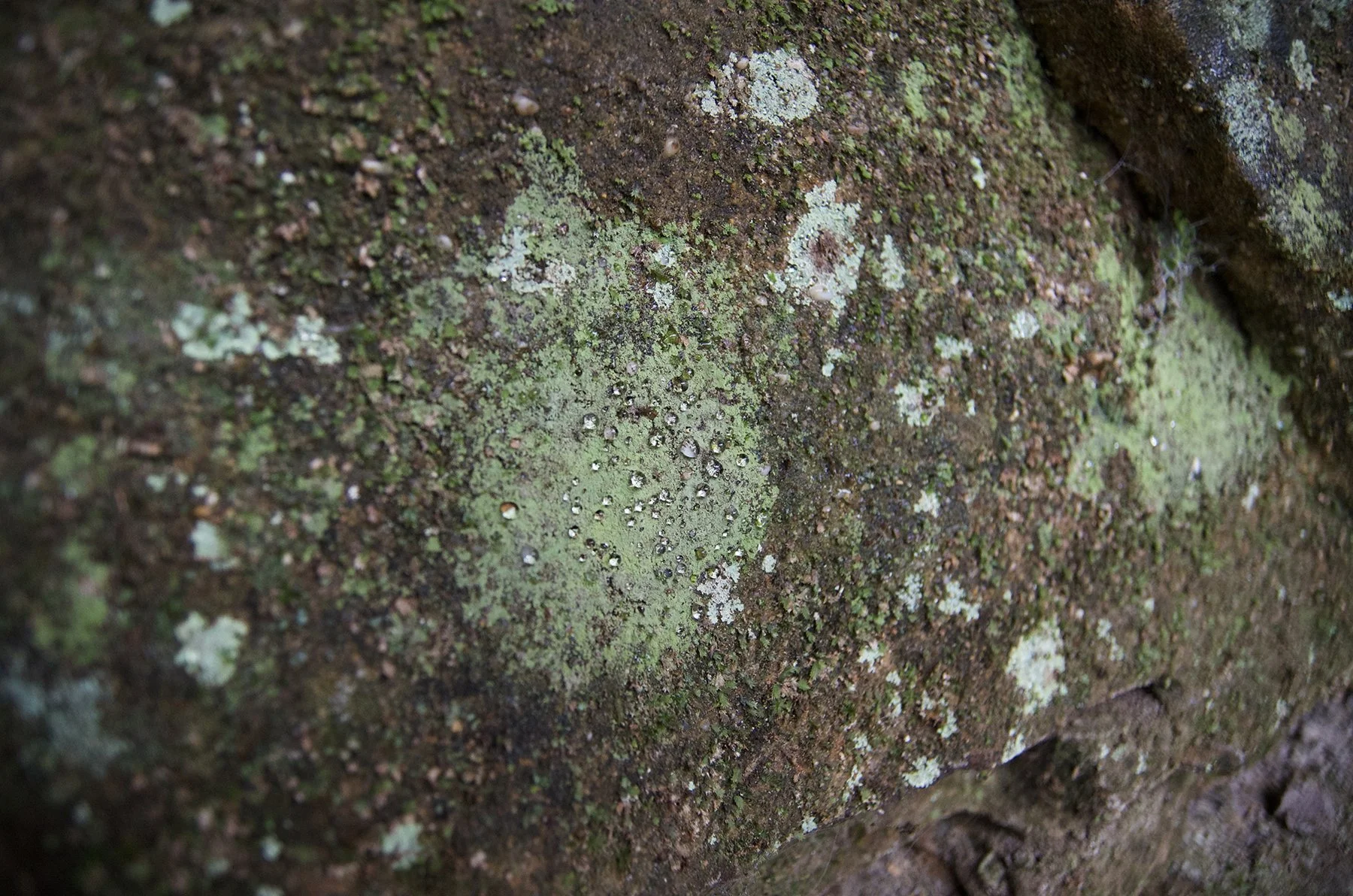
Dust Lichen (Lepraria incana)
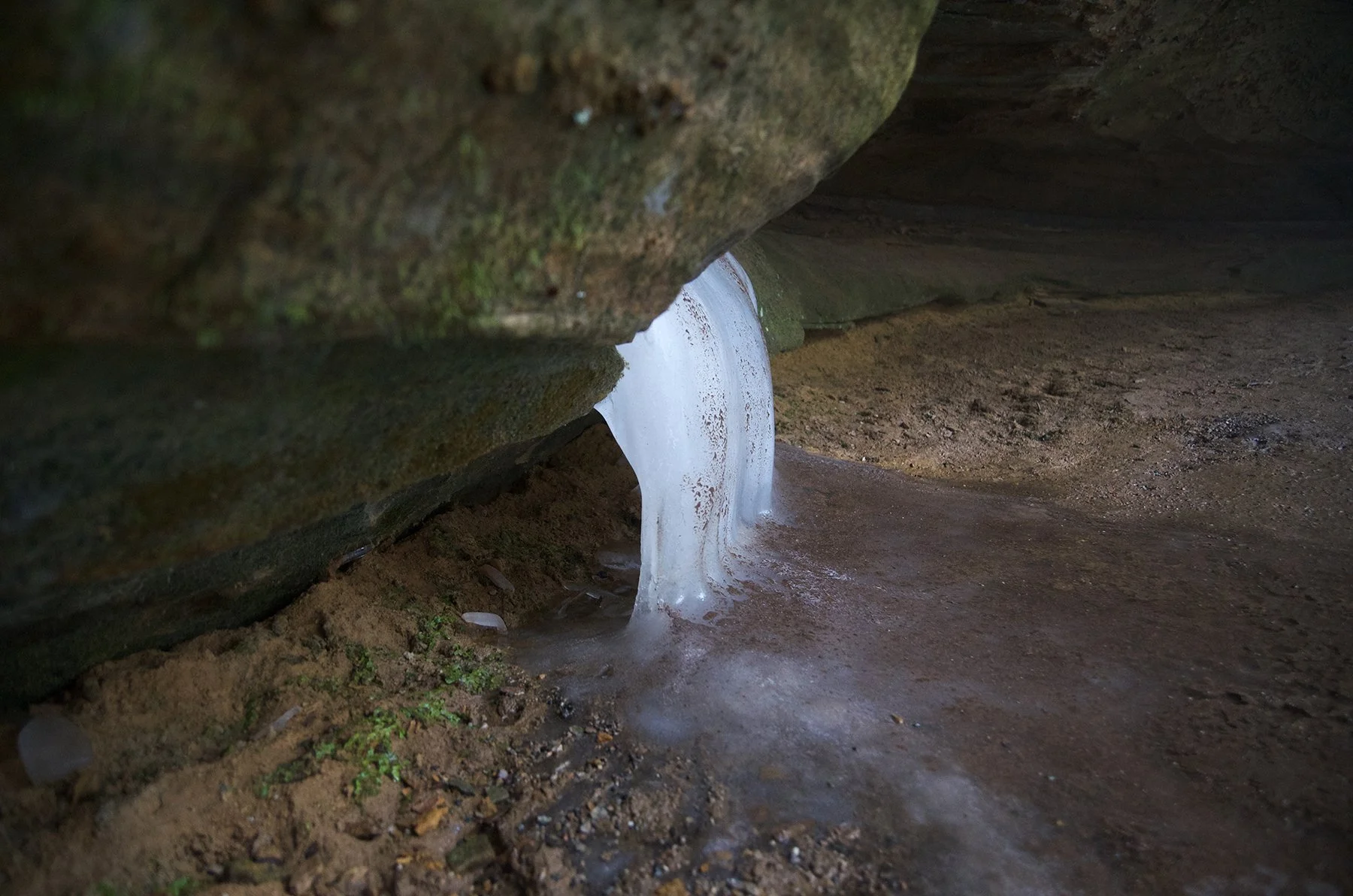
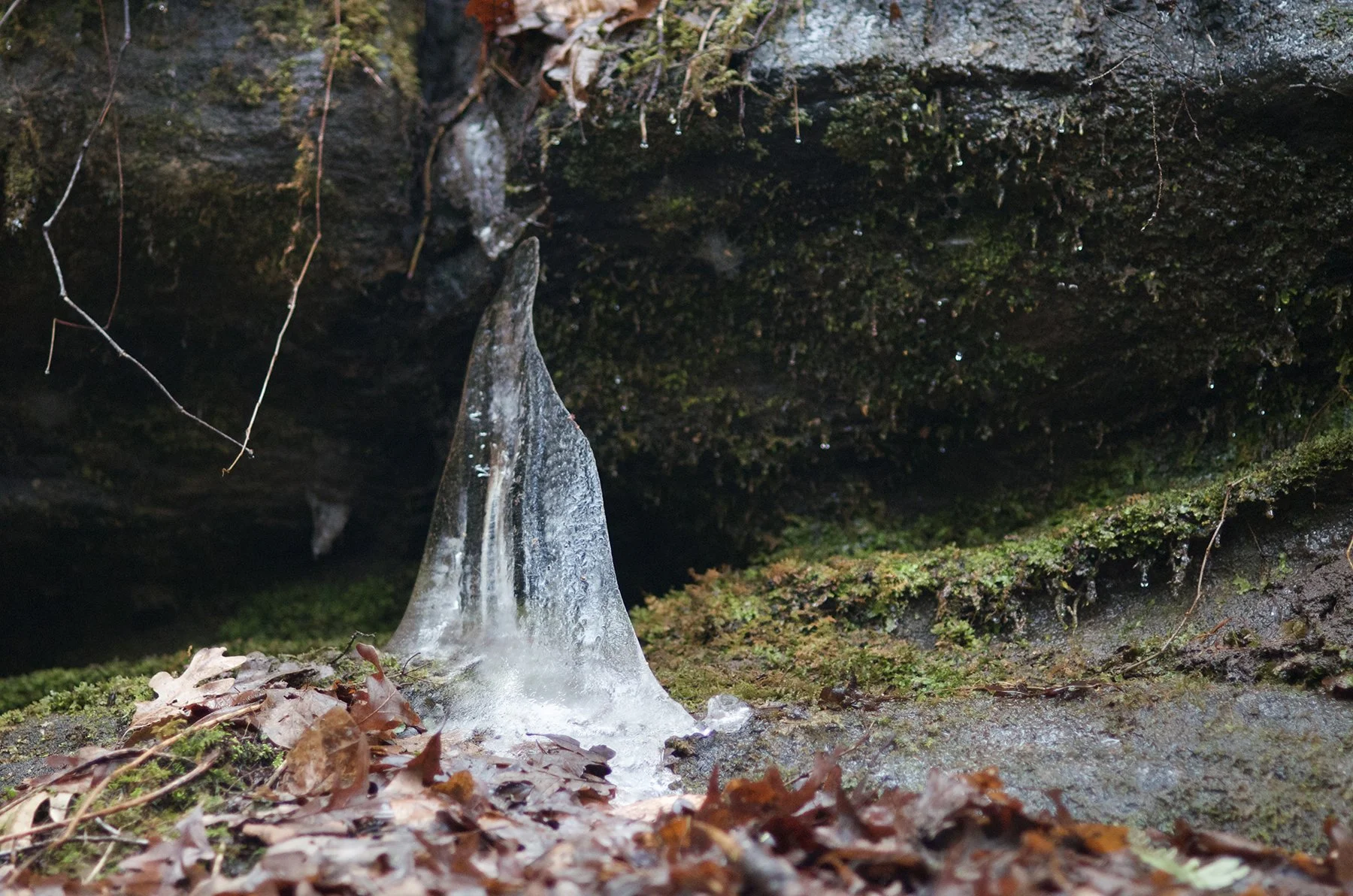
An ice stalagmite?
Ohio, Conkles Hollow State Natural Preserve
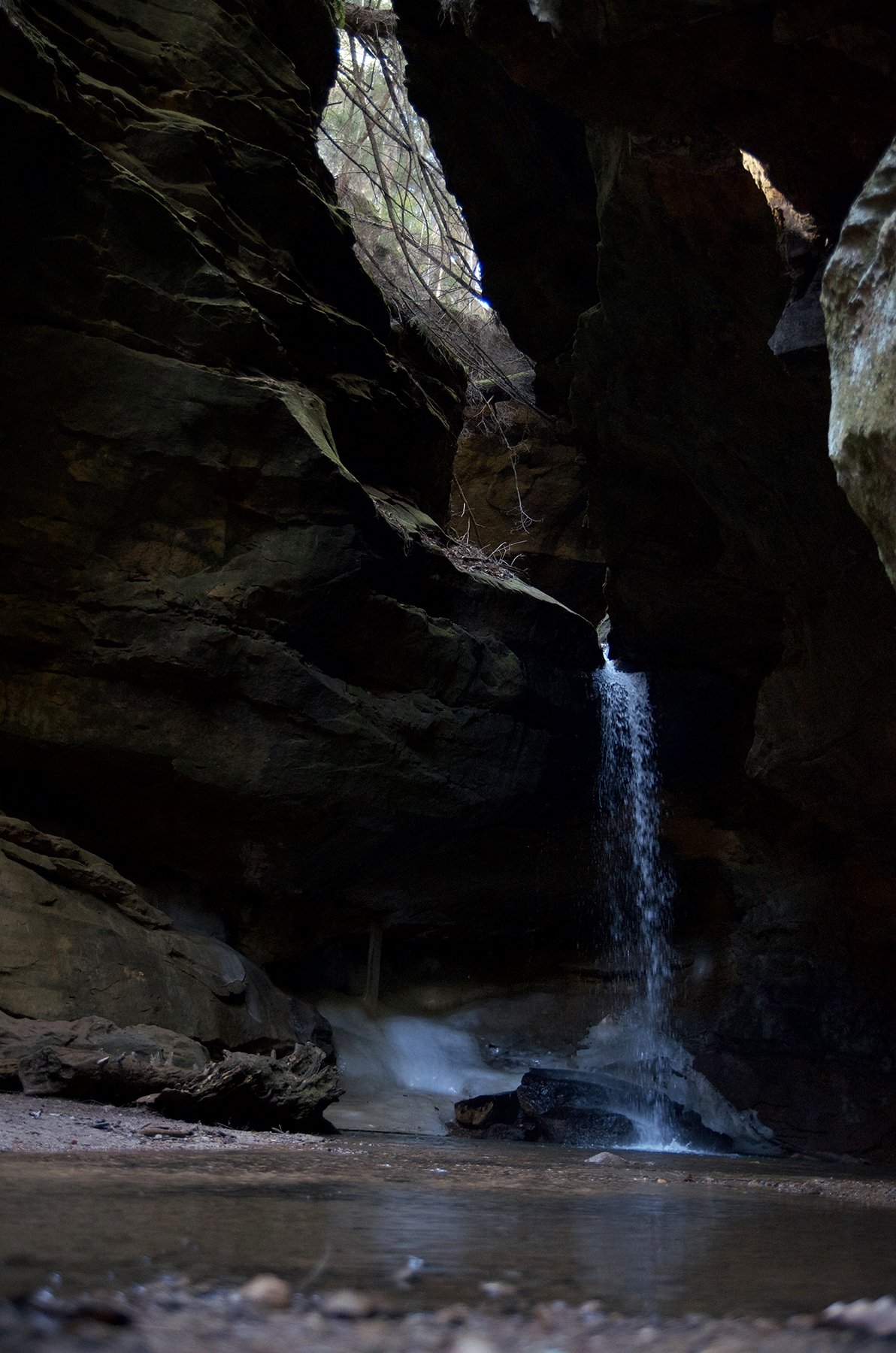
Wreckworth Falls
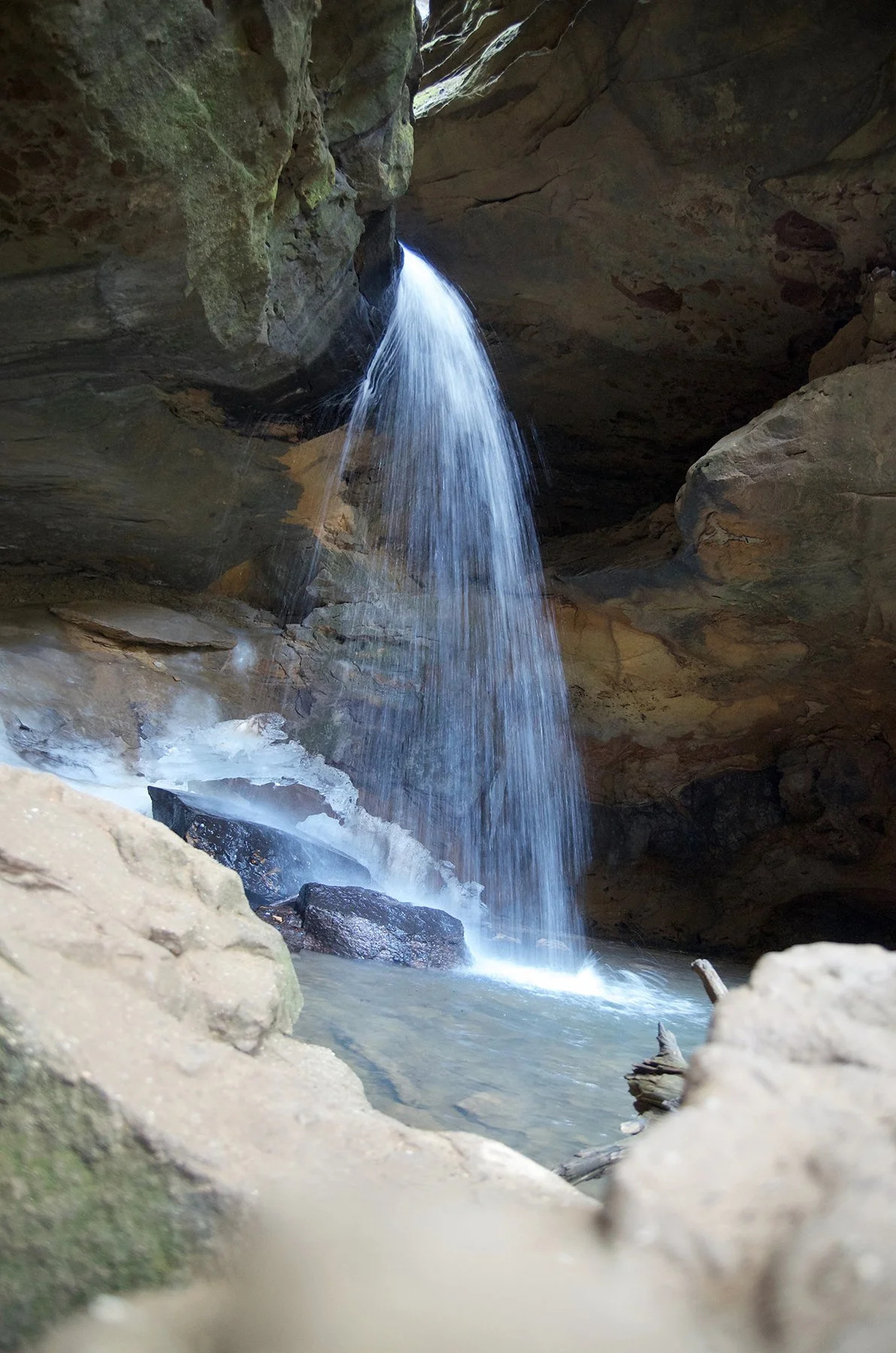
Wreckworth Falls
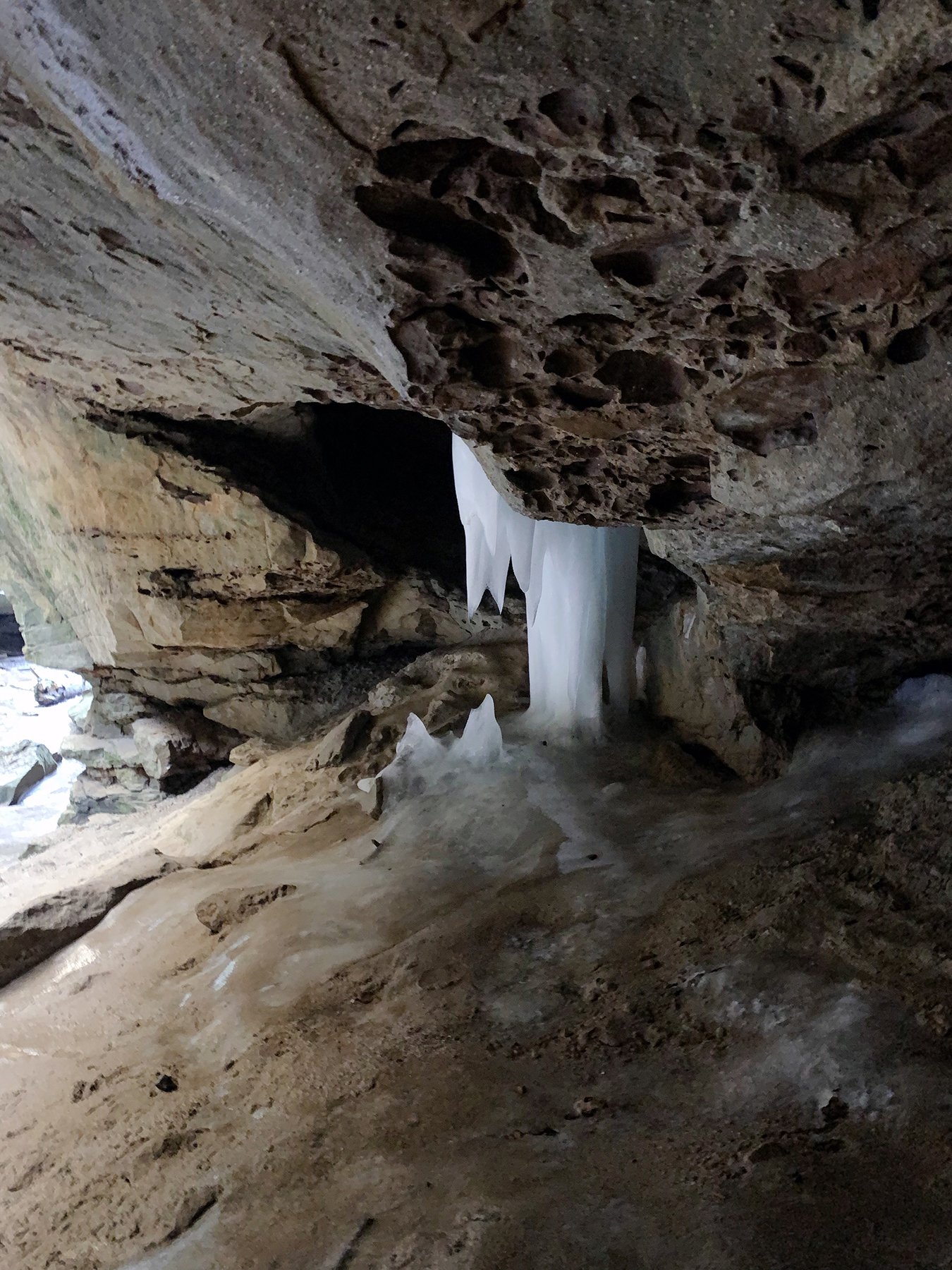
Ice formation, possibly from a seep, alongside two small ice stalagmites.
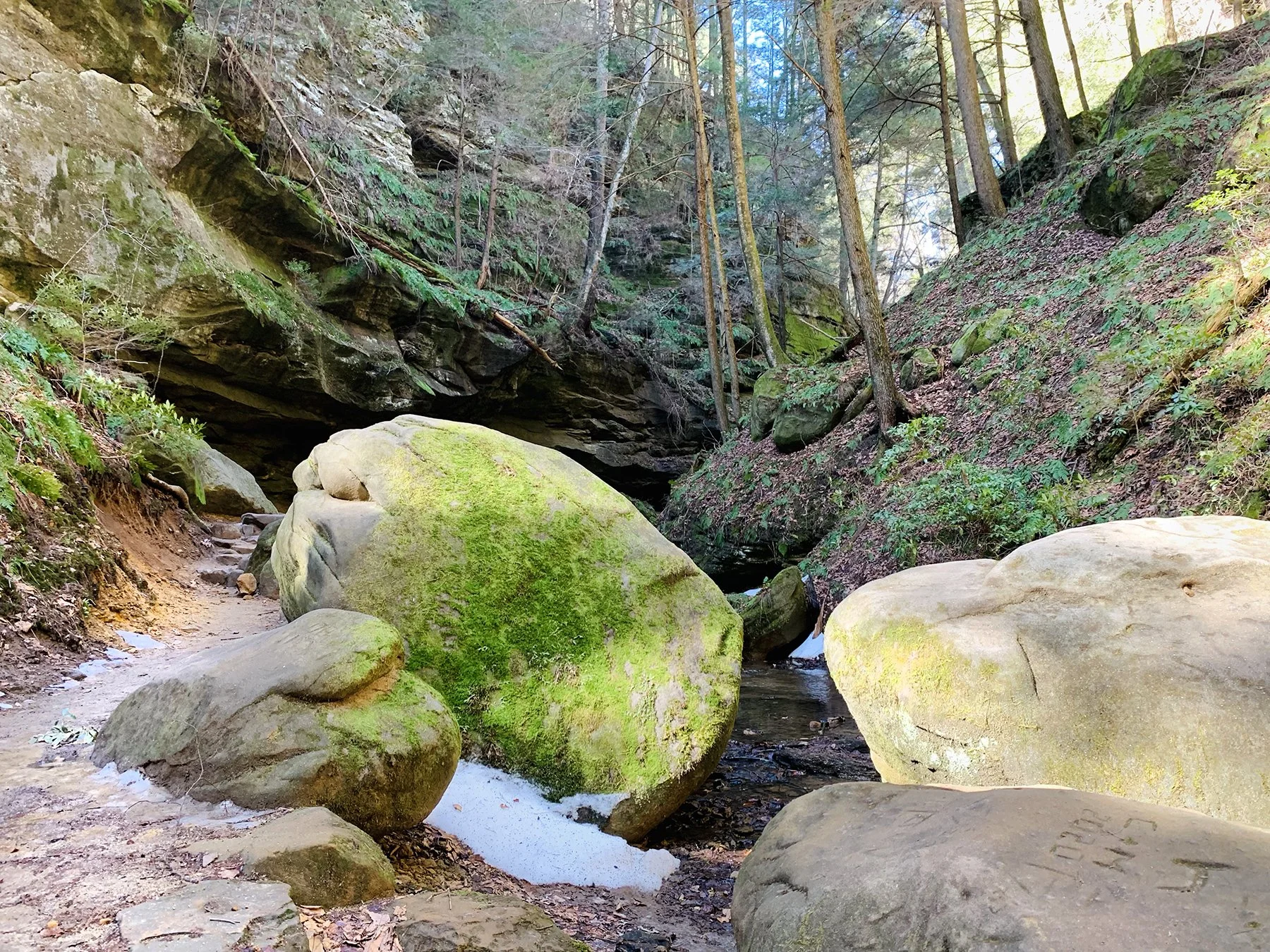
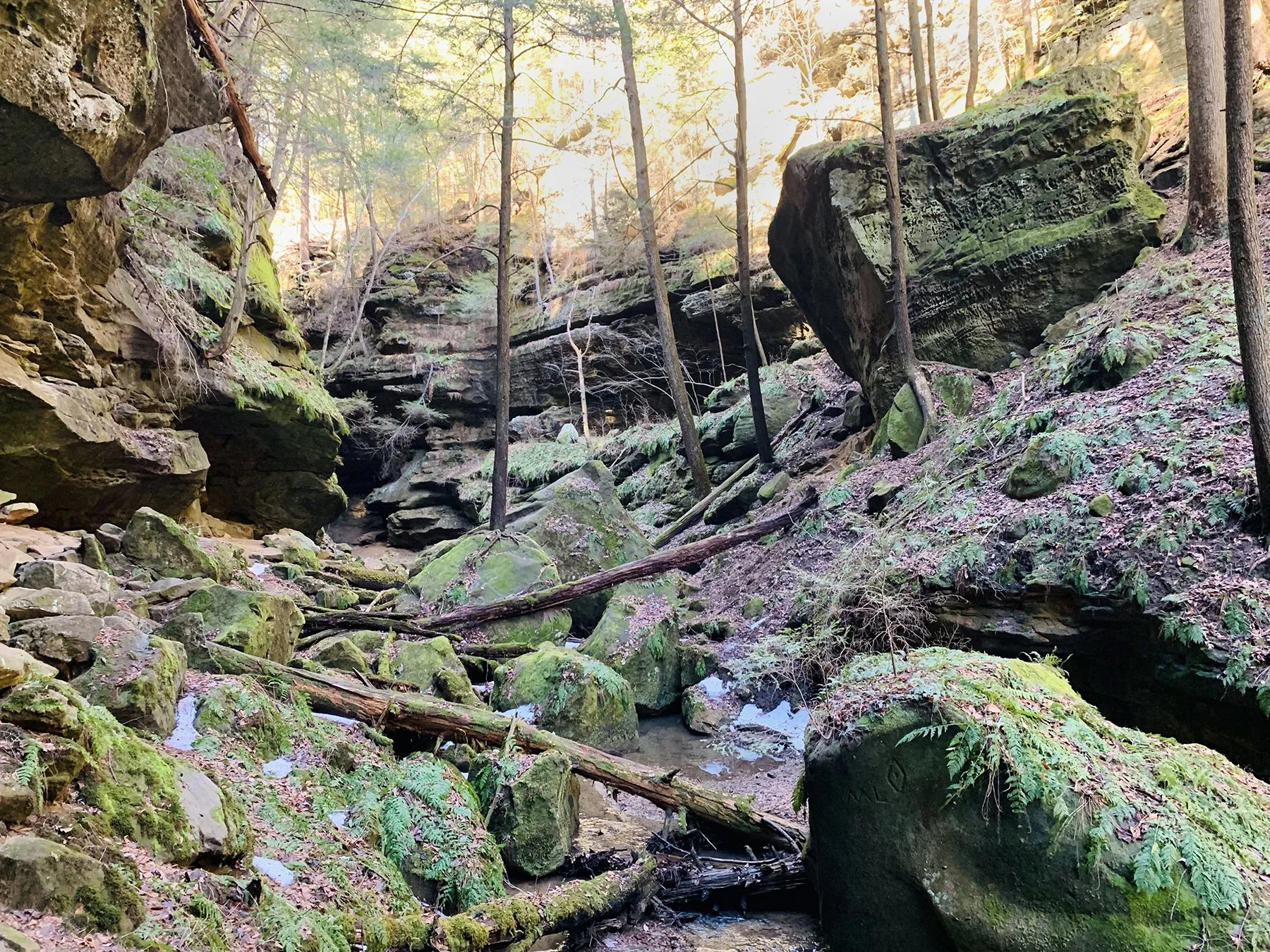
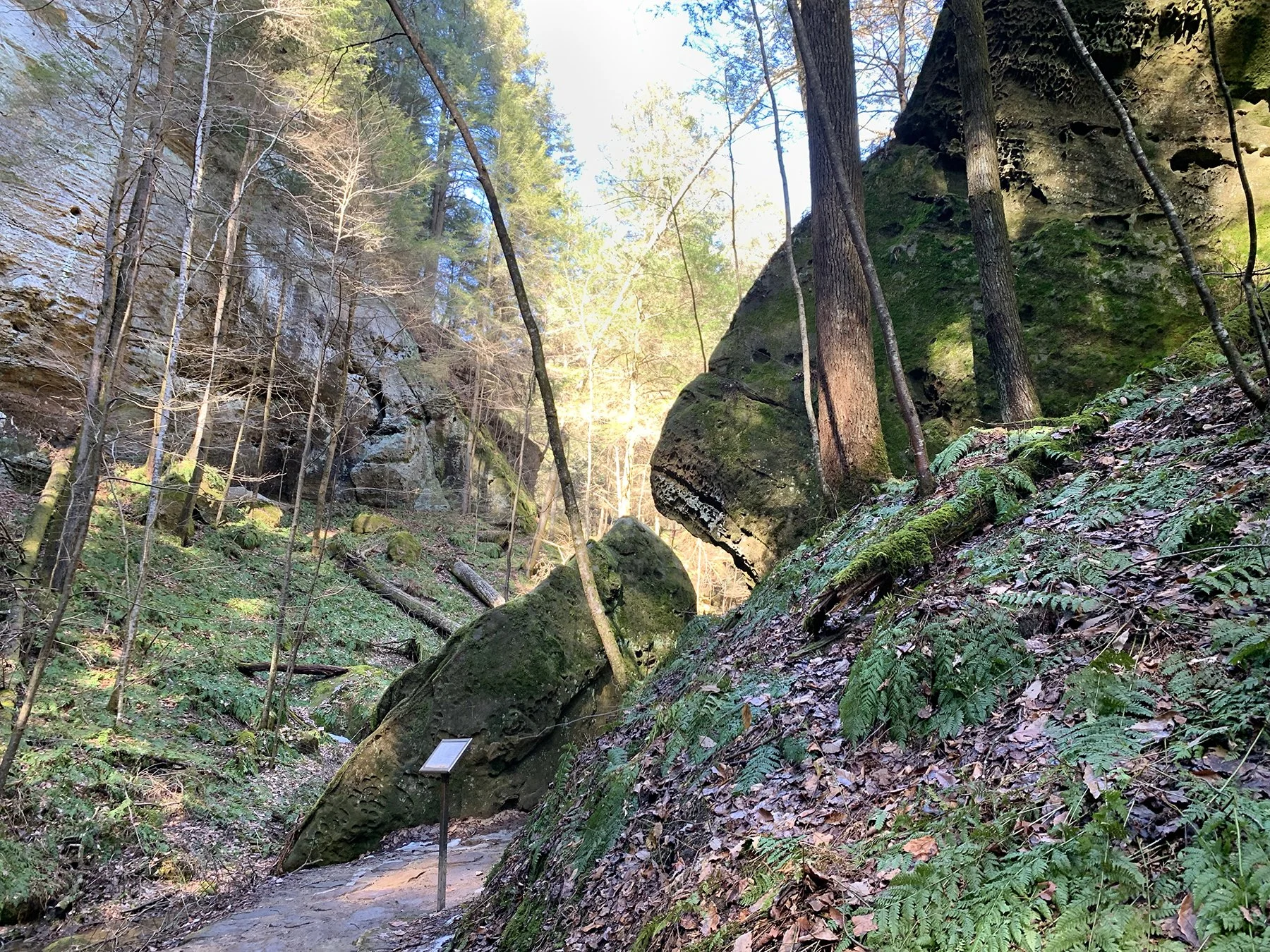
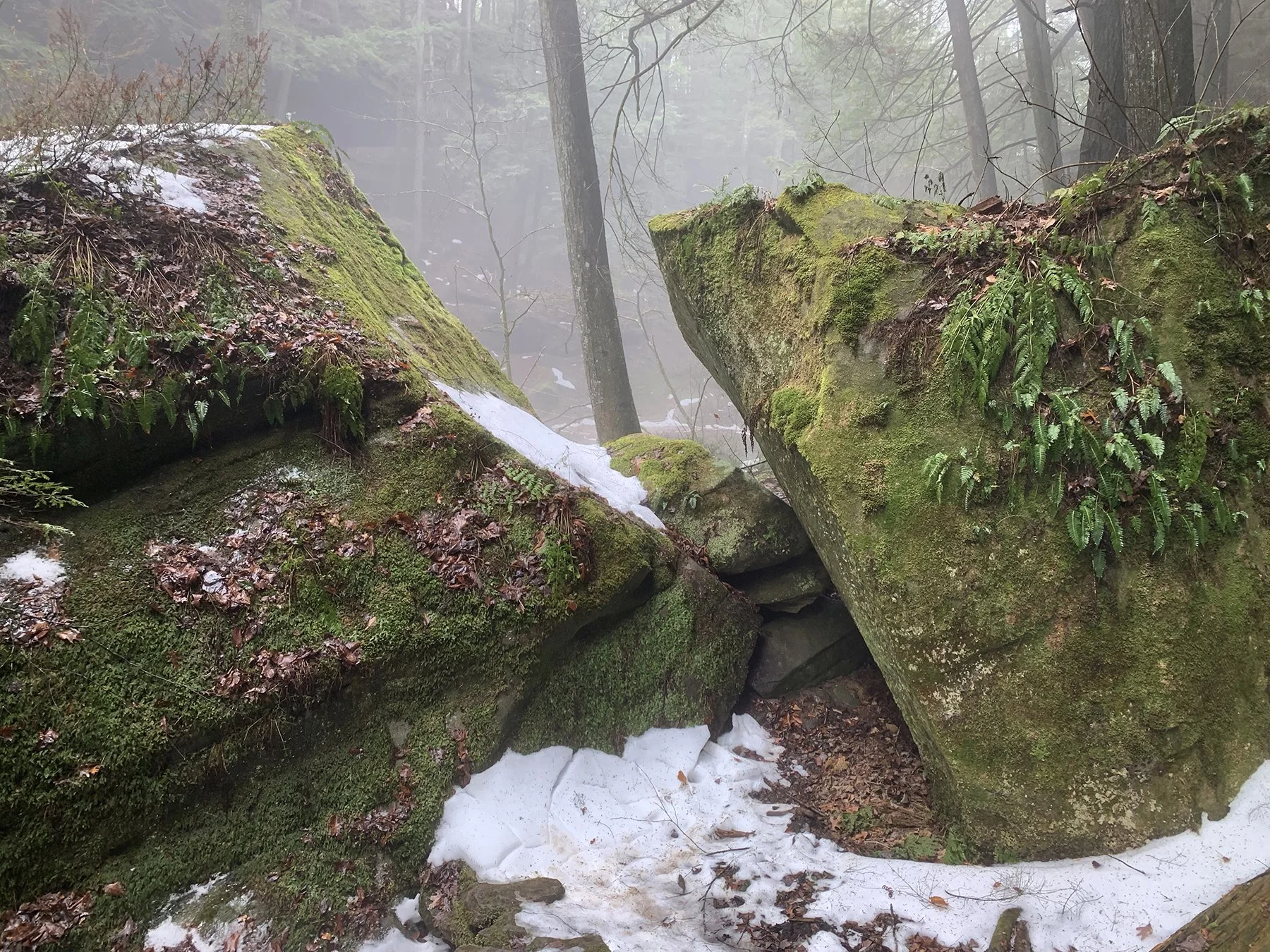
A "slump block" that eroded away from a cliff.
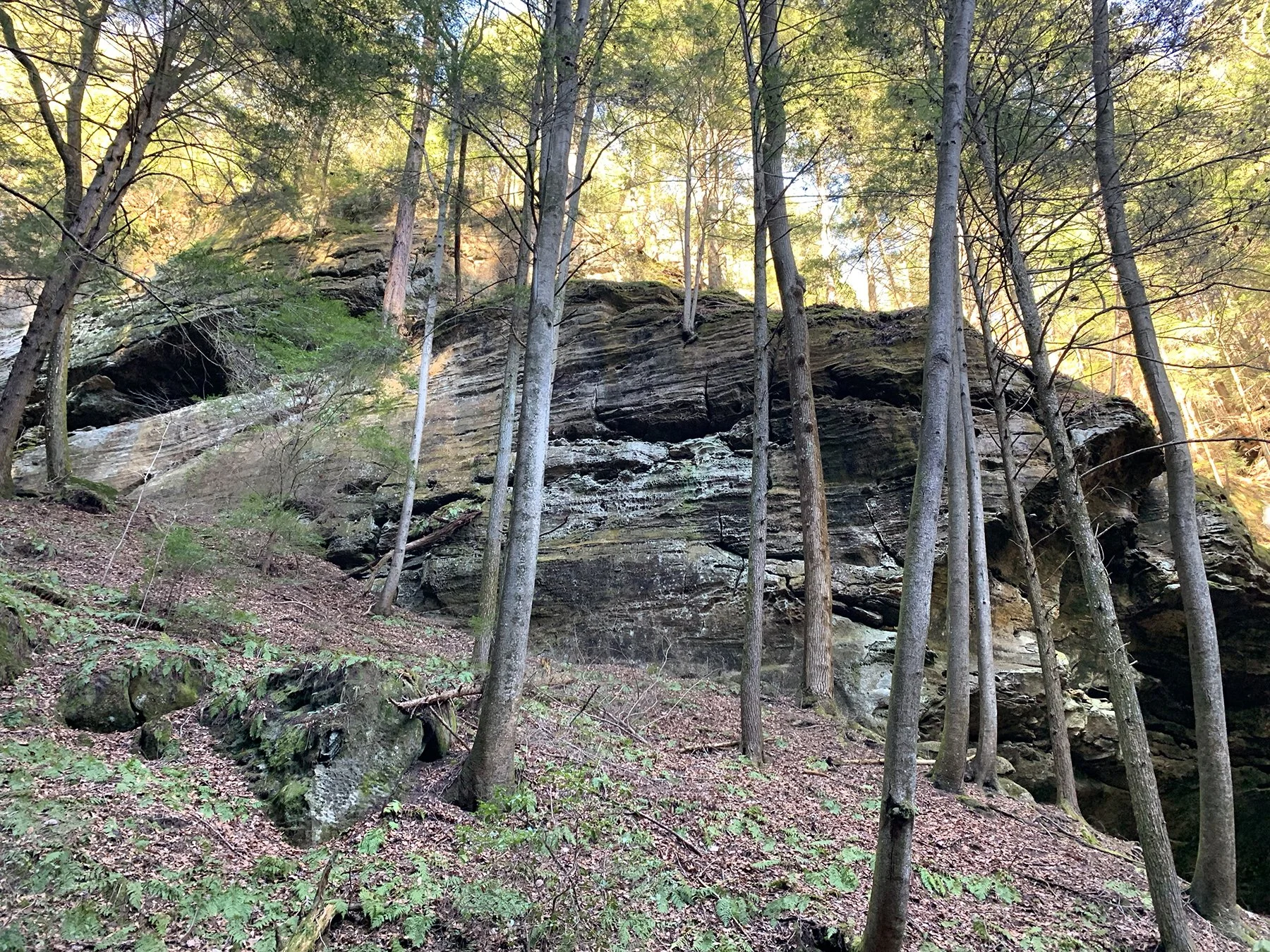
Black Hand Sandstone rock outcrop.
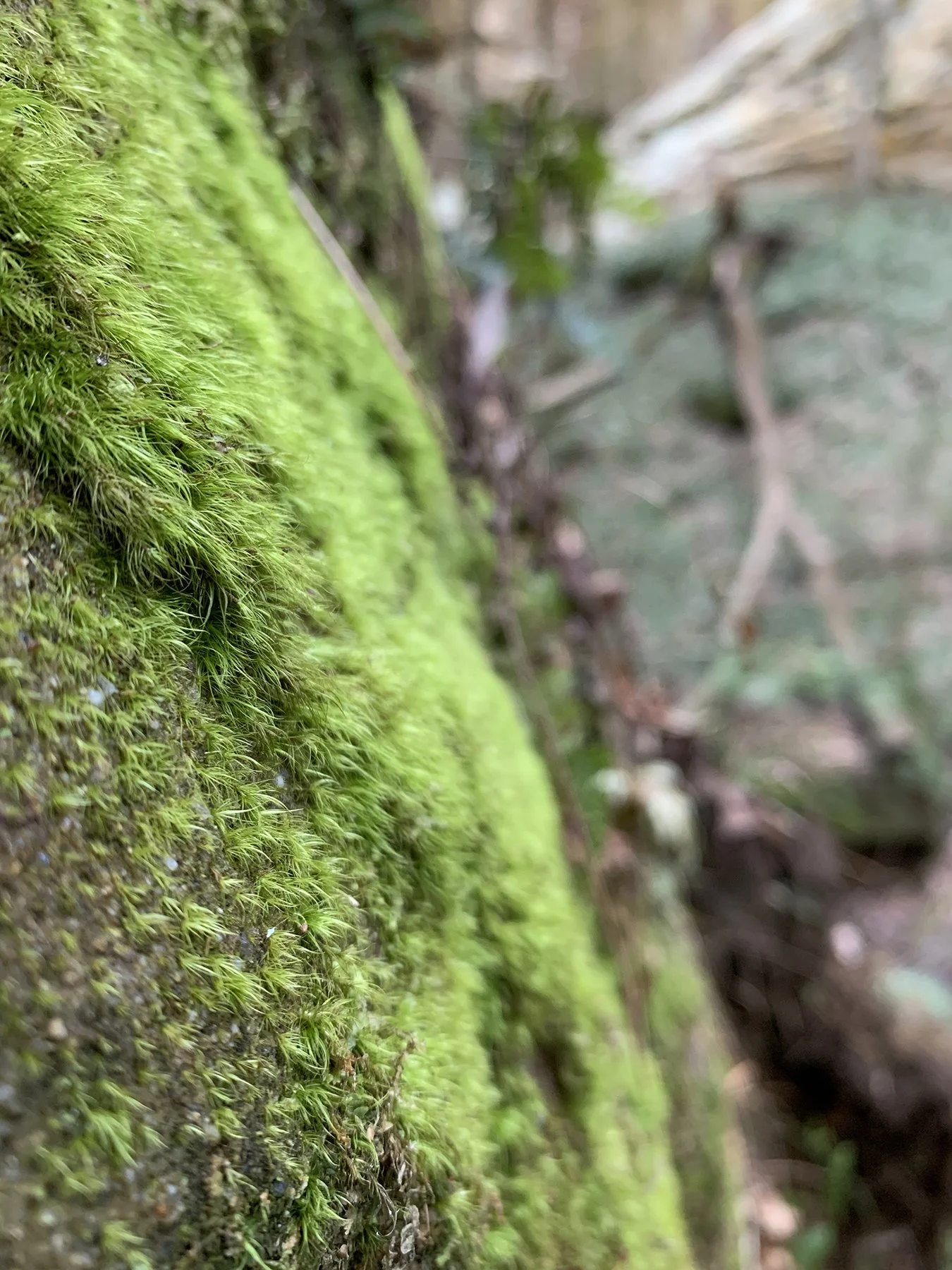
Boulder Broom Moss (Dicranum fulvum)
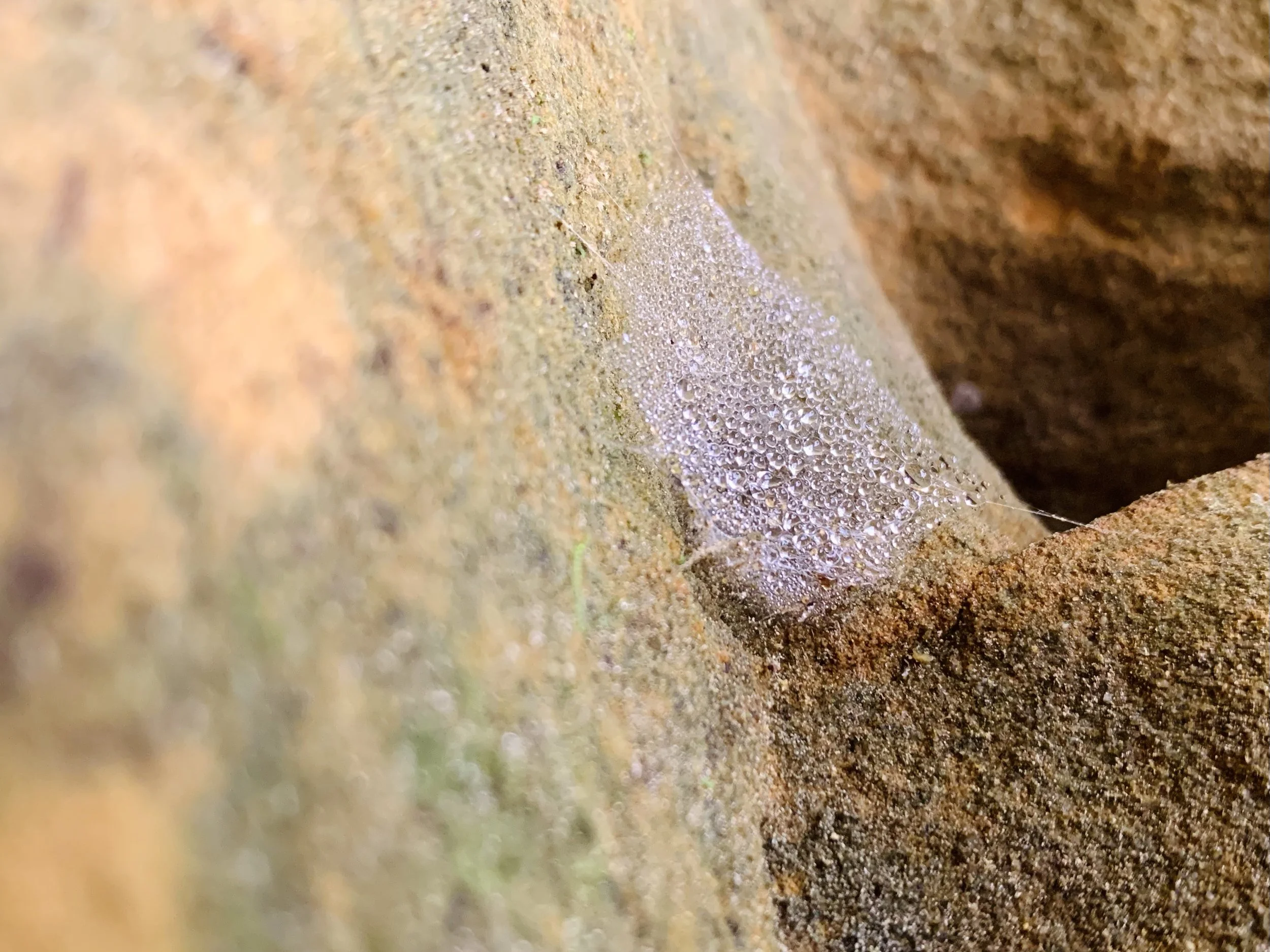
Dewdrops on a spider web.
Ohio, Hocking Hills — Rock House
A true cave.
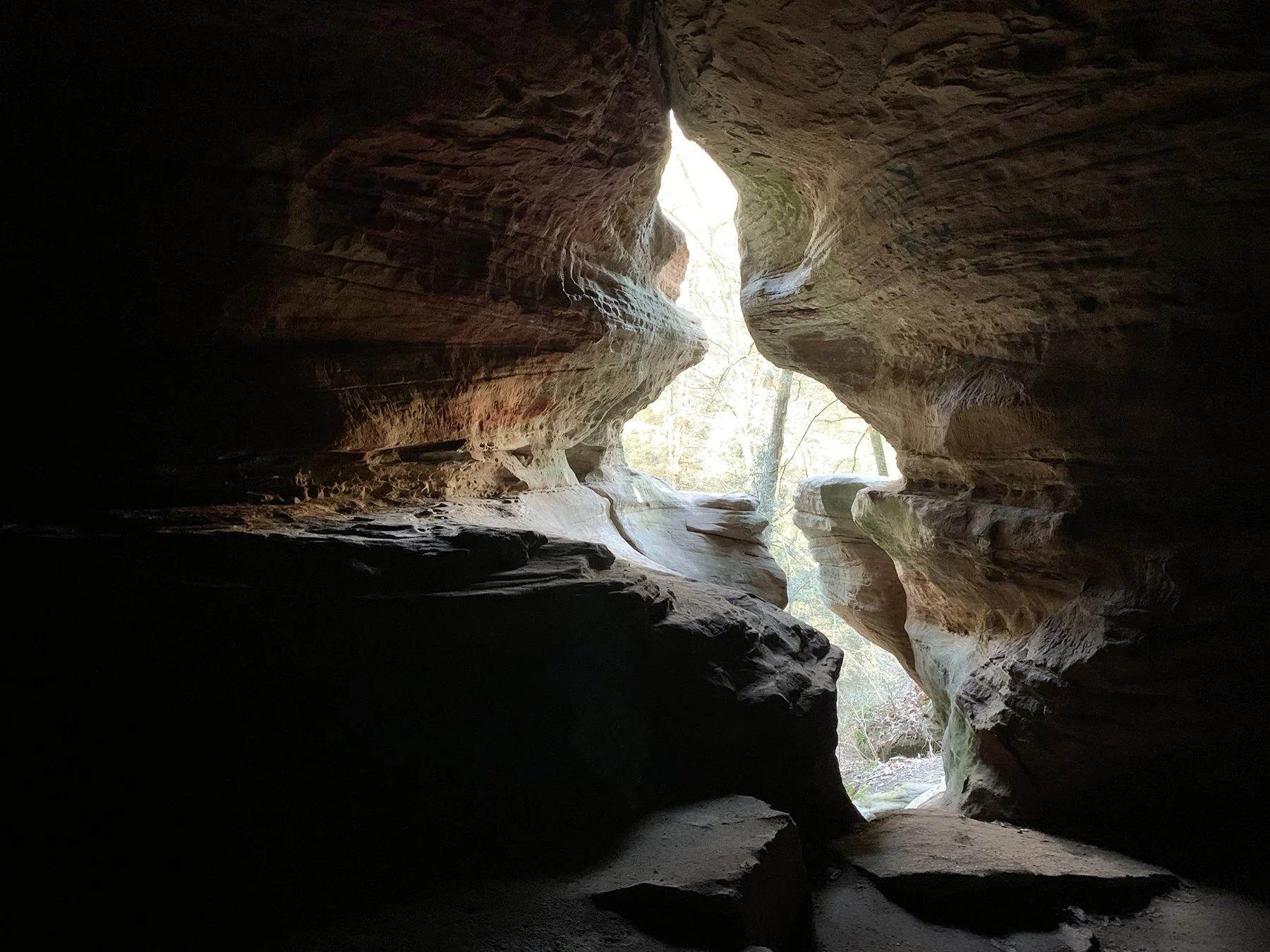
View outward from inside the cave. The opening is in the shape of a bird.
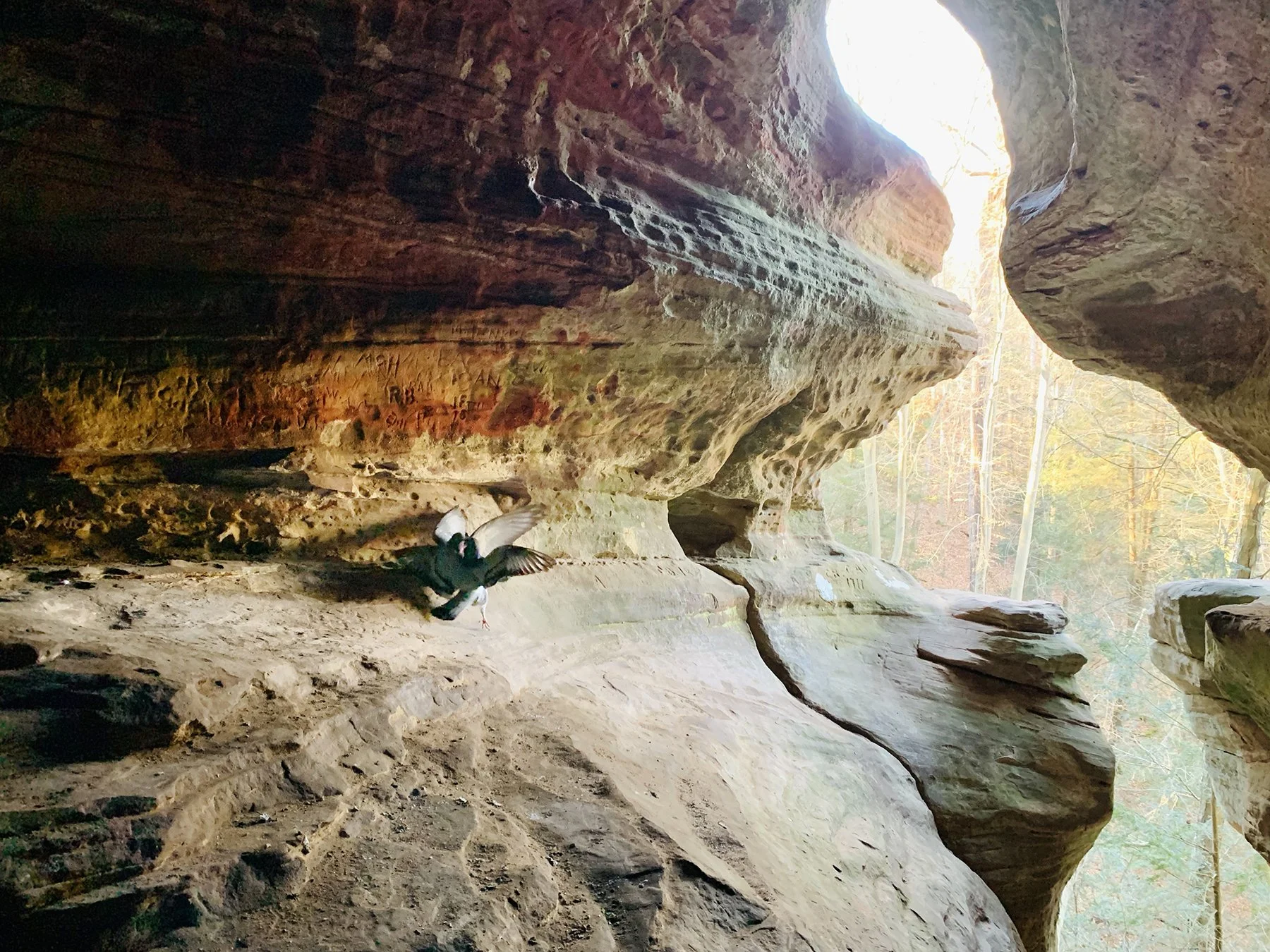
View outward from inside the cave with two pigeons in a mating dance on the rock wall. The opening is in the shape of a bird.
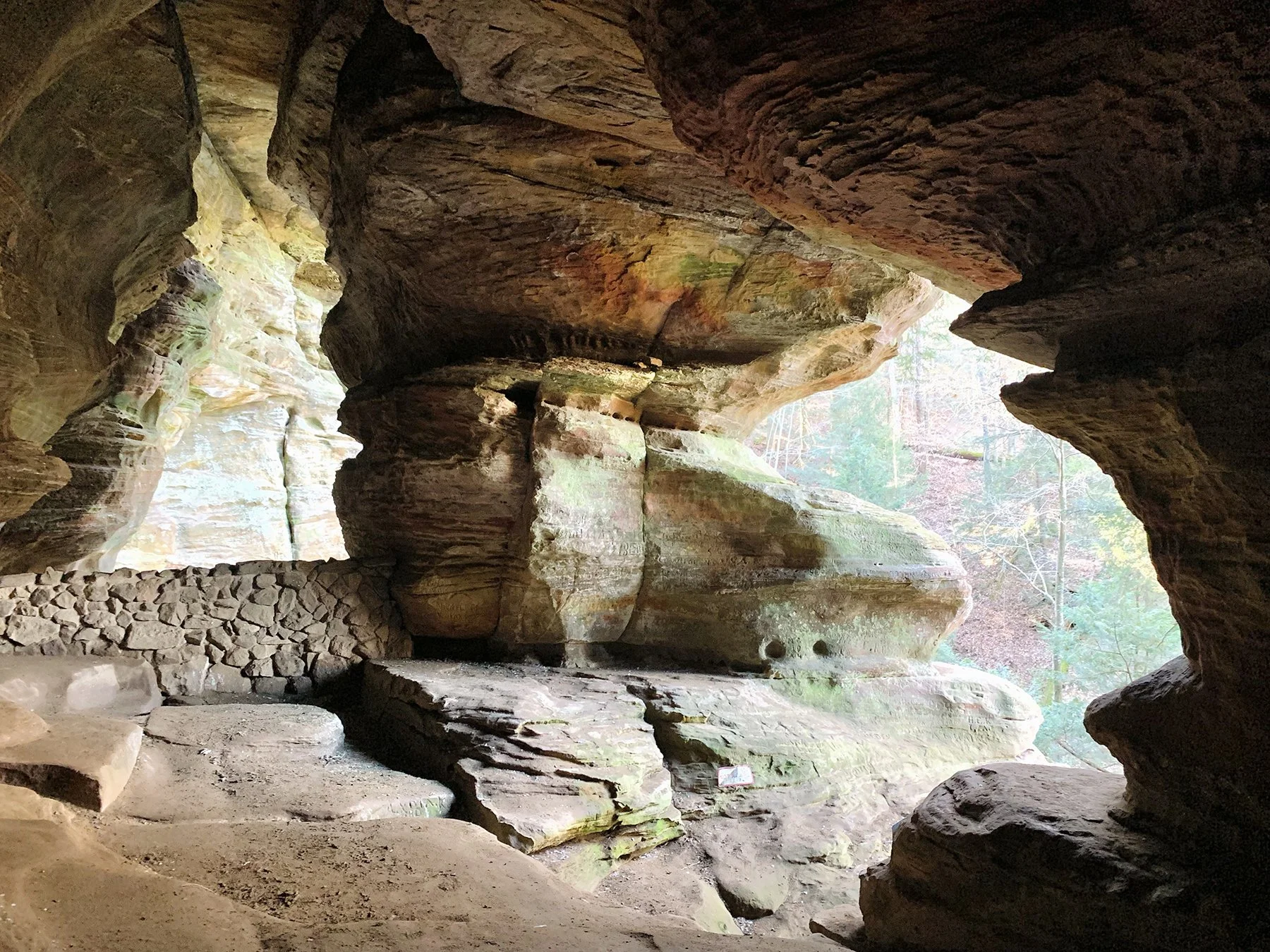
View outward from inside the cave.
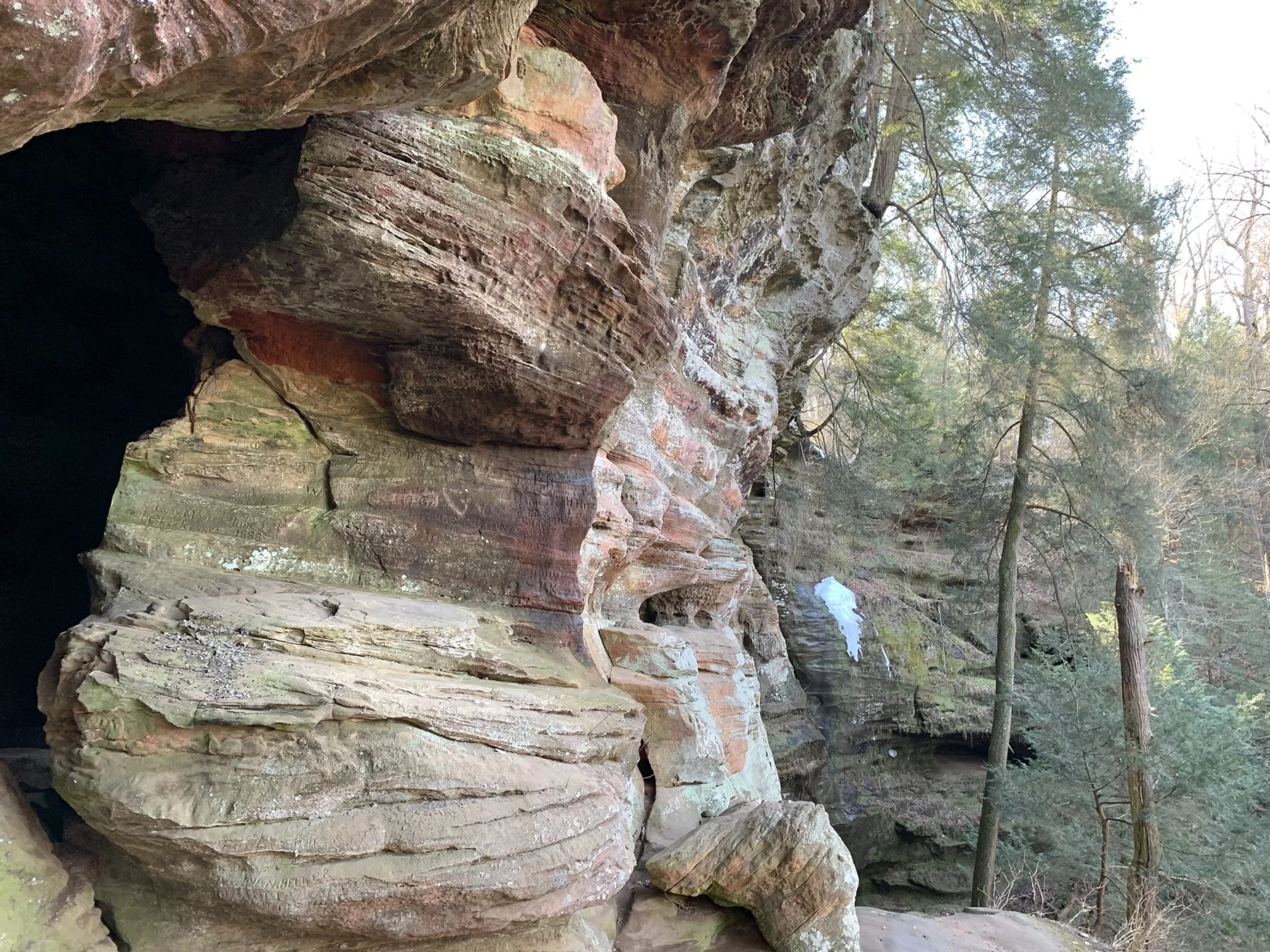
One of several cave entrances.
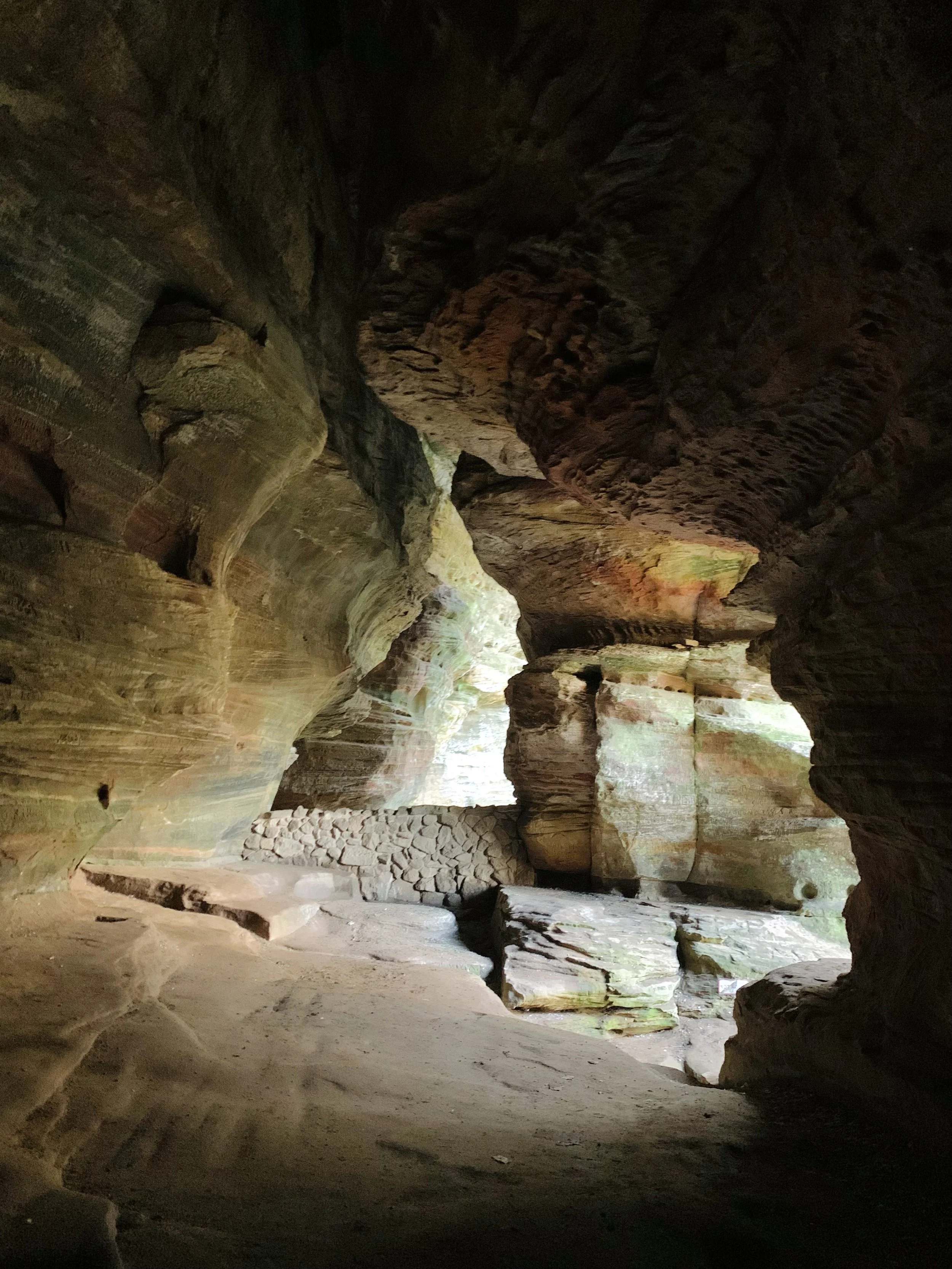
View inside the cave.
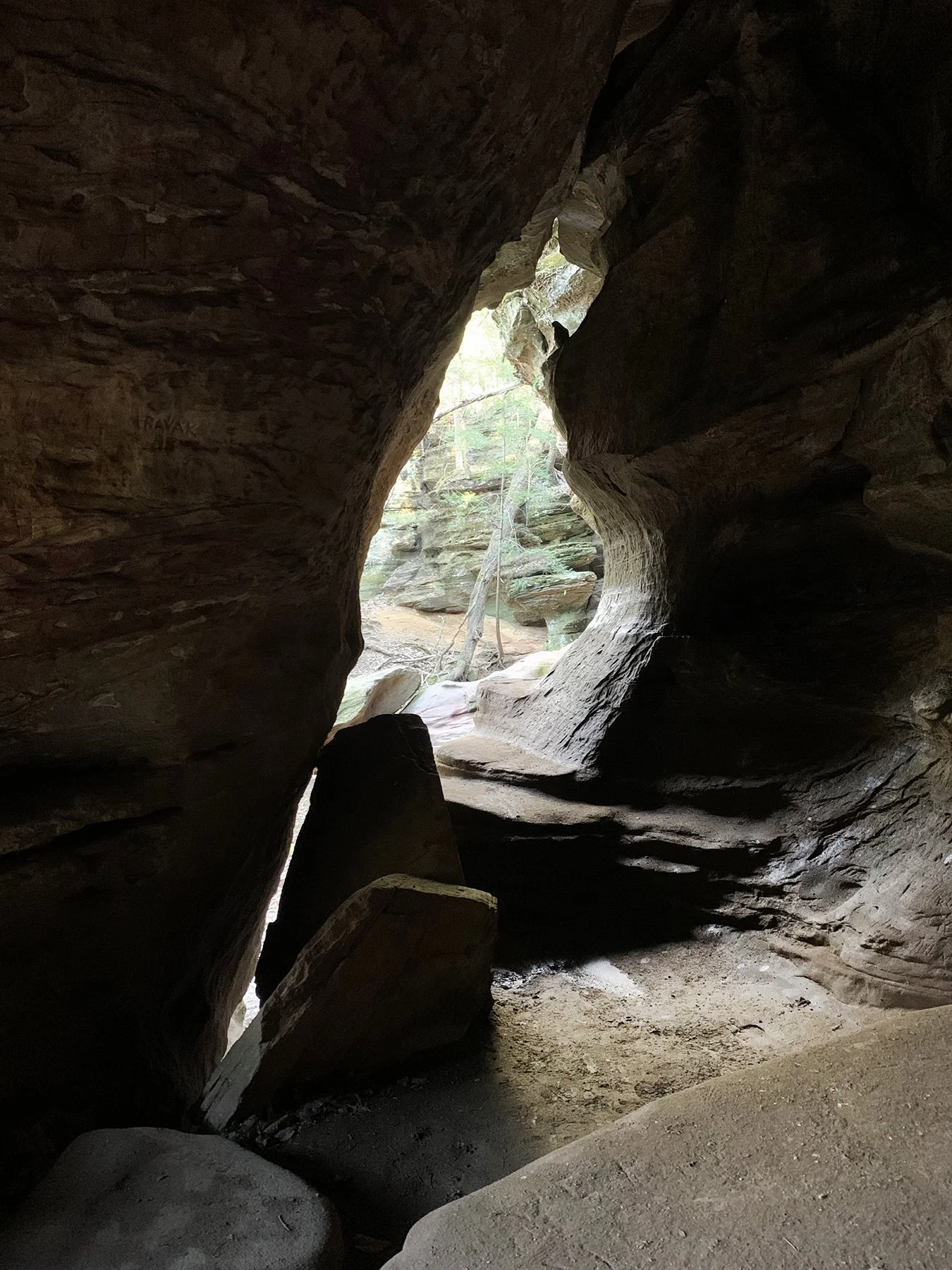
View outward from inside the cave. Another opening in the shape of a bird.
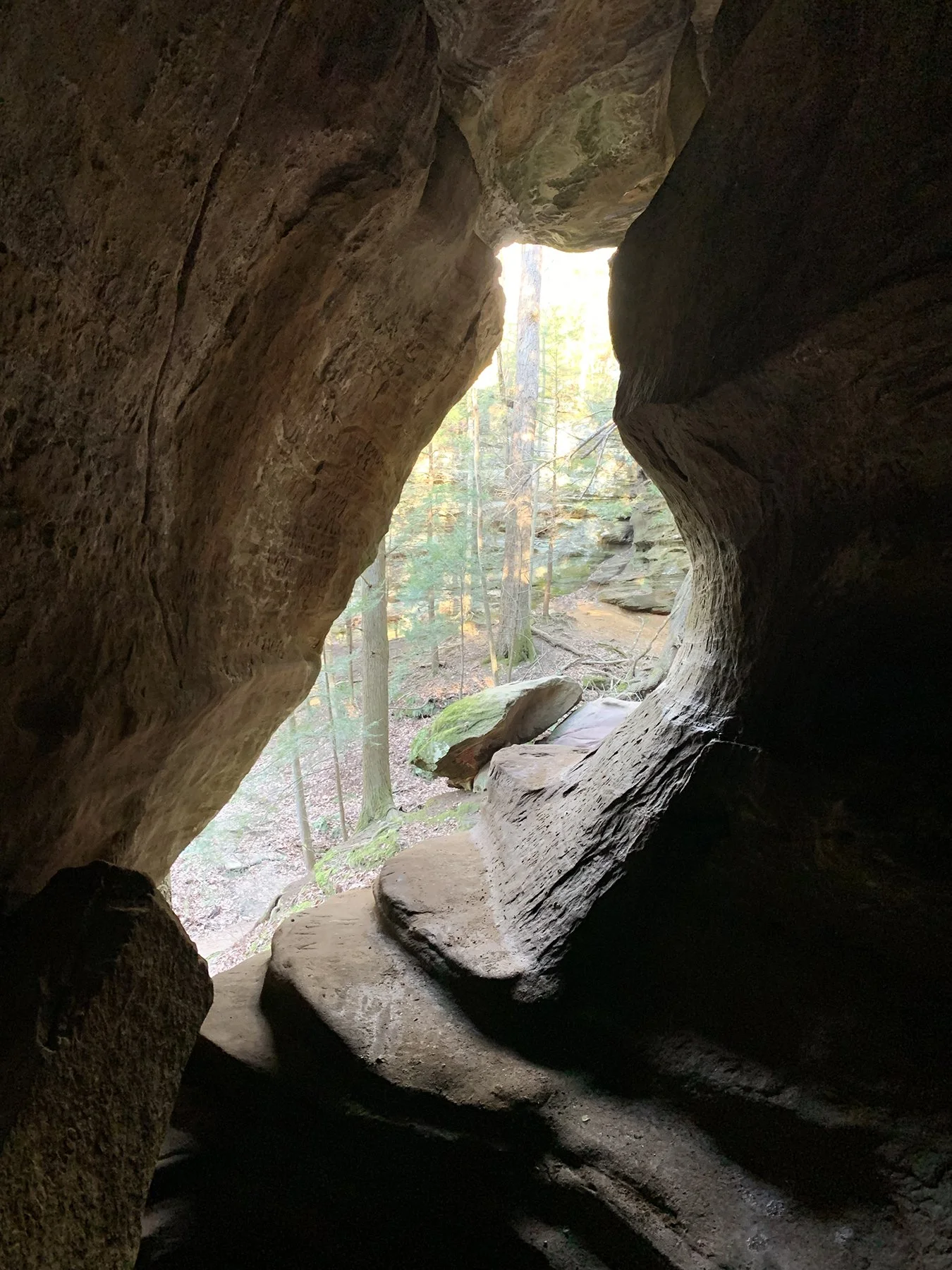
View outward from inside the cave. The opening is in the shape of a bird or owl.
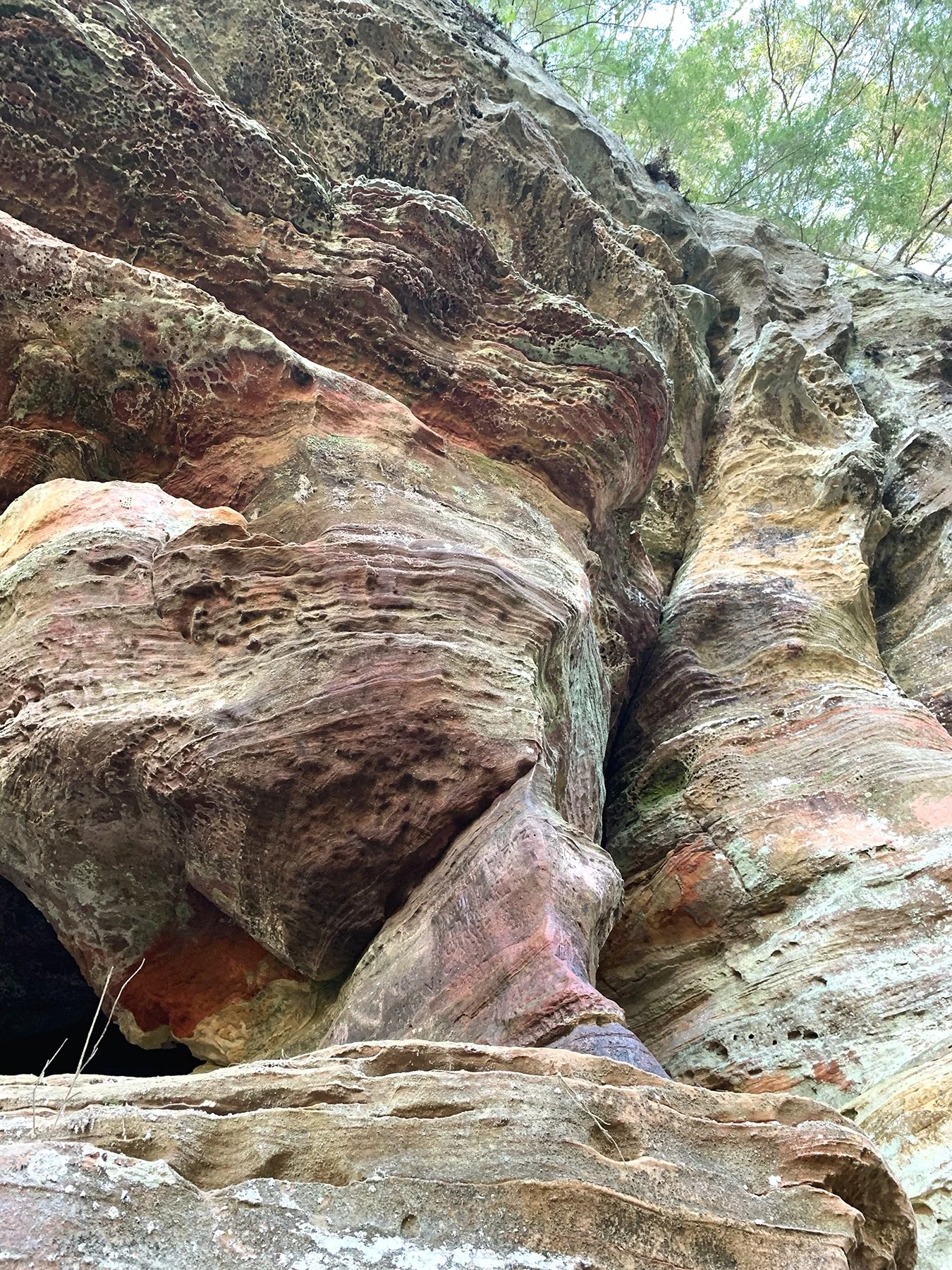
A cliff on the trail to the cave. The darker area between the two cliff sections may be an example of a geological joint.
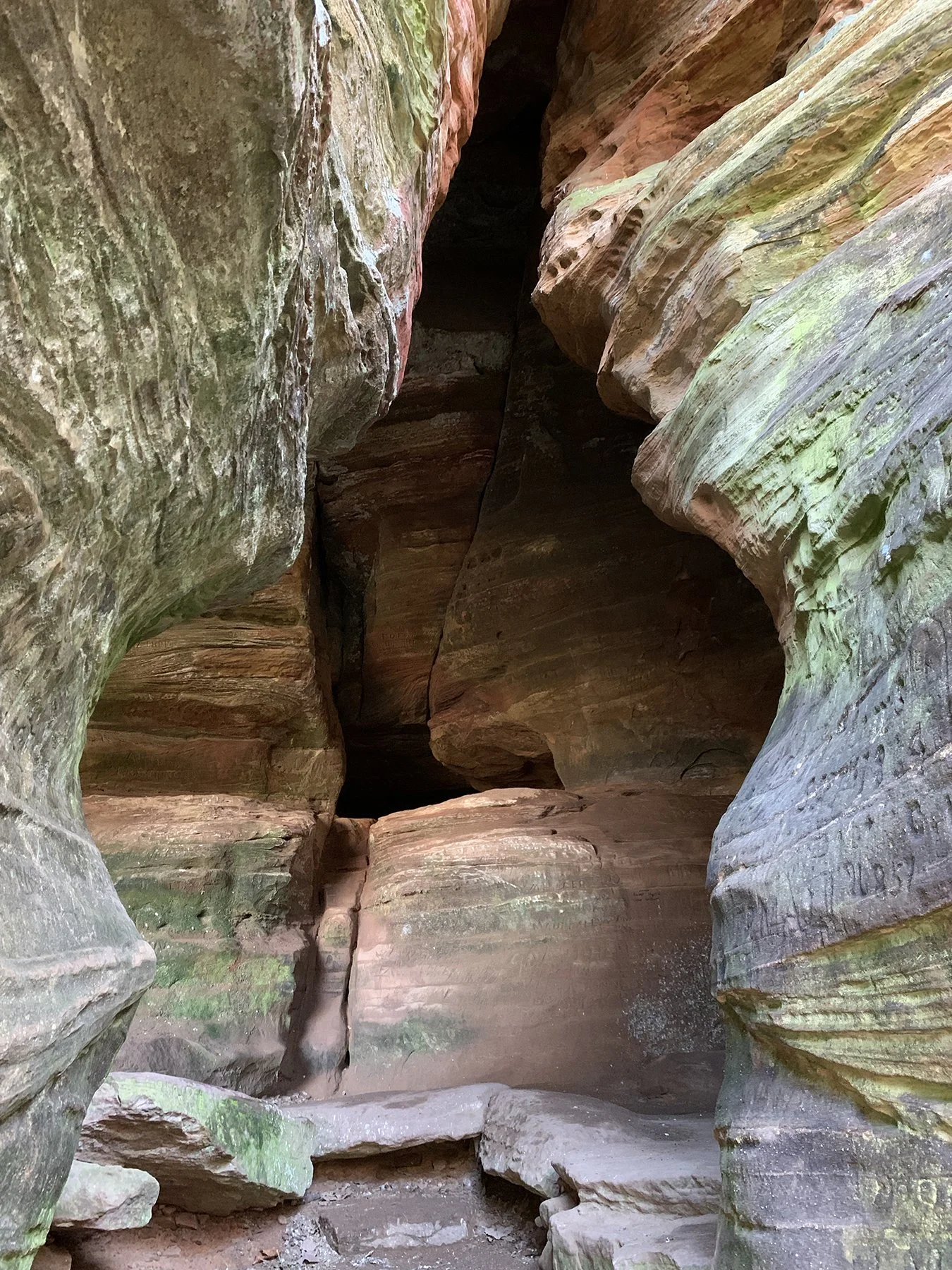
One of several cave entrances.
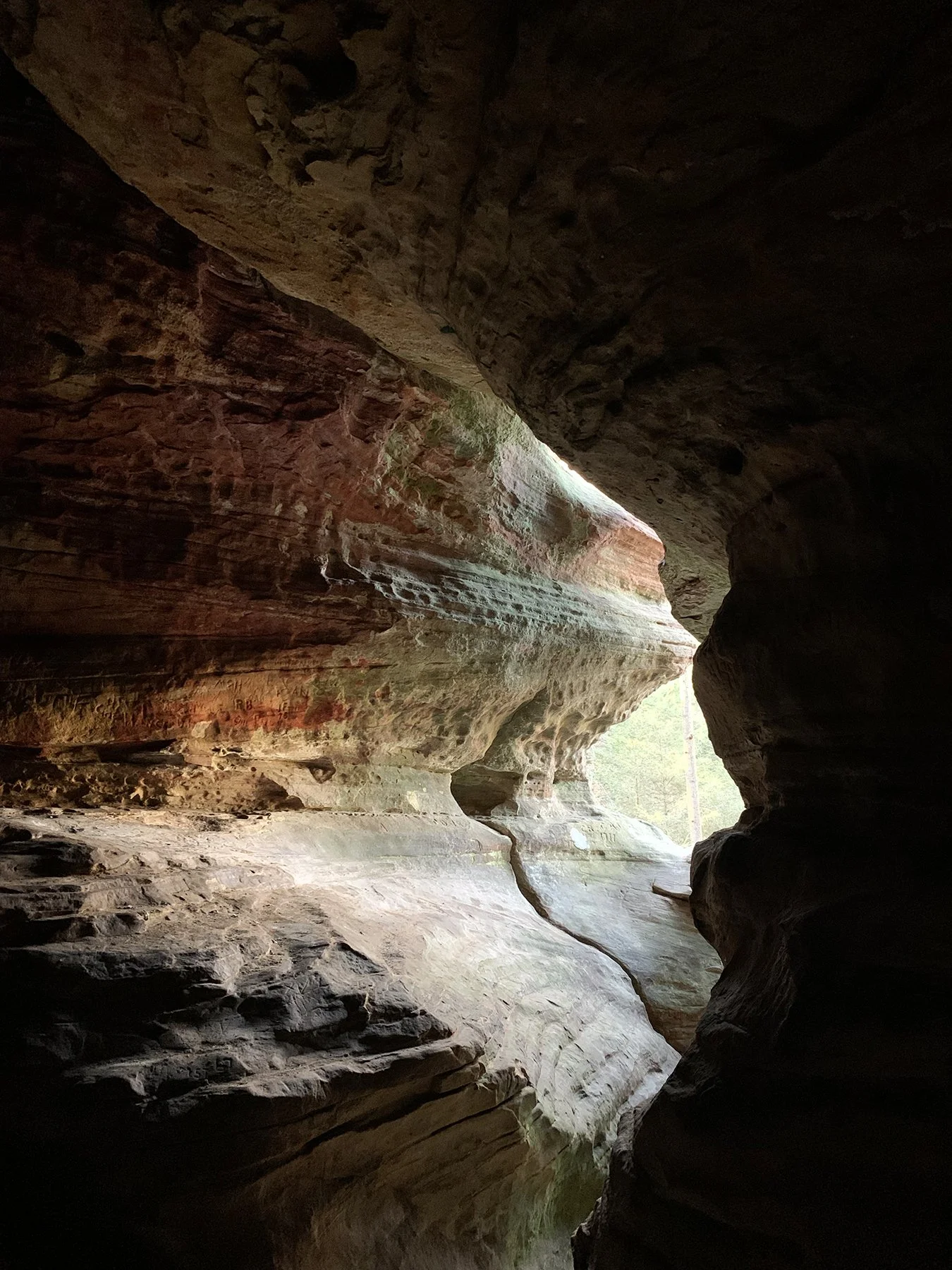
View of the cave layers and bright colors.